Ilex aquifolium
L.
Holly
iNaturalist· cc-by-nc
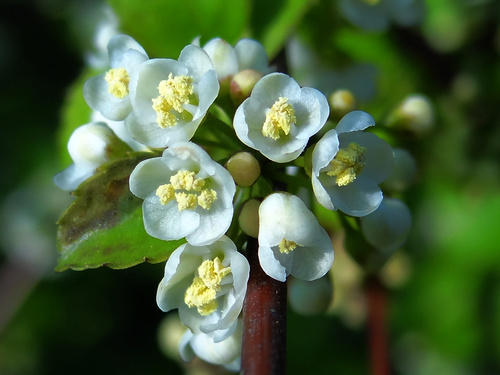
(c) bjstruecker, some rights reserved (CC BY-NC)
iNaturalist· cc-by-nc
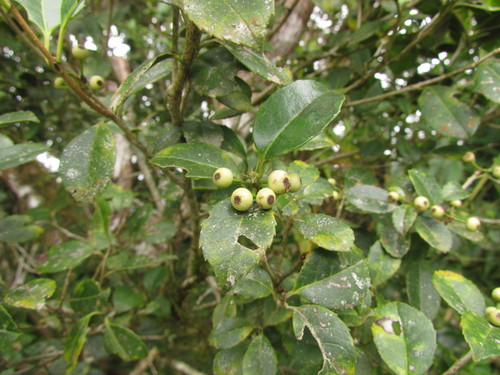
(c) mjdrumond, some rights reserved (CC BY-NC)
iNaturalist· cc-by-nc
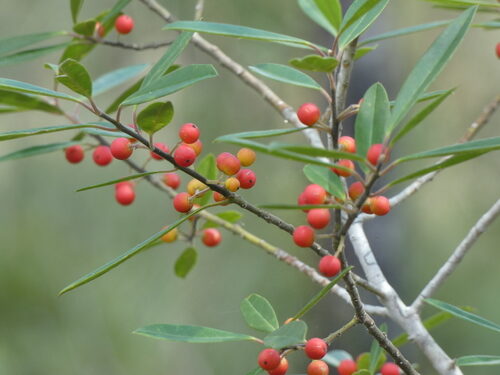
(c) Cesar Pollo, some rights reserved (CC BY-NC), uploaded by Cesar Pollo
Summary
Source: WikipediaIlex aquifolium, the holly, common holly, English holly, European holly, or occasionally Christmas holly, is a species of flowering plant in the family Aquifoliaceae, native to western and southern Europe, northwest Africa, and southwest Asia. It is regarded as the type species of the genus Ilex, which by association is also called holly. It is an evergreen tree or shrub found, for example, in shady areas of forests of oak and in beech hedges. In the British Isles it is one of very few native hardwood evergreen trees. It has a great capacity to adapt to different conditions and is a pioneer species that repopulates the margins of forests or clearcuts. European holly can exceed 15 m in height, but is often found at much smaller heights, typically 2–3 m (6.6–9.8 ft) tall and broad, with a straight trunk and pyramidal crown, branching from the base. It grows slowly and does not usually fully mature due to cutting or fire. It is estimated to live as long as 300 years. European holly is the species of holly long associated with Christmas, and previously the Roman festival of Saturnalia. Its glossy green prickly leaves and bright red berries (produced only by the female plant) are represented in wreaths, garlands and cards wherever Christmas is celebrated. It is a subject of music and folklore, especially in the British tradition. It is also a popular ornamental shrub or hedge, with numerous cultivars in a range of colours.
Description
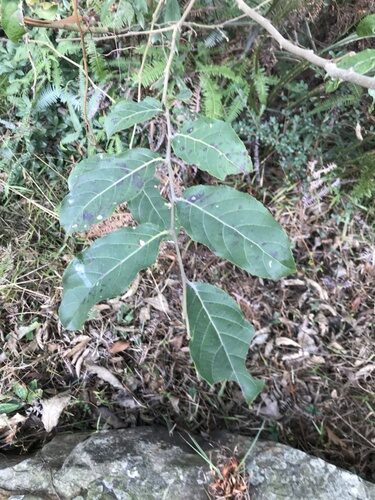
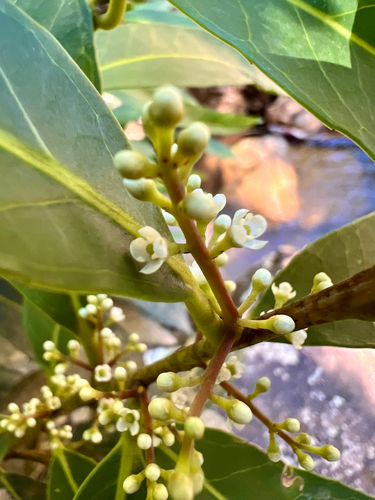
An evergreen tree. It grows 15 m high and spreads 4 m wide. The stem is stout. The bark is smooth and grey. The tree crown is pyramid shaped. The leaves are thick and a glossy green. There are stout prickles along the edge. They alternatively point upwards and downwards. The flowers are small and white. They are in the axils of the leaves. The fruit are bright red berries. They are on female plants only.
Edible Uses
The leaves have been used as a tea substitute, and the roasted fruit has served as a coffee substitute. Some caution is advised, as the fruit can be purgative and emetic.
Traditional Uses
The leaves have been used as a tea substitute. The red berries are used to make a brandy.
This uses section is brief — help expand it
Medicinal Uses
Holly is little used in modern herbalism. The leaves are diaphoretic, expectorant, febrifuge and tonic, and can be used fresh at almost any time of year or harvested in late spring and dried for later use. They are employed in treating intermittent fevers, rheumatism, catarrh and pleurisy. Fresh leaf juice has been used successfully to treat jaundice. The berries are violently emetic and purgative; they have been used for dropsy and, in powdered form, as an astringent to check bleeding. The berries are toxic, especially to children, and should not be used medicinally except under professional supervision. The root has been used as a diuretic, though more effective diuretics are available. The plant is used in Bach flower remedies, with the prescribing keywords being 'Hatred', 'Envy', 'Jealousy' and 'Suspicion'.
Known Hazards
Holly berries contain alkaloids, theobromine, saponins, caffeic acid, and a yellow pigment, ilixanthin. The berries are generally regarded as toxic to humans.
Distribution
It is a temperate plant. It grows best in an acid, sandy or gravelly loam. It needs a protected sunny position. It is resistant to frost and sensitive to drought. In the tropics it is grown at higher altitudes. Arboretum Tasmania.
Where It Grows
Africa, Andorra, Australia, East Africa, Europe*, France, Germany, Hawaii, Italy, Luxembourg, Mediterranean, Pacific, San Marino, Slovenia, Tasmania, USA, Zimbabwe,
Cultivation
Succeeds in most soils, including peat, chalk, gravels, sand and shales, so long as they are not water-logged, though wild plants are occasionally found in situations with standing winter water. Grows well in heavy clay soils. Established plants are fairly drought tolerant. Dislikes dry soils according to one report whilst another says that it succeeds in dry shade. Tolerates a pH range from 3.5 to 7.2. Succeeds in full sun or fairly dense shade, self-sown seedlings from woods and shady places making the most shade tolerant plants. Tolerant of maritime exposure though in such a situation it may lose some or all its leaves in the winter. Plants require a minimum July temperature of 12°c for good fruit production. They tolerate short periods in winter down to -15°c. Severe frosts can kill whole branches, especially if they are open to the sky. The young growth in spring can be damaged by late frosts. A very ornamental plant, there are many named varieties. Flowers and fruits are formed on wood of the previous year's growth. A good bee plant, the minute flowers are sweetly scented. The fruit is a valuable winter food source for birds. Resents root disturbance, especially as the plants get older. It is best to place the plants into their permanent positions as soon as possible, perhaps giving some winter protection for their first year or two. Only move the plants in May or, preferably, in September. Plants are quite slow growing, even when in good soils and situations. Trees are usually dioecious but hermaphrodite forms are available. Male and female plants must usually be grown if seed is required. Plants are capable of regenerating from the main stem both above and below ground level and, although the top may be killed in a fire, the plants will usually regrow from the base. Rabbits are particularly fond of this species and will quickly remove the bark. This species is notably resistant to honey fungus. In garden design, as well as the above-ground architecture of a plant, root structure considerations help in choosing plants that work together for their optimal soil requirements including nutrients and water.
Propagation
Seed is best sown as soon as ripe in autumn in a cold frame, where it can take 18 months to germinate. Stored seed typically requires two winters and a summer before germinating and should be sown as soon as possible in a cold frame. Scarification followed by warm stratification and then cold stratification may speed germination. Seedlings are slow-growing; pot them up individually when large enough to handle and grow on in light shade in a cold frame for the first year. They can be planted into a nursery bed in late spring of the following year but should not remain there more than two years, as they dislike transplanting. Alternatively, grow on in pots for a second season before planting into permanent positions in late spring or early summer, with a good mulch and some winter protection for the first year outdoors. Cuttings of almost ripe wood with a heel taken in August can be rooted in a shaded cold frame; leave for 12 months before potting up. Layering in October takes 2 years.
Other Uses
Holly makes an excellent hedge plant, tolerating hard clipping and maritime exposure to form a dense, stock-proof shelter, though it is fairly slow-growing. The cultivar 'Pendula', grown as a cutting on its own roots, makes a good carpeting ground cover and can be planted up to 1.2 metres apart each way, though it covers ground slowly. The wood is strong, hard and dense, polishes well and is a beautiful white except at the centre of very old trees. It must be thoroughly dried and seasoned to avoid warping, and is highly regarded by cabinet makers. Heartwood from mature trees is used for printing blocks, engravings and turnery. The wood also makes good fuel, burning well even when green. Bark has historically been made into a glue used to catch birds.
Synonyms
Also Known As
Navadna bodika
References (5)
- Brown, D., 2002, The Royal Horticultural Society encyclopedia of Herbs and their uses. DK Books. p 241
- Facciola, S., 1998, Cornucopia 2: a Source Book of Edible Plants. Kampong Publications, p 23
- Kew Plants of the World onLine
- Smith, N., Mori, S.A., et al, (Eds.), 2004, Flowering Plants of the Neotropics. Princeton. p 27
- Sp. pl. 1:125. 1753