Kirkia tenuifolia
Engl.
gbif· cc-by
Royal Botanic Gardens, Kew
gbif· cc-by
Royal Botanic Gardens, Kew
gbif· cc-by
Royal Botanic Gardens, Kew
Description
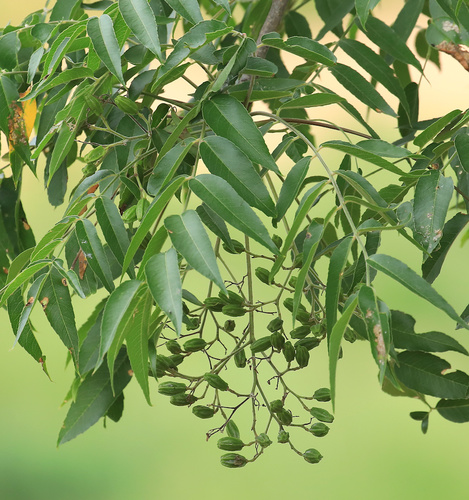
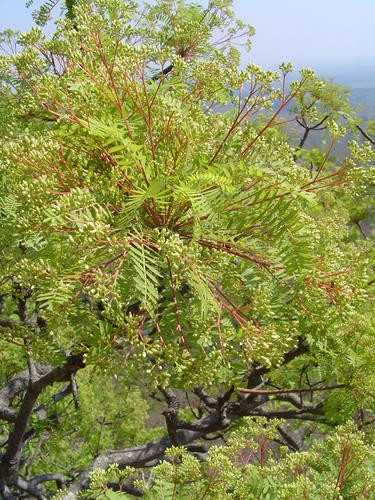
It is a deciduous tree. It grows up to 8 m high. The bark is smooth or slightly cracked and dark grey. There are root tubers. The leaves are on short shoots. There are 5-9 leaflets and the base is wedge shaped. They are 1-3 cm long by 1-2 cm wide. The flowers are greenish cream and in groups 3-7 cm long. The petals are 3-5 mm long. The fruit are narrowly oval and pink. They are 10-12 mm long by 6-8 mm wide. They are four angled.
Edible Uses
The swollen roots are chewed to quench thirst, and the bark is used for moisture.
Traditional Uses
The swollen roots are chewed to quench thirst.
This uses section is brief — help expand it
Medicinal Uses
A decoction of the bark is drunkas a treatment for cholera.
Distribution
A tropical plant. It grows in dry soils in shrubland. It grows between 200-800 m above sea level. It can grow in arid places.
Where It Grows
Africa, East Africa, Ethiopia, Kenya, Somalia,
Cultivation
It is usually found on red sandy to stony soils and on limestone. Large tubers are found on the roots - these are almost certainly for the storage of water, making the tree drought tolerant.
Propagation
Seed - easy. Cuttings root easily.
Notes
It is also put in the family Simaroubaceae.
Also Known As
Biss duga, Dofarchot
References (4)
- Heywood, V.H., Brummitt, R.K., Culham, A., and Seberg, O. 2007, Flowering Plant Families of the World. Royal Botanical Gardens, Kew. p 177
- Mutie, F. M., et al, 2023, Important Medicinal and Food Taxa (Orders and Families) in Kenya, Based on Three Quantitative Approaches. Plants 2023, 12, 1145
- Royal Botanic Gardens, Kew (1999). Survey of Economic Plants for Arid and Semi-Arid Lands (SEPASAL) database. Published on the Internet; http://www.rbgkew.org.uk/ceb/sepasal/internet [Accessed 11th June 2011]
- World Checklist of Useful Plant Species 2020. Royal Botanic Gardens, Kew