Rubus hoffmeisterianus
Kunth & C. D. Bouche
wikimedia· cc0
Wikimedia Commons - Unknown authorUnknown author
Description
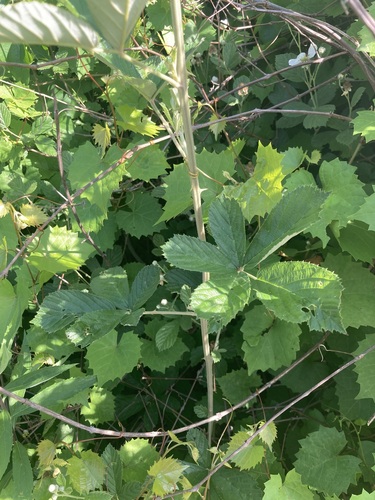
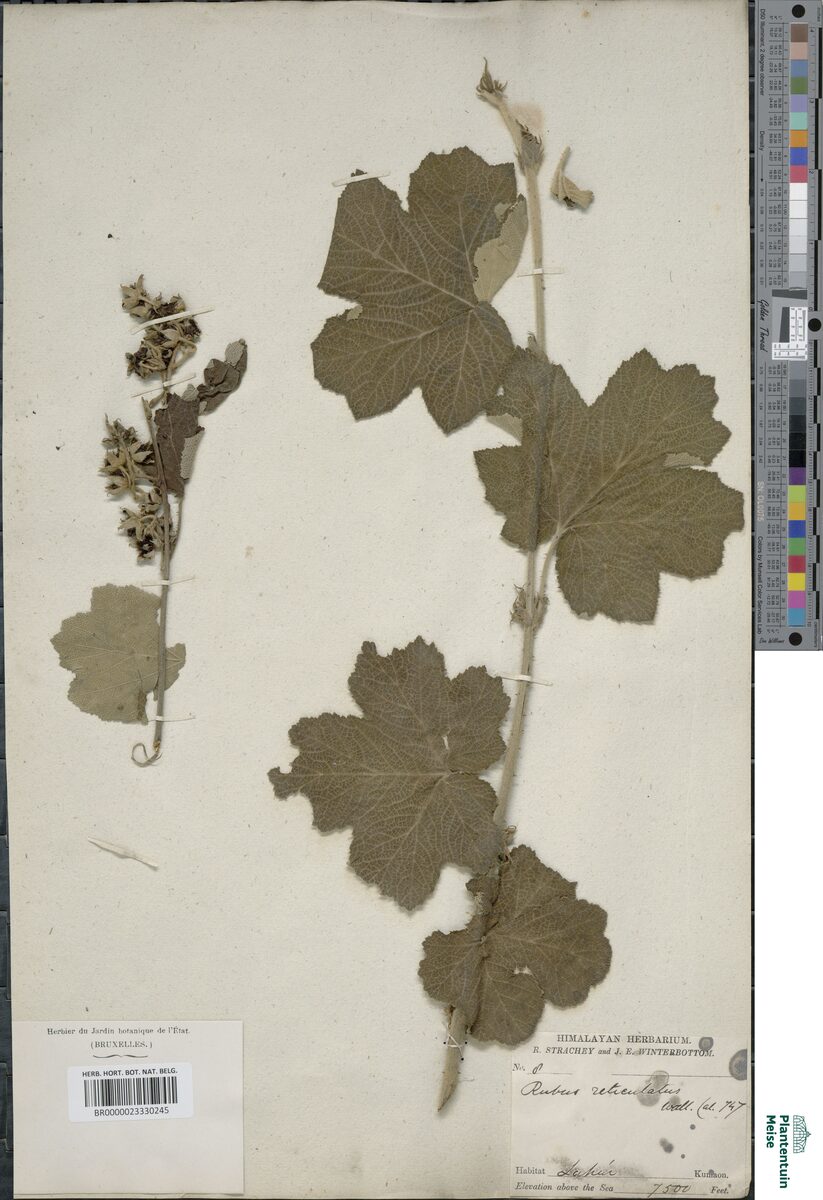
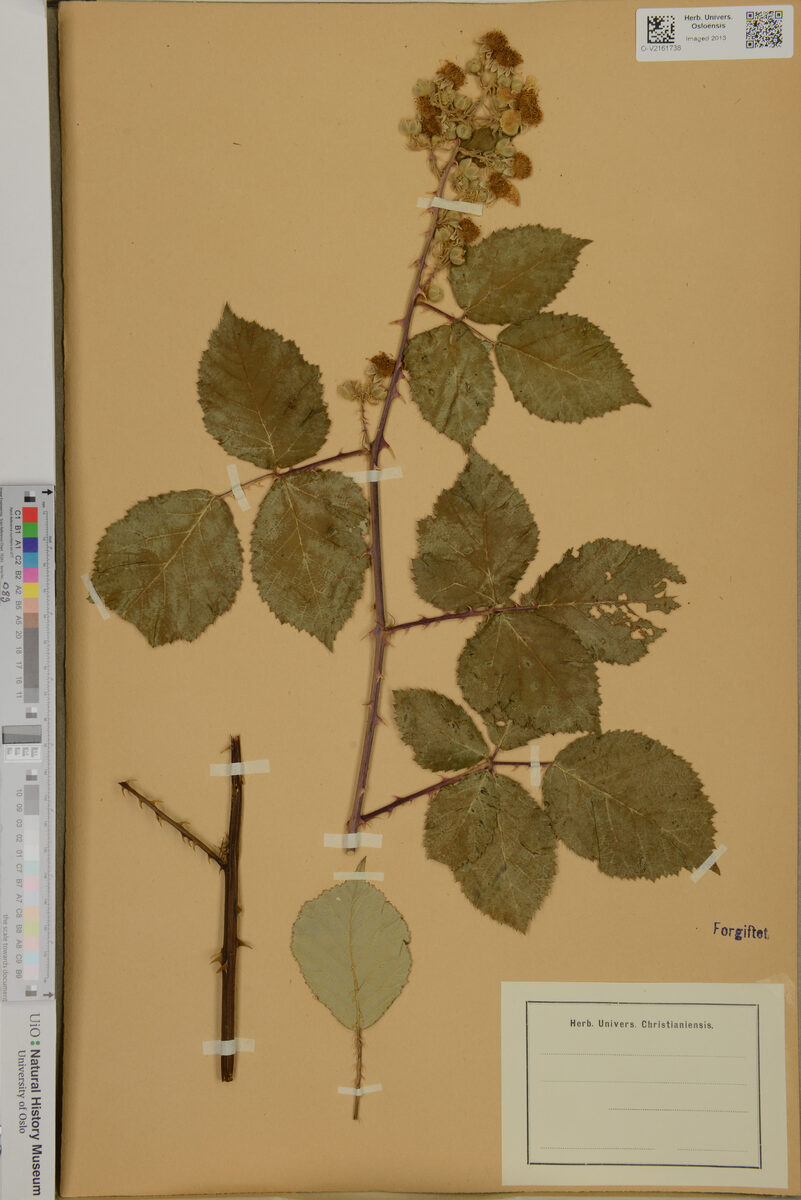
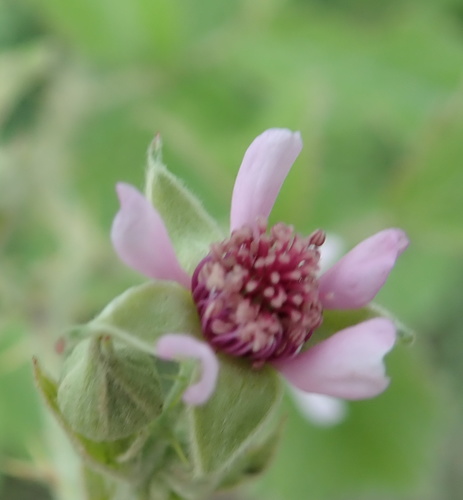
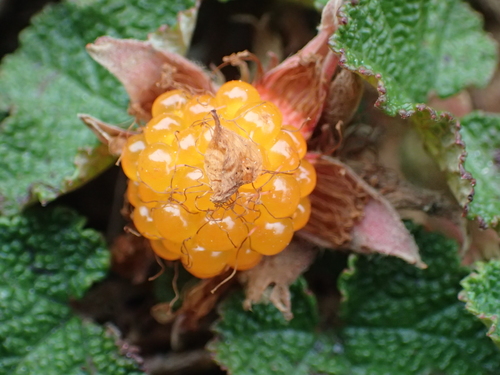
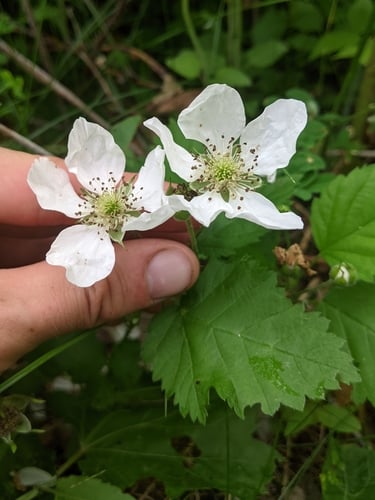
A scrambling shrub. It grows 2 m high. The young branches are slender and hairy. They have prickles that curve back. The leaves usually have 3 leaflets. They are 3-5 cm long and the end leaflet is the largest. The leaflets often have 3 lobes and blunt teeth. They have white hairs underneath. The flowers are pink. The flowers are in small clusters at the ends of branches and in the axils of leaves. The fruit are red or orange. They are about 1 cm across. The fruit are edible.
Edible Uses
The ripe fruit are eaten raw.
Traditional Uses
The ripe fruit are eaten.
This uses section is brief — help expand it
Distribution
It is a temperate plant. It grows between 1,500-2,400 m altitude in the Himalayas.
Where It Grows
Afghanistan, Asia, Himalayas, India, Nepal, NW India, Pakistan,
Dangerous Lookalikes
This plant can be confused with the following toxic species. Always verify identification carefully before consuming any wild plant.
Red Baneberry
Actaea rubra
Walter Siegmund (talk)
Rubus hoffmeisterianus
Rubus hoffmeisterianus
Wikimedia Commons - Unknown authorUnknown author
Red Baneberry: Short herbaceous plant (no thorns), berries on thick red stems, each berry has a single seed, compound sharply-toothed leaves.
Rubus hoffmeisterianus: Thorny woody canes (brambles), aggregate berry made of many drupelets, berries pull easily from receptacle.
Synonyms
Also Known As
Aunselu, Akhre, Darme
References (4)
- Khan, M. & Hussain, S., 2014, Diversity of wild edible plants and flowering phenology of district Poonch (J & K) in the northwest Himalaya. Indian Journal of Sci, Res. 9(1): 032-038
- C. S. Kunth, Sp. nov. hort. berol. 14. 1848 ("1847")
- Polunin, O., & Stainton, A., 2006, Flowers of the Himalaya, Oxford India Paperbacks. p 112
- www.Efloras.org Annotated checklist of the Flowering Plants of Nepal.