Pourouma mollis
Trecul
Soft pourouma
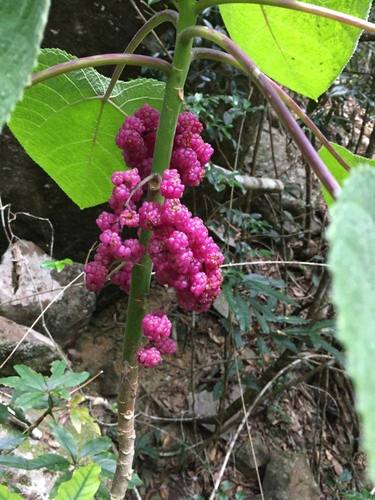
iNaturalist· cc-by-nc
(c) Jason Hafstad, some rights reserved (CC BY-NC), uploaded by Jason Hafstad
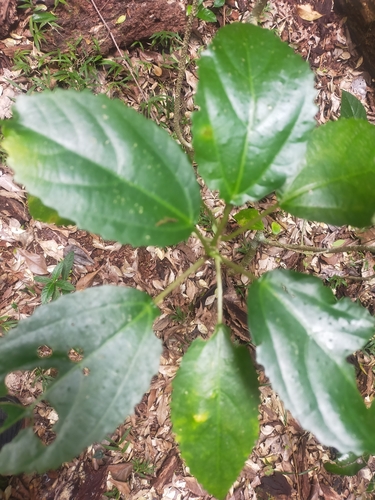
iNaturalist· cc-by-nc
(c) Jason Hafstad, some rights reserved (CC BY-NC), uploaded by Jason Hafstad
iNaturalist· cc-by-nc
(c) Geovane Siqueira, some rights reserved (CC BY-NC)
Description
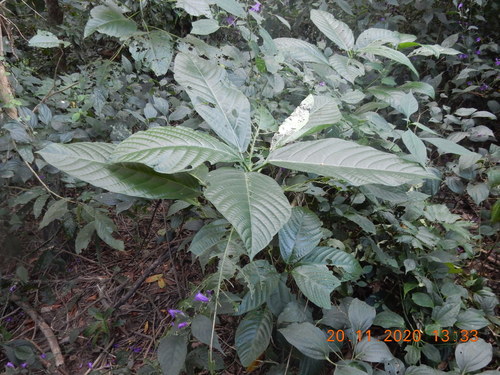
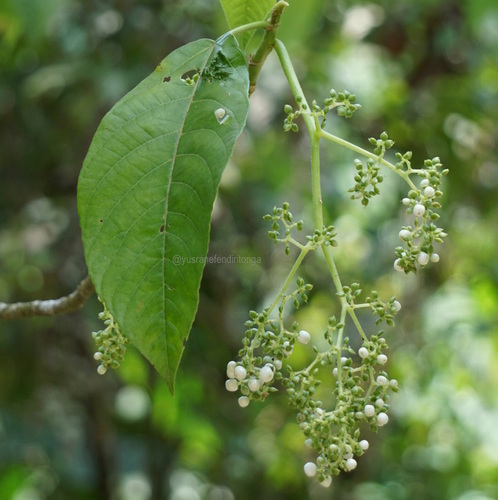
A tree. It grows 25 m tall. The leaves can be entire or have 3 lobes. The flowers are separatel male and female. The male flower groups are slightly branched. They are brown or yellow. There are 10-20 flowers in the group. The female flowers are clustered in 2 groups. The fruit is oval and 2 cm long by 1 cm wide. They are green but turn dark brown.
Edible Uses
The fruit is eaten and is considered a significant food source.
Distribution
A tropical plant. It grows in rainforest and savanna forest.
Where It Grows
Amazon, Bolivia, Brazil, Colombia, Ecuador, Guiana, Guianas, Guyana, Peru, South America, Suriname, Venezuela,
Other Information
It is a significant food.
Notes
Also put in the family Cecropiaceae and Moraceae.
Synonyms
Also Known As
Boesi-papaja, Granboesi-papaja, Moyoi, Tararanga, Tararanga-vermelha
References (7)
- Etkin, N. L. (Ed.), 1994, Eating on the Wild Side, Univ. of Arizona. p 140
- Grenand, P., 1992, The Use and Cultural Significance of the Secondary Forest Among the Wayapi Indians. ORSTOM. In Sustainable Harvesting and Marketing of Rainforest Products. Island Press. Washington. p 32
- Grandtner, M. M. & Chevrette, J., 2013, Dictionary of Trees, Volume 2: South America: Nomenclature, Taxonomy and Ecology. Academic Press p 521
- Kermath, B. M., et al, 2014, Food Plants in the Americas: A survey of the domesticated, cultivated and wild plants used for Human food in North, Central and South America and the Caribbean. On line draft. p 684
- Lopez-Diago, D. & Garcia, N., 2021, Wild edible fruits of Colombia. Biota ColomBiana 22 (2) p 53
Show all 7 references Hide references
- Roa, J. A. G. & Boada, D. S. G., 2018, Fundación para el Fortalecimiento de la Fruticultura y Plantas Alimenticias no Convencionales en Colombia.
- van Roosmalen, M.G.M., 1985, Fruits of the Guianan Flora. Utrecht Univ. & Wageningen Univ. p 312