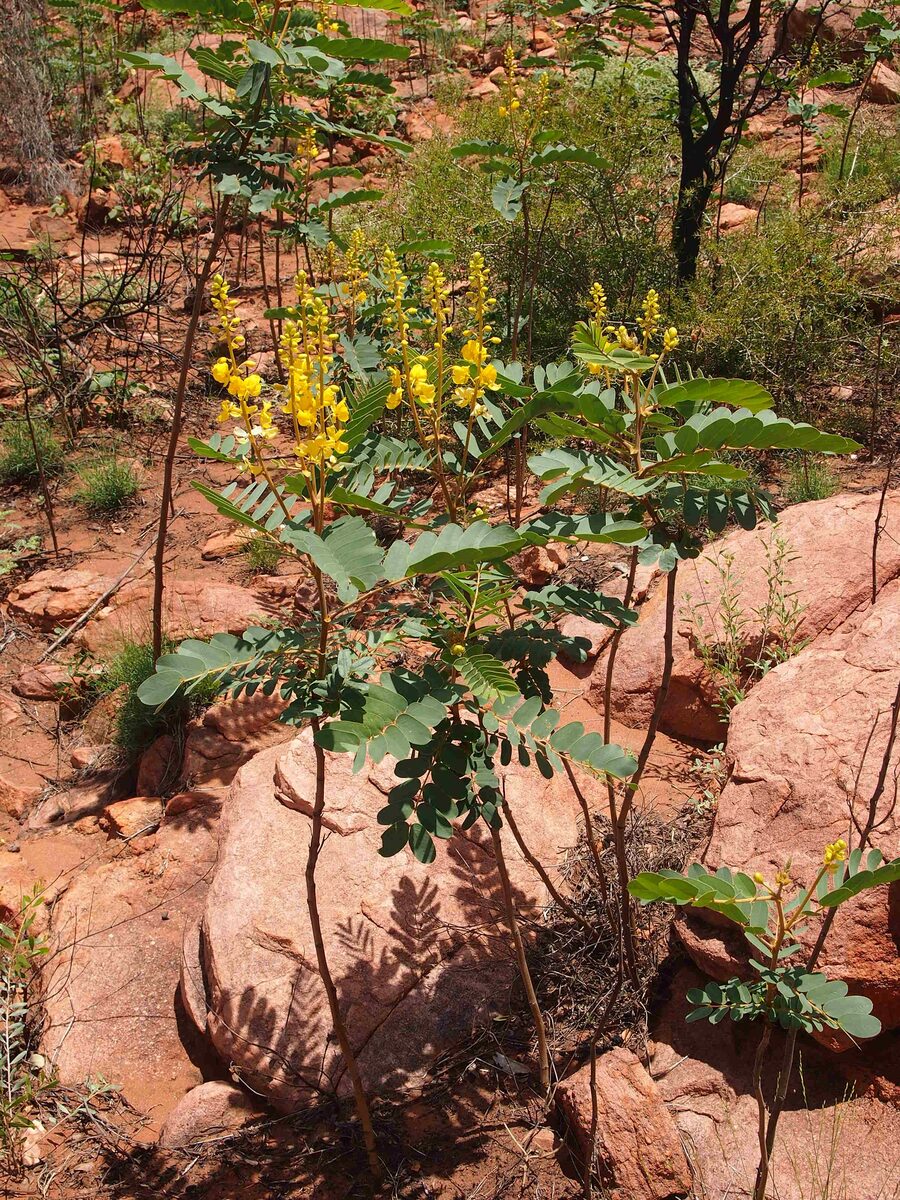
Dialium guianense
(Aubl.) Sandwith
Ironwood
iNaturalist· cc-by-nc
(c) Silvano LG, some rights reserved (CC BY-NC), uploaded by Silvano LG
iNaturalist· cc-by-nc
(c) accidentalshrike, some rights reserved (CC BY-NC), uploaded by accidentalshrike
iNaturalist· cc-by-nc-sa
(c) Reinaldo Aguilar, some rights reserved (CC BY-NC-SA)
Summary
Source: WikipediaDialium guianense is a species of tree in the flowering plant family Fabaceae. The species occurs through North America (South Eastern Mexico), Central America and South America, and was an important source of food and wood for the ancient Mayans.
Description
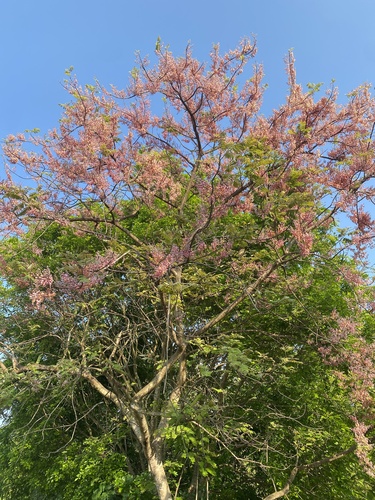
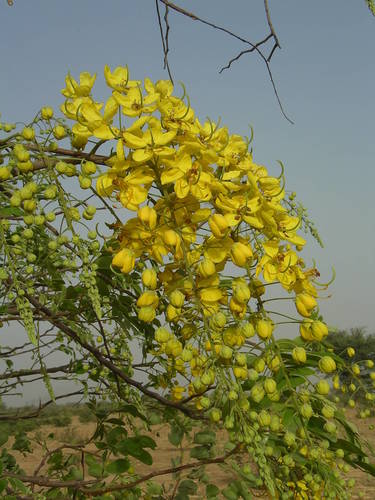
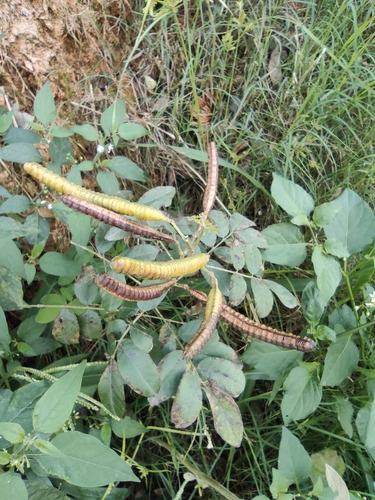
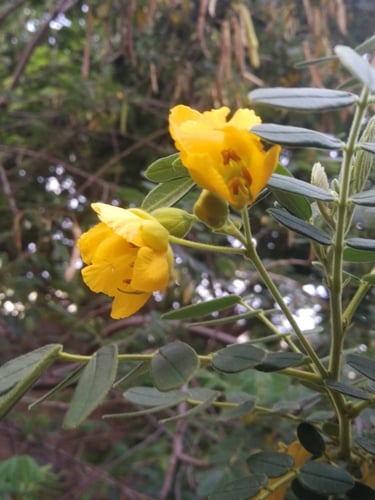
A large tree. It grows 15-30 m high. The crown is a pyramid shape. It has large prop roots. The trunk is upright and 50-90 cm across. The bark is thin and scaly. The leaves are compound. There are 5-7 leaflets. The flowers are small and green. They are in groups at the ends of branches. The fruit is a fleshy pod. It has only one hard seed. The white aril or layer around the seeds is edible.
Edible Uses
The wood from the trees were valued for the construction of railroads, fence posts, and house frames. In Tabasco and Chiapas its fruit is used for preparing beverages and also some kind of sweet paste with sugar It has also been used for flooring and bridges. In Mexico the tree valued as a source for food.
Traditional Uses
The aril or fleshy layer around the seed is eaten dried or soaked in water.
This uses section is brief — help expand it
Medicinal Uses
The bark is used for medicinal purposes.
Known Hazards
Sawdust from the wood may cause coughing and skin irritation to sawmill workers.
Distribution
A tropical plant. It grows in Brazil in the Amazon. It grows in rainforest and in mountain savanna forest on granite. In Central America it grows between 50-600 m altitude.
Where It Grows
Amazon, Belize, Bolivia, Brazil, Central America, Colombia, Costa Rica, Ecuador, El Salvador, Guatemala, Guiana, Guianas, Guyana, Honduras, Mexico, Nicaragua, North America, Panama, Peru, Puerto Rico, South America, Suriname, Venezuela, West Indies,
Cultivation
The plants are grown from seed. The ripe fruit are harvested and the seeds removed. Fresh seed are planted. They germinate in 15-20 days. Seedlings are transplanted into the field when 30-40 cm high.
Propagation
Seed - it has a hard seedcoat and may benefit from scarification before sowing to speed up germination. This can usually be done by pouring a small amount of nearly boiling water on the seeds (being careful not to cook them!) and then soaking them for 12 - 24 hours in warm water. By this time they should have imbibed moisture and swollen - if they have not, then carefully make a nick in the seedcoat (being careful not to damage the embryo) and soak for a further 12 hours before sowing. Sow the seed in a semi-shaded position in a nursery seedbed. A germination rate in excess of 50% can be expected, with scarified seeds sprouting within 15 - 20 days. When they are 5 - 6cm tall, pot the seedlings up into individual containers. They are ready to plant out when about 30 - 40cm tall.
Other Uses
The heartwood is uniform brown or reddish brown, deepening in colour upon exposure; it is not clearly demarcated from the thick, almost white or yellowish sapwood. The texture is rather fine; the grain somewhat interwoven; lustre medium to bright; odour and taste none or at least not distinctive. The wood is very hard; very heavy (it does not float in water); very tough; strong; durable and resistant to termites and probably also to marine borers due to its silica content. Because of its hardness, it is not easy to work with machine and hand tools; pre-boring is necessary for nails and screws; it finishes smoothly. It is used for fence posts, bridge timbers, railroad ties, house construction, cart wheels, piling, and other purposes. It is too hard and has not enough figure to make it suitable for furniture.
Other Information
Fruit are sold in local markets.
Notes
Also as Caesalpinaceae.
Synonyms
Also Known As
Alfenique, Azedinha, Beijo-de-coco, Beju-de-coco, Caya, Comenegro, Cuachil, Cururu, Dekademo, Deninho, Dikademo, Durinho, Guach, Guapaque, Guapiqui, Ipu, Jatahy-peba, Jataizinho, Jitai-jatai, Jitai-mirim, Jitai-preto, Jitai, Jutai-peba, Jutai-poca, Jutai-pororoca, Jutai, Jutairama, Kerandji, Kwataloka, Menemo, Oyo ya'so, Palo de sangre, Paqui, Parajuba, Pikin-loka, Quebra-machado, Roxinho, Tamarina, Tamarandillo, Tamarindo, Tamarindo silvestre
References (21)
- Bendezu, Y. F., 2018, Arboles nativos de lad Region Ucayali. Instituto Nacional de Innovacion Agraria. p 126
- Chizmar Fernandez, C., et al, 2009, Plantas comestibles de Centroamerica. Instituto de Biodiversidad, Costa Rica. p 179
- Etkin, N.L. (Ed.), 1994, Eating on the Wild Side, Univ. of Arizona.
- Flores, Y., 2018, Arboles nativos de la Region Ucayili. Estacion Experimental Agragia Pucallpa. Pucallpa Peru, 375 p. p 126
- Grandtner, M. M., 2008, World Dictionary of Trees. Wood and Forest Science Department. Laval University, Quebec, Qc Canada. (Internet database http://www.WDT.QC.ca)
Show all 21 references Hide references
- Grandtner, M. M. & Chevrette, J., 2013, Dictionary of Trees, Volume 2: South America: Nomenclature, Taxonomy and Ecology. Academic Press p 198
- Ibarra-Manriquez, G., et al, 1997, Useful Plants of the Los Tuxtlas Rain Forest (Veracruz, Mexico): Considerations of their Market Potential. Economic Botany, Vol. 51, No. 4, pp. 362-376
- Kermath, B. M., et al, 2014, Food Plants in the Americas: A survey of the domesticated, cultivated and wild plants used for Human food in North, Central and South America and the Caribbean. On line draft. p 304
- Lloydia 2(3):184. 1939
- Lopez-Diago, D. & Garcia, N., 2021, Wild edible fruits of Colombia. Biota ColomBiana 22 (2) p 37
- Lorenzi, H., 2002, Brazilian Trees. A Guide to the Identification and Cultivation of Brazilian Native Trees. Vol. 02 Nova Odessa, SP, Instituto Plantarum p 161
- Macbride. J. F., 1942, Flora of Peru. Leguminosae. Field Museum Natural History. Chicago. p 143
- Piedra-Malagón, E. M., et al, 2022, Edible native plants of the Gulf of Mexico Province. Biodiversity Data Journal 10: e80565 p 21
- Reis, S. V. and Lipp, F. L., 1982, New Plant Sources for Drugs and Foods from the New York Botanical Garden herbarium. Harvard. p 125
- Roa, J. A. G. & Boada, D. S. G., 2018, Fundación para el Fortalecimiento de la Fruticultura y Plantas Alimenticias no Convencionales en Colombia.
- Segura, S., et al, 2018, The edible fruit species in Mexico. Genet Resour Crop Evol (2018) 65:1767–1793
- Torre, de la, L., et al, 2008, Enciclopedia de las Plantas Útiles del Ecuador. Herbario QCA. Pontificia Universidad Católica del Ecuador. p 336
- van Roosmalen, M.G.M., 1985, Fruits of the Guianan Flora. Utrecht Univ. & Wageningen Univ. p 184
- Vasquez, R. and Gentry, A. H., 1989, Use and Misuse of Forest-harvested Fruits in the Iquitos Area. Conservation Biology 3(4): 350f
- Wiersema, J. H. & Leon, B., 2013, World Economic Plants. A Standard Reference CRC Press. 2nd Ed. p 241
- World Checklist of Useful Plant Species 2020. Royal Botanic Gardens, Kew