Stetsonia coryne
(Salm-Dyck) Britton & Rose
Cardon, Toothpick cactus, Tuna, Branch candlestick cactus
iNaturalist· cc-by-nc
(c) jlcartes, some rights reserved (CC BY-NC), uploaded by jlcartes
iNaturalist· cc-by-nc
(c) Martin Lowry, some rights reserved (CC BY-NC), uploaded by Martin Lowry
iNaturalist· cc-by-nc
(c) Martin Lowry, some rights reserved (CC BY-NC), uploaded by Martin Lowry
Summary
Source: WikipediaStetsonia coryne, the toothpick cactus, is the sole species in the cactus genus Stetsonia. Stetsonia coryne is native to arid regions of South America, where it grows to a height of 15 to 25 ft (4.6 to 7.6 m) tall. It contains mescaline and other alkaloids.
Description
A cactus. It is a large plant like a tree. It grows 5-8 m tall. It has thick trunks with many erect or arching branches. The stems are blue-green and ribbed. They are 9-10 cm across. There are 8-9 ribs. The spines are yellow and turn black. They are stiff, and straight. There is one central spine 5 cm long. There are 7-9 spines around it that are 3 cm long. The flowers open at night. They are funnel shaped and white. They are 15 cm long. The fruit are oval and green to red. They are covered with scales.
Edible Uses
The rind has a tangy lemon flavor and is edible raw or cooked. The fruit are eaten as a vegetable or used as a seasoning for fish.
Traditional Uses
The rind has a tangy lemon flavour and is edible. The fruit can be eaten cooked. They are eaten as a vegetable or as a seasoning for fish. The ripe fruit are eaten raw.
Medicinal Uses
The plant is used medicinally. No more information The plant contains the alkaloid mescaline, the same active compound that is found in a number of hallucinogenic cactus species. The concentration of mescaline is unknown, and we have seen no records of this species being used as a hallucinogenic.
Distribution
A subtropical plant. It grows in high arid regions in Argentina. In Argentina it grows between 200-1,000 m above sea level.
Where It Grows
Argentina, Bolivia, Paraguay, Slovenia, South America*,
Cultivation
Stetsonia coryne is somewhat cold tolerant. In its native, hot, dry climate it is known to survive occasional lows down to -8°c. Requires a sunny position The flowers open at night, often remaining open the following day.
Other Uses
The thorns are used as needles. The trunks are used to make furniture and crafts. The plant is grown as a living fence in order to mark out boundaries and act as a barrier against herbivorous animals.
Synonyms
Also Known As
Caracore, Cardon, Istak, Pang, Taringi
References (13)
- Anderson, E.F., 2001, The Cactus Family, Timber Press. p 58, 650
- Arenas, P. and Scarpa, G. F., 2006, Edible wild plants of the Chorote Indians, Gran Chaco, Argentina. Botanical Journal of the Linnean Society. Vol. 153 (1): pp 73-85
- Fouqué, A. 1972. Espèces fruitières d'Amérique tropicale. Institut français de recherches fruitierès outre-mer
- Grandtner, M. M. & Chevrette, J., 2013, Dictionary of Trees, Volume 2: South America: Nomenclature, Taxonomy and Ecology. Academic Press p 630
- http://www.botanic-gardens-ljubljana.com/en/plants
Show all 13 references Hide references
- Kermath, B. M., et al, 2014, Food Plants in the Americas: A survey of the domesticated, cultivated and wild plants used for Human food in North, Central and South America and the Caribbean. On line draft. p 838
- Montani, M. C. & Scarpa, G. F., 2016, Recursos vegetales y prácticas alimentarias entre indígenas tapiete del noreste de la provincia de Salta, Argentina. Darwiniana, nueva serie vol.4 no.1 San Isidro jul. 2016
- Palmieri, V. S., et al, 2018, Aproximaciones etnobotánicas de las especies y prácticas de frutos nativos comestibles de la Actualidad. Aportes para la interpretación del pasado prehispánico de cerro colorado (Córdoba, Argentina). Bol. Soc. Argent. Bot. 53 (1): 115-133
- Palmieri, V. S., et al, 2022, Wild edible plants of the Central Mountains in Argentina. Comparing subregions to understand the complexity of local botanical knowledge. Rodriguésia 73: e01092021. 2022
- Plant Ecology - Reviews of Research. 1955, Arid Zone Research VI. UNESCO p 97 (As Cereus coryne)
- Polini, G., et al, Useful and edible plants of Paraguay Region of Chaco. p 48
- Scarpa, G. F., 2009, Wild food plants used by the indigenous peoples of South American Gran Chaco: A general synopsis and intercultural comparison. Journal of Applied Botany and Food Quality 83:90-101
- www.desert-tropicals.com
More from Cactaceae
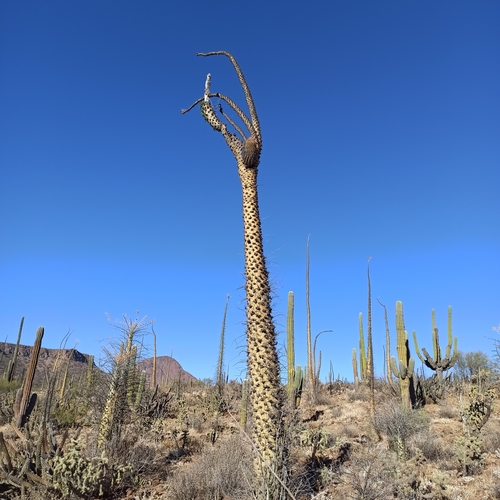
Ferocactus peninsulae
Common narrel cactus
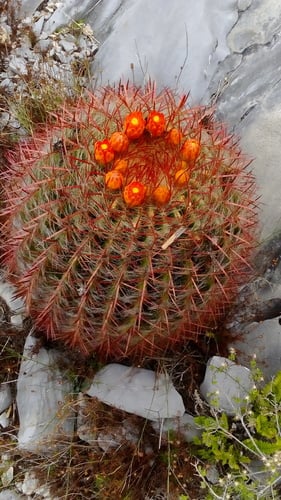
Ferocactus pilosus
Mexican lime cactus
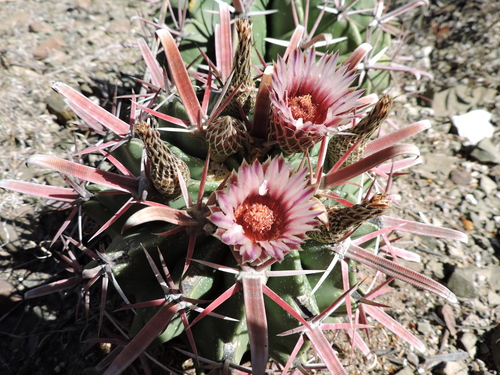
Ferocactus recurvus
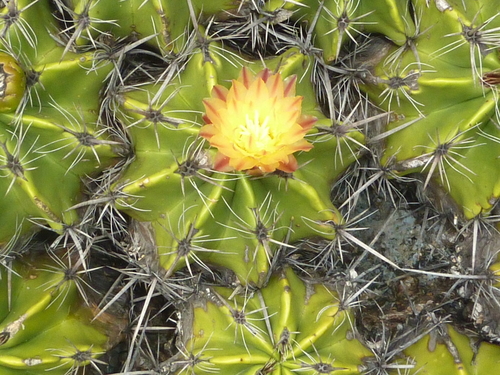
Ferocactus robustus
Clump barrel
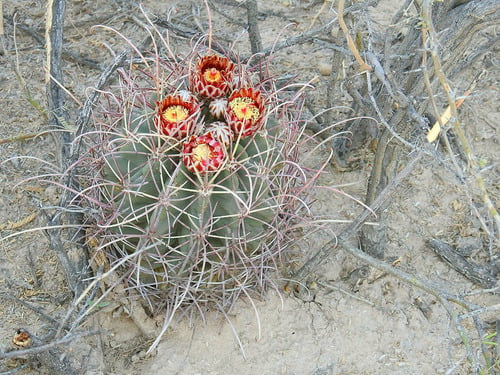
Ferocactus uncinatus
Turk's head cactus, Catclaw cactus
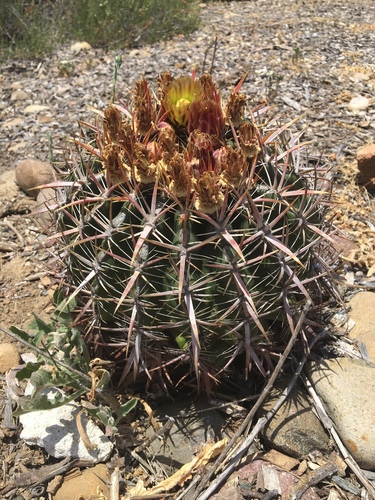
Ferocactus viridescens
Coast barrel cactus, Keg cactus, Green-stemmed viznaga, San Diego barrel cactus, Sisal