Streblus anthropophagorum
(Seem.) Corner
wikimedia· cc-by
Wikimedia Commons - Art Whistler
Description
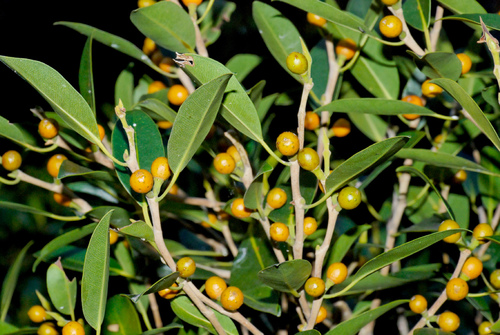
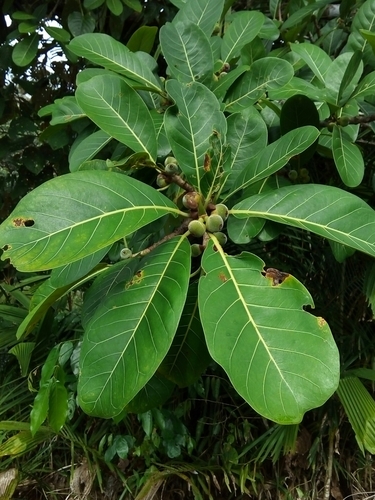
A small tree. It grows 10 m high. It has milky sap. There is a cap around the tip of the stems. The leaves are simple and alternate. They are in 2 rows. The leaf blade is narrowly oval and 7-24 cm long. The leaves and stems do not have hairs. The male and female flowers are separate on separate trees. The flowers occur as many together in spikes. These occur singly in the axils of leaves. The female spikes can be 11 cm long and the male spikes 4-20 cm long. The fruit is red and oval. They are 8-12 mm long. They contain one large seed.
Edible Uses
The leaves are cooked and eaten, and the fruit is also edible.
Traditional Uses
The leaves are cooked and eaten.
This uses section is brief — help expand it
Distribution
A tropical plant. It grows from sea level to 1600 m altitude.
Where It Grows
American Samoa, Cook Islands, Fiji, Marquesas, Niue, Pacific, Samoa, Tonga,
Cultivation
A dioecious species, both male and female forms need to be grown if fruit and seed are required.
Other Uses
The plant has an abundant white or watery latex.
Notes
There are 23 Streblus species. They occur in Asia and the Pacific.
Synonyms
Also Known As
Ndreiviri, Tolenivia, Rewai, Malavaci, Malawaci, Matimati
References (3)
- Parham, H. B. R, 1940, Supplement to the Journal of the Polynesian Society No. 16. Fiji Plants: Their Name and Uses.
- Smith, A.C., 1981, Flora Vitiensis Nova, Lawaii, Kuai, Hawaii, Volume 2 p 197
- Whistler, W.A., 2004, Rainforest Trees of Samoa. Isle Botanica Honolulu, Hawaii. p 110