Phenakospermum guyannense
(A. Rich.) Endl. ex Miq.
Yebao, Paloeloe
iNaturalist· cc-by-nc
(c) Nicola Flanagan, some rights reserved (CC BY-NC), uploaded by Nicola Flanagan
iNaturalist· cc-by-nc-sa
(c) Rich Hoyer, some rights reserved (CC BY-NC-SA), uploaded by Rich Hoyer
iNaturalist· cc-by-nc-sa
(c) Rich Hoyer, some rights reserved (CC BY-NC-SA), uploaded by Rich Hoyer
Description
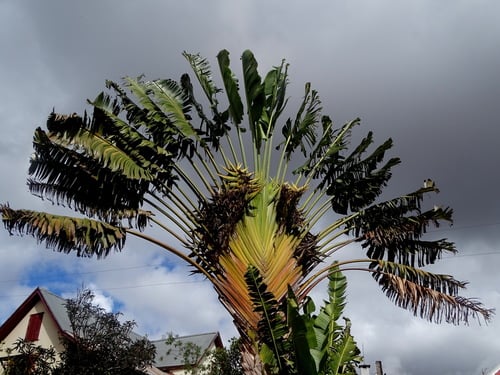
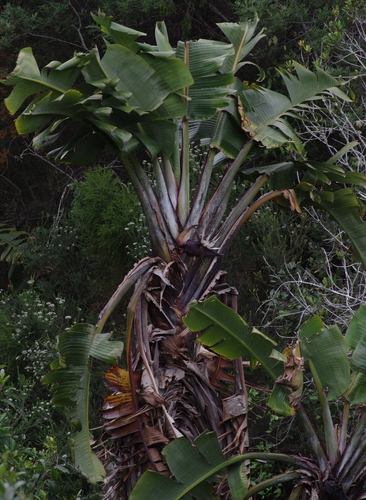
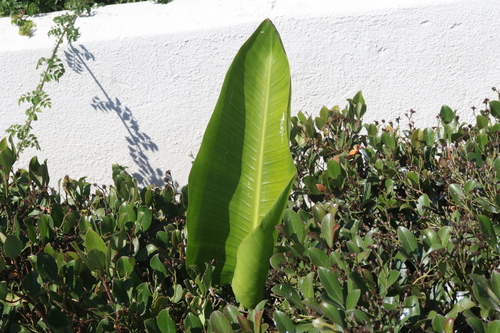
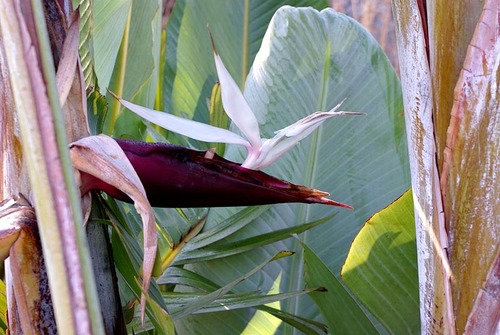
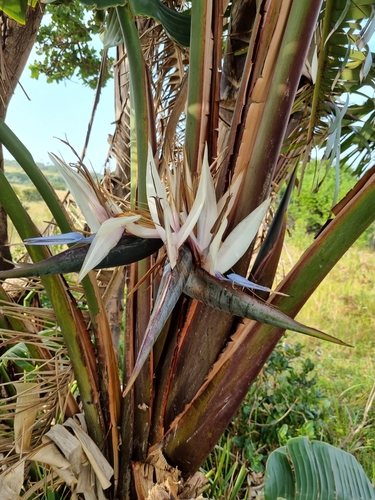
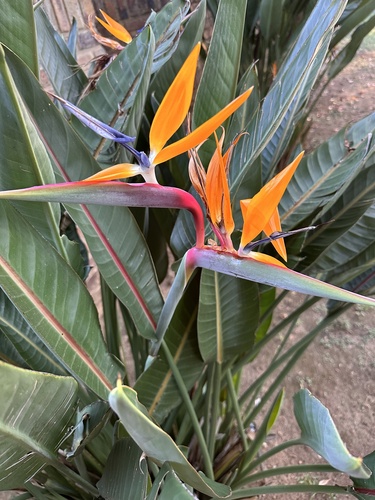
A large herb. The trunk is not woody and is 5-12 m tall. It is unbranched. The leaves are simple. The flowering arrangement is on the end of the trunk. It is 80-120 cm long. The flowers along each side of the stalk have 40 cm long bracts that are greenish-yellow but turn brown. These become woody. The fruit is a woody capsule. It is 11-13 cm long by 5-7 cm across. There are many small seeds in each fruit. They are 1 cm long by 0.5 cm wide. They are black and shiny. The seeds are edible. They have a bright orange or red layer around the seeds. The plant dies after fruit are set.
Edible Uses
The bright orange or red aril surrounding the seeds is eaten.
Traditional Uses
The red aril of layer around the seeds is eaten.
This uses section is brief — help expand it
Distribution
A tropical plant. It grows on coastal plains and along rivers and in marshy areas.
Where It Grows
Amazon, Bolivia, Brazil, Colombia, Ecuador, French Guiana, Guianas, Guyana, Peru, SE Asia, Singapore, South America, Suriname, Venezuela,
Other Information
It is cultivated.
Notes
Also put in the family Musaceae.
Synonyms
Also Known As
Big palulu, Red traveler's palm, Turriago
References (8)
- Bot. Zeitung (Berlin) 3:345. 1845 "guianense"
- Etkin, N.L. (Ed.), 1994, Eating on the Wild Side, Univ. of Arizona. p 122, 123, 140
- Fouqué, A., 1972, Espèces fruitières d'Amérique tropicale. Institut français de recherches fruitierès outre-mer
- Heywood, V.H., Brummitt, R.K., Culham, A., and Seberg, O., 2007, Flowering Plant Families of the World. Royal Botanical Gardens, Kew. p 402 (Family)
- Kew Plants of the World Online
Show all 8 references Hide references
- Lopez-Diago, D. & Garcia, N., 2021, Wild edible fruits of Colombia. Biota ColomBiana 22 (2) p 52
- Roa, J. A. G. & Boada, D. S. G., 2018, Fundación para el Fortalecimiento de la Fruticultura y Plantas Alimenticias no Convencionales en Colombia.
- van Roosmalen, M.G.M., 1985, Fruits of the Guianan Flora. Utrecht Univ. & Wageningen Univ. p 314