Strychnos pseudoquina
A. St. Hil.
Copalchi, Quina
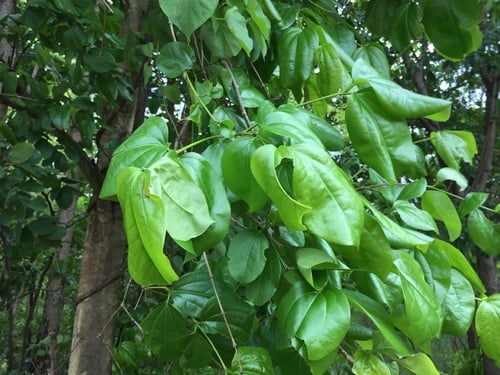
iNaturalist· cc-by-nc
(c) Guilherme A. Fischer, some rights reserved (CC BY-NC), uploaded by Guilherme A. Fischer
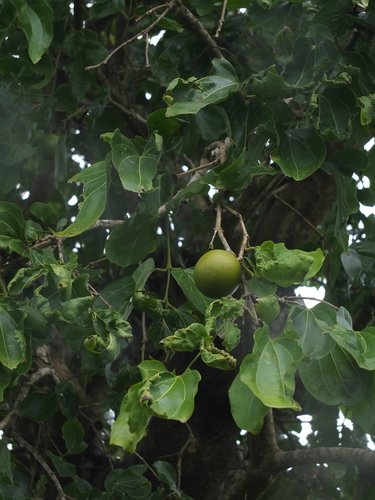
iNaturalist· cc-by-nc
(c) Guilherme A. Fischer, some rights reserved (CC BY-NC), uploaded by Guilherme A. Fischer
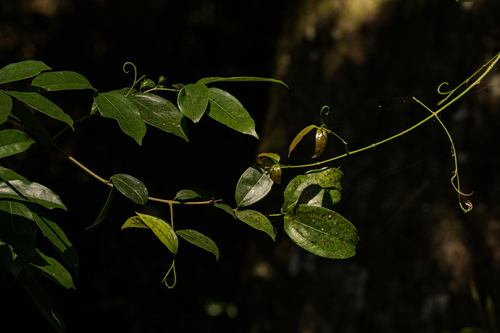
iNaturalist· cc-by-nc
(c) Guilherme A. Fischer, some rights reserved (CC BY-NC), uploaded by Guilherme A. Fischer
Description
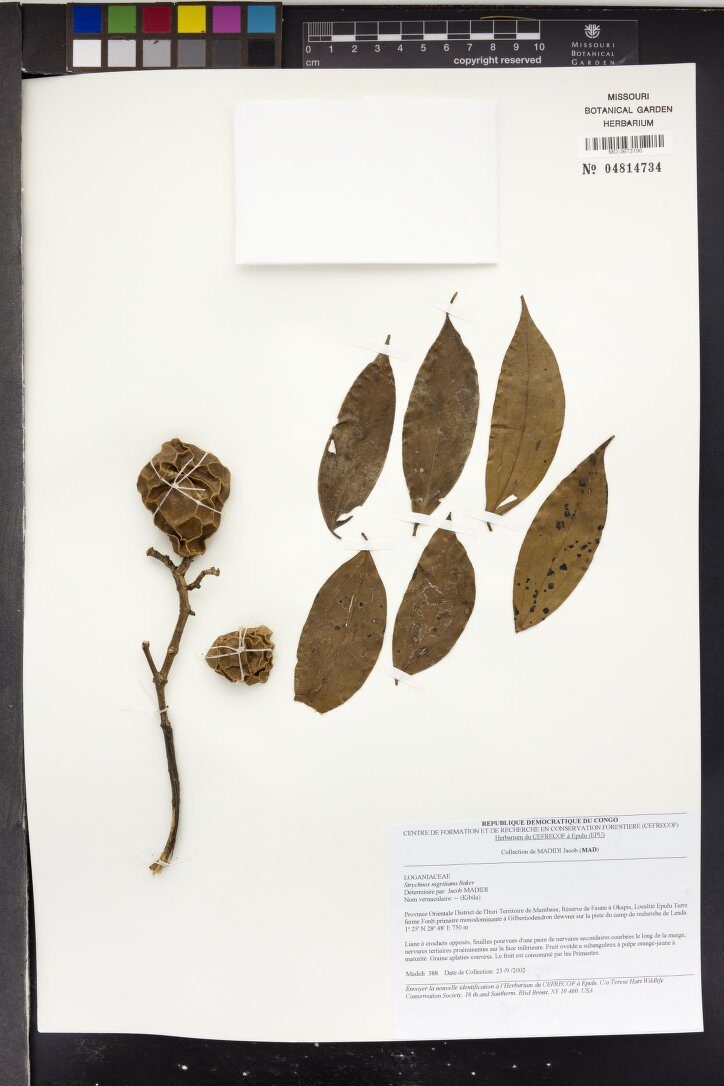
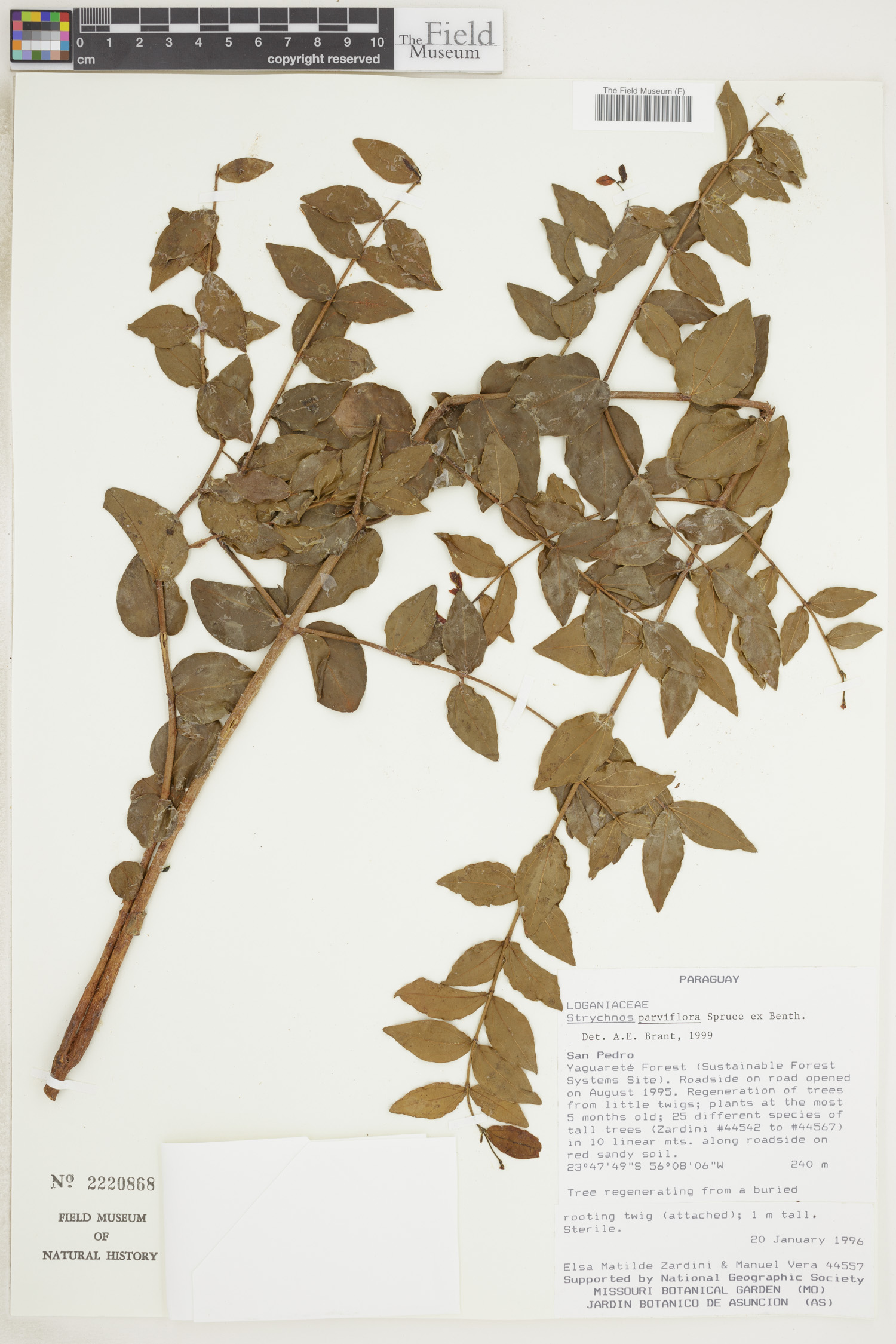
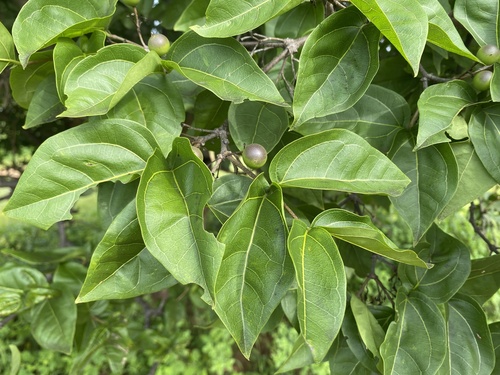
A small tree. It grows 4-9 m high. The crown is elongate and dense. The trunk is twisted and 20-35 cm across. The bark is thick and fractured. The leaves are opposite and shiny. They have rusty hairs underneath. They are 5-12 cm long on stalks 2-12 mm long. The flowers are in groups in the axils of leaves. The groups are 2-5 cm long. The flowers are white and they have a scent. The fruit is a round berry with 1-4 seeds. The flesh is sweet.
Edible Uses
The sweet fruit flesh is edible and contains 1-4 seeds.
Medicinal Uses
All parts of the plant, except the fruit, are extremely bitter and rather astringent. Considered by some to be the best febrifuge growing in Brazil, the bark is widely used as a treatment for malaria and fevers in general. The bark is bitter, depurative, febrifuge and tonic. It is used in the treatment of splenomegaly, hepatomegaly, intermittent fever, malaria and gastric problems. It is also used to rid the body of intestinal worms, including Ascaris (roundworm), Oxyuris (threadworm) and Taenia (tapeworm). The plant contains alkaloids and a number of methoxylated flavonoids such as isorhametine, strychnobiflavone, quinol, diaboline and 11-methoxydiabolin.
Known Hazards
Various parts of Strychnos plants, especially the seeds and bark, contain toxic alkaloids such as strychnine and brucine. The fleshy pulp of the ripe fruits, however, is often edible.
Distribution
A tropical plant.
Where It Grows
Bolivia, Brazil, Paraguay, South America,
Cultivation
Plants are grown from seed. The ripe fruit are harvested and the seeds removed from the pulp. The fresh seeds are harvested and they germinate in 3-4 weeks.
Propagation
Seed - best sown as soon as it is ripe in a sunny position in a nursery seedbed or in individual containers. Germination rates are normally low, with the seed sprouting within 3 - 4 weeks.
Other Uses
The wood is moderately heavy, somewhat durable, of medium texture, medium resistance, hard to cut. The wood is usually only found in small dimensions, but is sometimes used for making light furniture, for lathe work, window frames and ornamental objects. The wood is used for fuel and to make charcoal.
Production
Plants grow slowly.
Synonyms
Also Known As
False-quina, Guararoba, Limaozinho, Quineira, Quina-do-cerrado, Quina-do-campo, Quina-grosso, False-quina, Quina-branca, Quina-cruzeiro, Quina-de-chapada, Quina-de-periquito, Quina-de-mato-grosso
References (5)
- Bortolotto, I. M., et al, 2018, Lista preliminar das plantas alimenticias nativas de Mato Grosso do Sul, Brasil. Iheringia, Serie Botanica, Porto Alegre, 73 (supl.):101-116
- Grandtner, M. M. & Chevrette, J., 2013, Dictionary of Trees, Volume 2: South America: Nomenclature, Taxonomy and Ecology. Academic Press p 631
- Hedrick, U.P., 1919, (Ed.), Sturtevant's edible plants of the world. p 637
- Lorenzi, H., 2002, Brazilian Trees. A Guide to the Identification and Cultivation of Brazilian Native Trees. Vol. 02 Nova Odessa, SP, Instituto Plantarum p 237
- www.colecionandofrutas.org