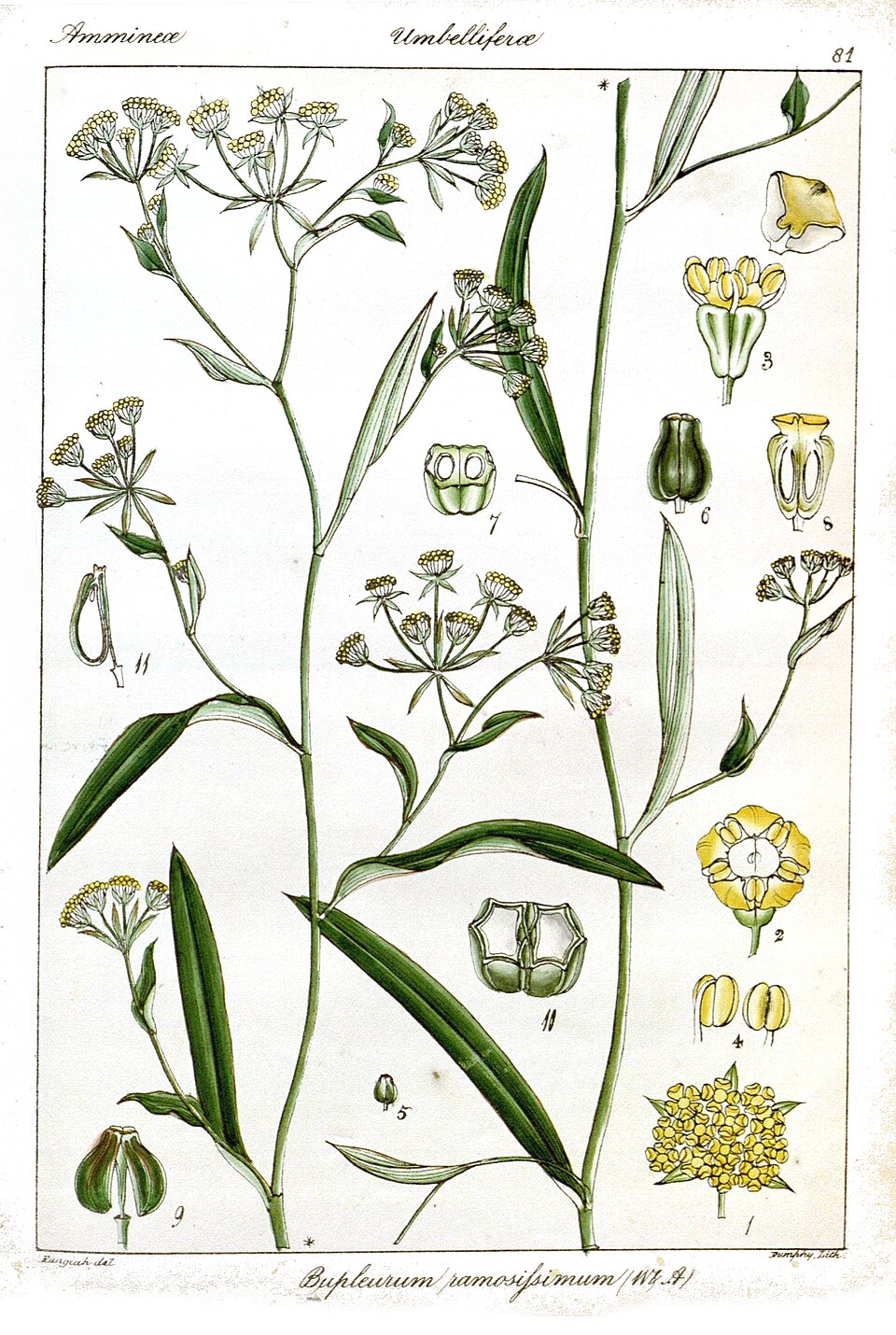
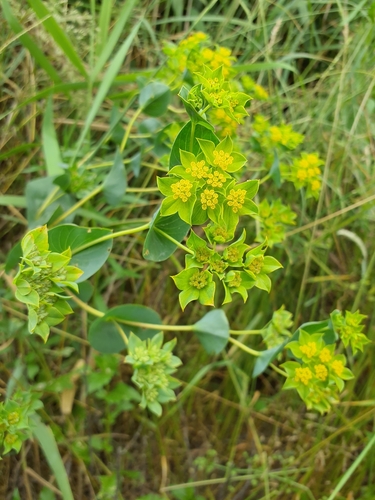
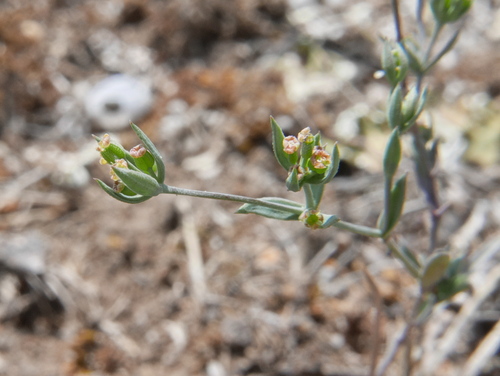
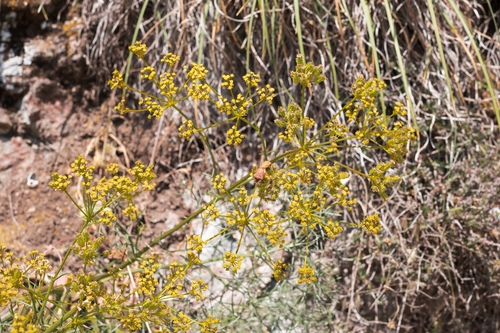
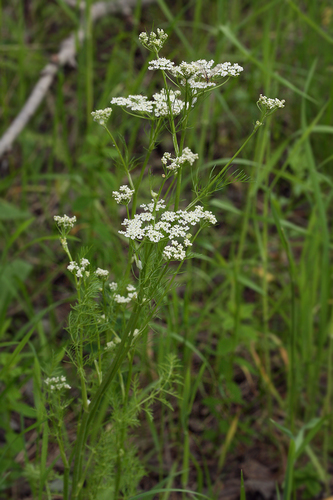
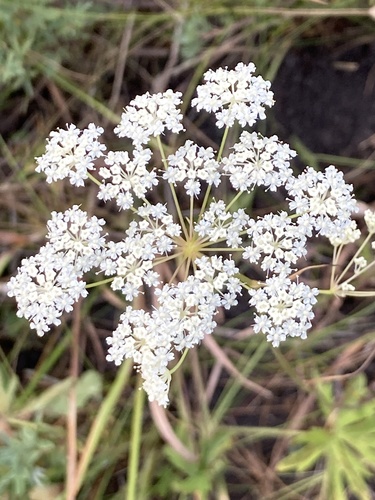
Scandix pecten-veneris
Linn.
Shepherd's needle
iNaturalist· cc-by-nc
(c) Сергей, some rights reserved (CC BY-NC), uploaded by Сергей
iNaturalist· cc-by-nc
(c) faluke, some rights reserved (CC BY-NC)
iNaturalist· cc0
no rights reserved, uploaded by 葉子
Summary
Source: WikipediaScandix pecten-veneris (shepherd's-needle, Venus' comb, Stork's needle) is a species of edible plant belonging to the family Apiaceae. It is native to Eurasia, but is known to occur elsewhere. It is named for its long fruit, which has a thickened body up to 1.5 centimeters long and a beak which can measure up to 7 centimeters long and is lined with comblike bristles.
Description
A short annual herb. The leaves are divided 2-3 times with leaflets along the stalks. The lobes are narrow and have teeth. The flowers are in white umbels opposite the leaves. They have 1-3 rays. Some petals of the outer flowers are usually larger. They can be 2-3 mm long. The fruit is 20-80 mm long and erect with a long beak.
Edible Uses
Young stem tops are edible raw or cooked and are much esteemed, used in salads or as a potherb.
Traditional Uses
The leaves are eaten as a green vegetable. They are also used in vegetable pies. They are used as a flavouring.
This uses section is brief — help expand it
Medicinal Uses
None known
Distribution
It is a temperate plant. It occurs in fallow and waste land. It can grow in arid places. Tasmania Herbarium.
Where It Grows
Afghanistan, Africa, Algeria, Argentina, Australia, Canada, Canary Islands, Central Asia, Chile, Crete, Cyprus, Egypt, Europe, France, Greece, India, Iran, Iraq, Israel, Italy, Jordan, Korea, Lebanon, Libya, Luxembourg, Mediterranean, Middle East, Morocco, North Africa, North America, Pakistan, Portugal, Saudi Arabia, South America, Spain, Syria, Tajikistan, Tasmania, Tunisia, Turkey, Türkiye, Turkmenistan, Uzbekistan,
Cultivation
See the plants native habitat for ideas on its cultivation needs.
Propagation
Sow seed in situ in spring or late summer.
Other Uses
None known
Nutrition
| Part | Moisture | kJ | kcal | Protein | Vit A | Vit C | Iron | Zinc |
|---|---|---|---|---|---|---|---|---|
| Leaves | 81.3 | — | 50 | 3.8 | — | — | — | — |
Also Known As
Ahartzikas, Alfileres, Bhuss, Darzila, Euzanak, Giyadarzila, Hatzikas, Hefraf, Hifraf, Indu saag, Kiskis, Mochita, Scandix, Skanthrix, Sujinok, Surik, Venus comb, Wild chervil
References (24)
- Bhatia, H., et al, 2018, Traditionally used wild edible plants of district Udhampur, J&K, India. Journal of Ethnobiology and Ethnomedicine (2018) 14:73
- Blamey, M and Grey-Wilson, C., 2005, Wild flowers of the Mediterranean. A & C Black London. p 156
- Blanco-Salas, J., et al, 2019, Wild Plants Potentially Used in Human Food in the Protected Area “Sierra Grande de Hornachos” of Extremadura (Spain). Sustainability 2019, 11, 456
- Demir, I. & Ayaz, N., 2022, Wild edible plants contributing to the traditional foods of Mardin (Turkey) Province. Indian Journal of Traditional Knowledge Vol 21(3), July 2022, pp 569-582
- Dogan, A., et al, 2014, A review of edible plants on the Turkish Apiaceae species. J. Fac. Pharm. Istanbul, 44(2) pp 251-262
Show all 24 references Hide references
- Dogan, Y., 2012, Traditionally used wild edible greens in the Aegean Region of Turkey. Acta Societatis Botanicorum Poloniae 81(4): 329-342
- Dretakis, M. et al, 2012, Flora and Fauna Biodiversity in an ancient olive grove in Crete (Greece) in Calabrese G. (Ed.) Study on Biodiversity in Century-Old Olive Groves. CIHEAM - Mediterranean Agronomic Institute of Bari. p 94
- Ertug, F., 2004, Wild Edible Plants of the Bodrum Area. (Mugla, Turkey). Turk. J. Bot. 28 (2004): 161-174
- Ertug, F, Yenen Bitkiler. Resimli Türkiye Florası -I- Flora of Turkey - Ethnobotany supplement
- Galalaey, A. M. K., et al, 2021, Ethnobotanical study of some wild edible plants in Hujran Bason, Kurdistan Region of Iraq. ZANCO Journal of Pure and Applied Sciences. Salahaddin University-Erbil p 25
- Haj, F., et al, 2012, Species Diversity and Ethno Botanical Classes of the Flora of Allai Valley District Battagram Pakistan. International Journal of Plant Research 2012, 2(4): 111-123
- Hedrick, U.P., 1919, (Ed.), Sturtevant's edible plants of the world. p 597
- Kaya, O. M., et al, 2020, An ethnobotanical research in Sanhurfa central district and attached Villages (Turkey). Indian Journal of Traditional Knowledge. Vol. 19(1) pp 7-23
- Kermath, B. M., et al, 2014, Food Plants in the Americas: A survey of the domesticated, cultivated and wild plants used for Human food in North, Central and South America and the Caribbean. On line draft. p 788
- Liopa-Tsakalidi, A., 2014, Scandix pecten-veneris L: A wild green leafy vegetable. Australian Journal of Crop Science. 8(1): 103-108
- Psaroudaki, A., et al, 2012, Ten Indigenous Edible Plants: Contemporary Use in Eastern Crete, Greece. Culture, Agriculture, Food and Environment Vol. 34, Issue 2 pp. 172–177
- Psaroudaki, A., et al, 2015, Genetic structure and population diversity of eleven edible herbs of Eastern Crete. Journal of Biological Research-Thessaloniki, 22:7
- Royal Botanic Gardens, Kew (1999). Survey of Economic Plants for Arid and Semi-Arid Lands (SEPASAL) database. Published on the Internet; http://www.rbgkew.org.uk/ceb/sepasal/internet [Accessed 13th June 2011]
- Skoula, M & Sarpaki, A., 2005, Traditional knowledge on the uses of wild plants in Crete, Greece.
- Soukand, R., et al, 2021, The trauma of no-choice: Wild food ethnobotany in Yaghnobi and Tajik villages, Varzob Valley, Tajikistan. Genetic Resources and Crop Evolution · December 2021
- Sp. pl. 1:256. 1753 "pecten"
- Tasmanian Herbarium Vascular Plants list p 3
- Tardio, J., et al, Ethnobotanical review of wild edible plants in Spain. Botanical J. Linnean Soc. 152 (2006), 27-71
- Tbatou, M, et al, 2016, Wild Edible Plants traditionally used in the countryside of El Jadida, Coastal Area in the Center of Morocco. Life Sciences Leaflets 75:28-48