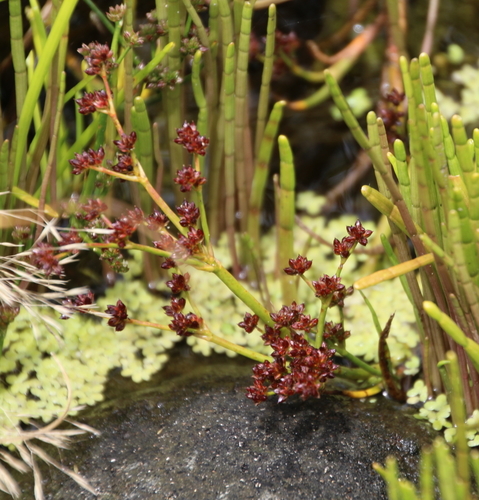
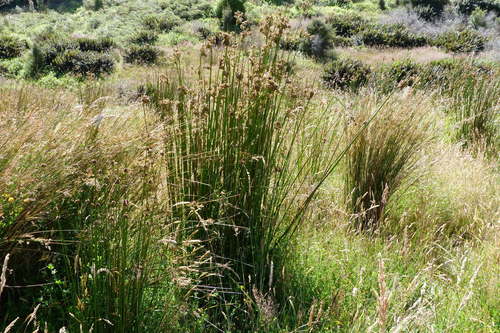
Prionium serratum
(L.f.) Drege
Palmite rush
iNaturalist· cc-by-sa
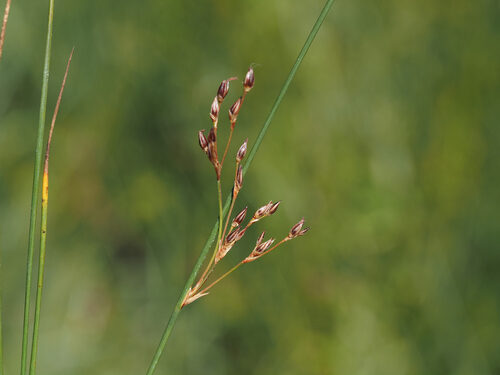
(c) Serban Proches, some rights reserved (CC BY-SA)
iNaturalist· cc-by-nc
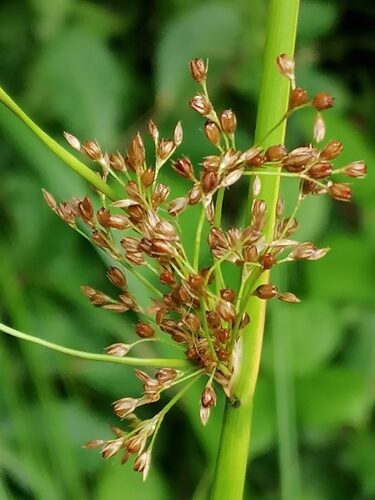
(c) dimarais, some rights reserved (CC BY-NC), uploaded by dimarais
iNaturalist· cc-by
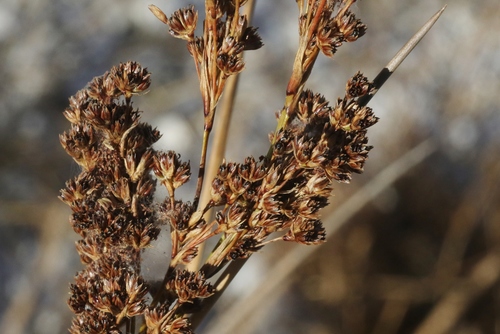
(c) linkie, some rights reserved (CC BY), uploaded by linkie
Description
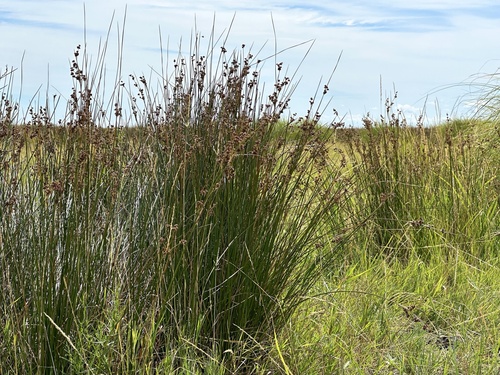
A plant that grows in water. It forms dense stands 1.8 m tall. The leaves are narrow and taper to the tip. There are teeth along the edge. The flowers are in a branched group at the top of the plant. The flowers are 2 mm long. The fruit is a capsule. There are 1-2 seeds in each chamber.
Edible Uses
The inner parts of young stems, young flowers, shoots, buds, rhizomes, roots, and stems are eaten.
Traditional Uses
The inner parts of the young stems is eaten. Young flowers are eaten.
This uses section is brief — help expand it
Distribution
It is a subtropical plant. It grows in the beds of rivers.
Where It Grows
Africa, Botswana, Lesotho, South Africa*, Southern Africa,
Synonyms
Also Known As
Palmiet, Sela, Tsetla
References (6)
- De Vynk, J. C., et al, 2016, Indigenous edible plant use by contemporary Khoe-San descendants of South Africa's Cape South Coast. South African Journal of Botany. 102 (2016) 60-69
- Fox, F. W. & Young, M. E. N., 1982, Food from the Veld. Delta Books. p 243
- Hedrick, U.P., 1919, (Ed.), Sturtevant's edible plants of the world. p 517 (As Prionum palmita)
- Linnaea 7:131. 1832
- Ruiters-Welcome, A. K., 2019, Food plants of southern Africa. Ph.D. thesis. Univ. of Johannesburg p 69
Show all 6 references Hide references
- Welcome, A. K. & Van Wyk, B.-E., 2019, An inventory and analysis of the food plants of southern Africa. South African Journal of Botany 122 (2019) 136–179