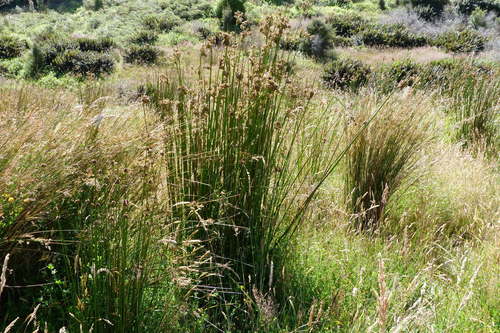
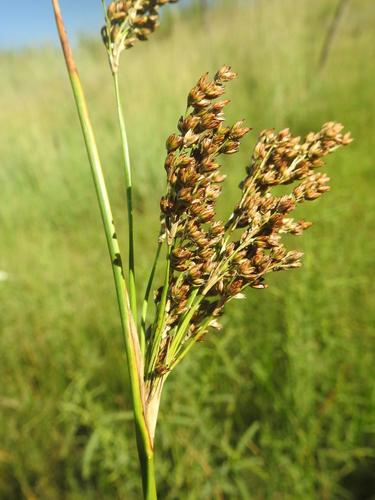
Juncus microcephalus
Kunth
iNaturalist· cc-by-nc
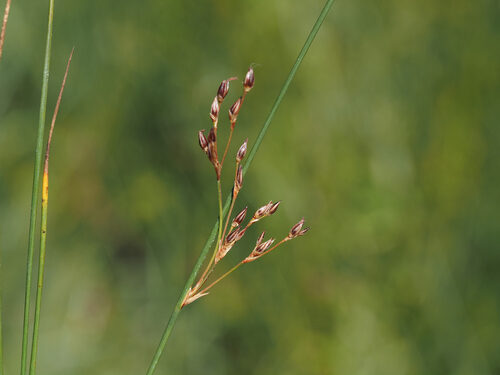
(c) tangatawhenua, some rights reserved (CC BY-NC), uploaded by tangatawhenua
iNaturalist· cc-by
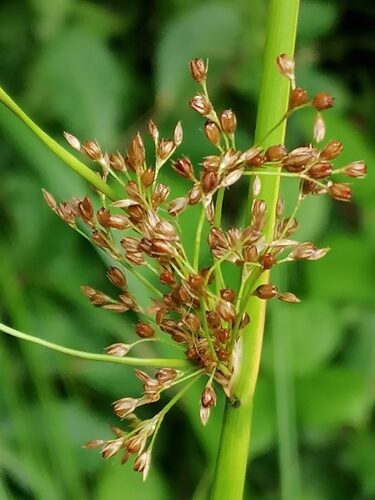
(c) Belinda Forbes, some rights reserved (CC BY)
iNaturalist· cc-by
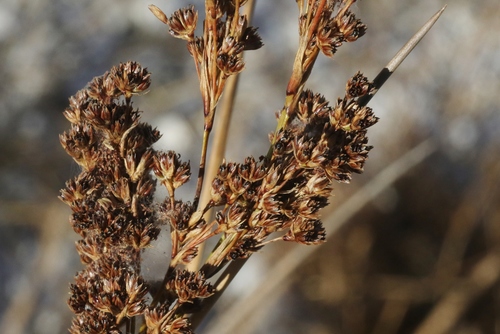
(c) Belinda Forbes, some rights reserved (CC BY)
Description
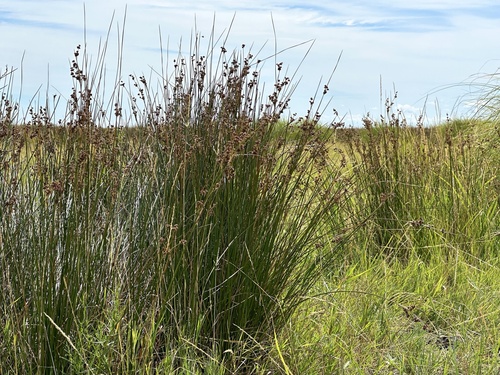
A herb. It forms colonies. It keeps growing from year to year. It can grow 2 m tall. The capsules bear hundreds of small seeds.
This description is brief — help expand it
Edible Uses
The roots, tubers, and young plants are eaten as vegetables.
Distribution
It is a warm temperate plant. It is often in wet soils. In Argentina it grows from sea level to 3,000 m above sea level.
Where It Grows
Argentina, Australia, Brazil, Central America, Chile, Costa Rica, Honduras, Mexico, North America, Paraguay, South America*, Tasmania, Uruguay, USA,
Cultivation
Plants are grown from seeds. They need light to germinate.
References (4)
- Piepenbring, M., 2000, Edible tubers formed by roots of Juncus microcephalus Kunth in H. B. K. Journal of Botanical Taxonomy and Geobotany. Feddes repertorium 111, 7-8, 567-570
- Tasmanian Herbarium Vascular Plants list p 66
- Wiersema, J. H. & Leon, B., 2013, World Economic Plants. A Standard Reference CRC Press. 2nd Ed. p 376
- World Checklist of Useful Plant Species 2020. Royal Botanic Gardens, Kew