Mouriri rhizophorifolia
(de Candolle) Triana
Guarataro
gbif· cc-by-nc
Rapid Reference Collection (RRC) | Field Museum of Natural History - Keller Science Action Center
gbif· cc-by-nc
Field Museum of Natural History - Botany Department | GDI 2013-2015
gbif· cc-by-nc
Field Museum of Natural History - Botany Department | GDI 2013-2015
Description
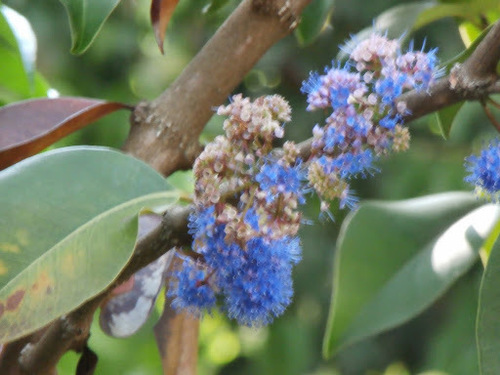
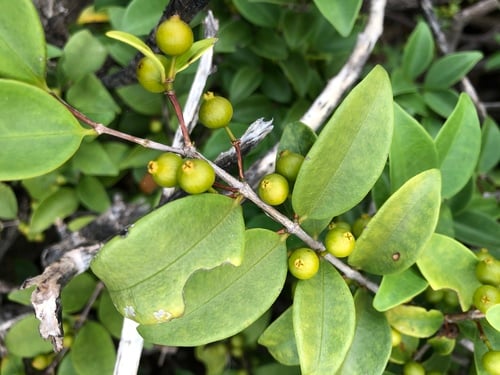
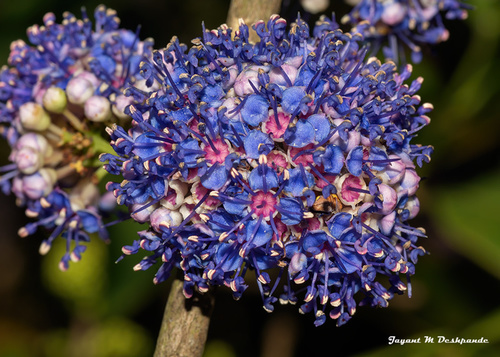
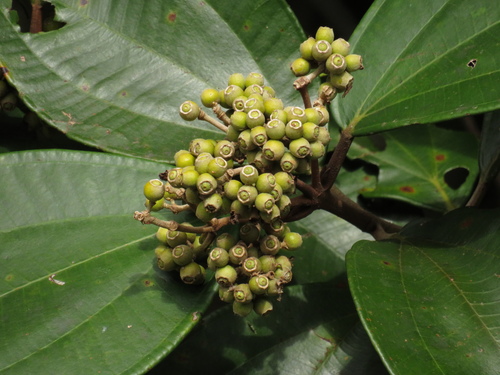
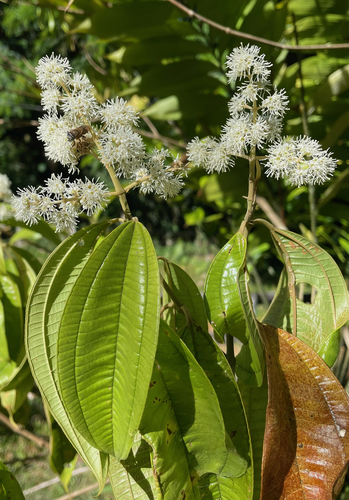
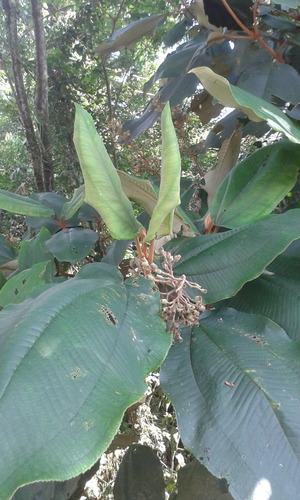
A low bushy tree. It can be 3 m high. The trunk can be 50 cm across. The bark is thin and papery. It flakes off in irregular pieces. The leaves are 5-11 cm long by 3-7 cm wide. They are dark green above and paler underneath. They are narrowly oval. The flowering stalks are in the axils of the leaves or where leaves have fallen. They can be in pairs and there are 1-3 flowers on each stalk. They flowers have a scent that can be unpleasant. The flower petals are white. The fruit are yellow or orange and almost round. They are 2-3 cm high. There can be 5 dark brown seeds.
Edible Uses
The fruit and seeds are edible.
Distribution
A tropical plant. They can grow in dry to moist forests and on rocky ground. They grow between 10-300 m altitude.
Where It Grows
Central America, Martinique, South America, St. Vincent and Grenadines, Trinidad & Tobago, Venezuela, West Indies,
Notes
They have also been put in the family Memecylaceae.
Synonyms
References (2)
- Hedrick, U.P., 1919, (Ed.), Sturtevant's edible plants of the world. p 422
- Morley, T., 1976, Melastomataceae, Flora Neotropica Vol. 15 p 52