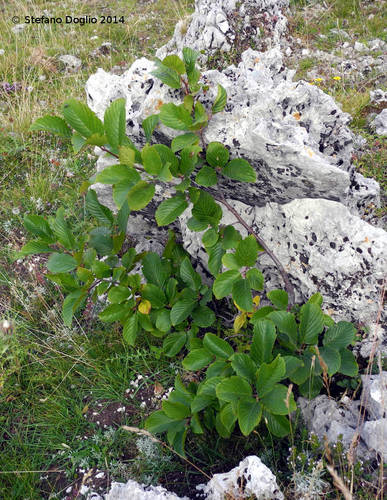
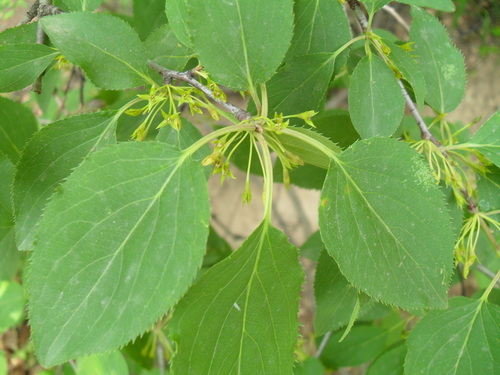
Berchemia lineata
(L.) DC.
Smooth supple-jack
iNaturalist· cc0
no rights reserved, uploaded by 葉子
iNaturalist· cc0
no rights reserved, uploaded by 葉子
iNaturalist· cc0
no rights reserved, uploaded by 葉子
Summary
Source: WikipediaBerchemia lineata is a climbing plant in the family Rhamnaceae. It occurs naturally in dry thickets in the rainshadows of the central Asian mountains. B. lineata is found from northern China to Nepal, but is also cultivated in gardens.
Description
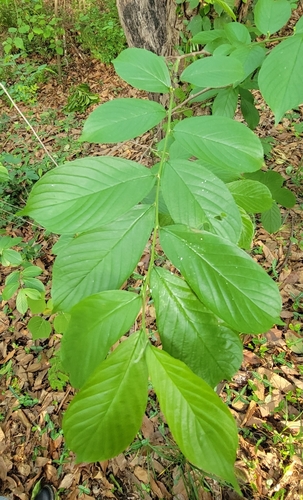
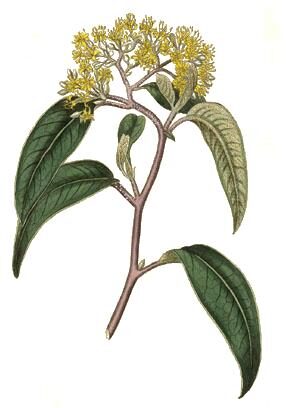
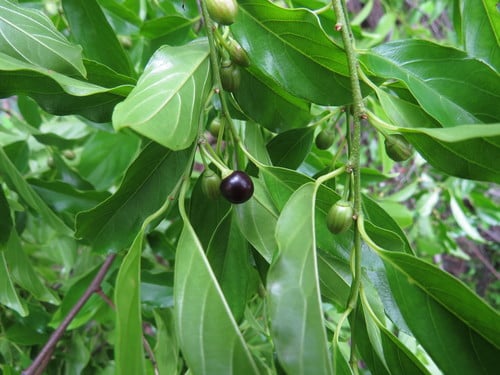
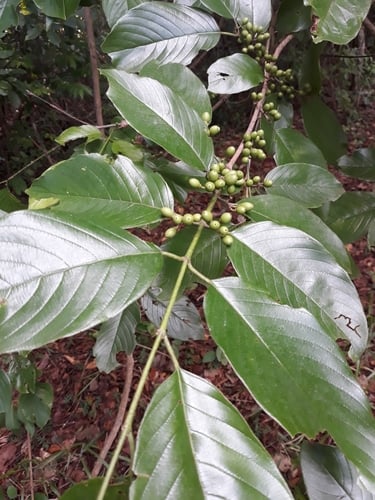
A low shrub or climber which grows to 5 m high. The leaves are papery. They are oval and 1-1.5 cm long by 7-9 mm wide. They are rounded at both ends. The flowers are in groups or 2 to many and are at the ends of branches or in the axils of leaves. The flowers are white. Fruit are about 8 mm across. They are bluish-black and fleshy.
Edible Uses
Edible Parts: Fruit Edible Uses: Fruit. - raw or cooked. Only eat the fruit when it is black ripe. The fruit is not very freely produced in Britain. The fruit is about 8mm in diameter.
Traditional Uses
The fruit are eaten raw or cooked when black ripe.
This uses section is brief — help expand it
Medicinal Uses
Antitussive Febrifuge The plant has been used as a febrifuge. The roots and leaves have been used as a medicine to relieve coughs and reduce sputum, to treat injuries, trauma and snakebite
Distribution
It grows on rocks at 2,000 to 2,700 m altitude in the Himalayas. Plants can survive frost. It is best with light to medium well-drained soil. It needs a sunny position. It is resistant to frost but damaged by drought.
Where It Grows
Asia, Australia, Britain, China*, Europe, Himalayas, Indochina, Japan, SE Asia, Taiwan, Vietnam,
Cultivation
Requires a good moist well-drained loam, succeeding in full sun if the soil does not dry out otherwise it is best in light shade. This species is not hardy in the colder areas of the country, it tolerates temperatures down to between -5 and -10°c. Suitable for growing along fences, against walls with wire supports or for growing through other shrubs. Plants climb by means of twining around supports. Closely related to B. edgeworthii.
Propagation
Seed - sow spring or autumn in a cold frame. When they are large enough to handle, prick the seedlings out into individual pots and grow them on in the greenhouse for at least their first winter. Plant them out into their permanent positions in late spring or early summer, after the last expected frosts. Cuttings of half-ripe wood, July/August in a frame. Cuttings of mature wood of the current season's growth, November to January in a frame. Root cuttings in winter. Layering of young stems in winter.
Other Uses
None known Special Uses
Notes
There are 12 Berchemia species.
Synonyms
References (6)
- Altschul, S.V.R., 1973, Drugs and Foods from Little-known Plants. Notes in Harvard University Herbaria. Harvard Univ. Press. Massachusetts. no. 2629
- Hu, Shiu-ying, 2005, Food Plants of China. The Chinese University Press. p 528
- Kuo, W. H. J., (Ed.) Taiwan's Ethnobotanical Database (1900-2000), http://tk.agron.ntu.edu.tw/ethnobot/DB1.htm
- Plants for a Future database, The Field, Penpol, Lostwithiel, Cornwall, PL22 0NG, UK. http://www.scs.leeds.ac.uk/pfaf/
- Prodr. 2:23. 1825
Show all 6 references Hide references
- Reis, S. V. and Lipp, F. L., 1982, New Plant Sources for Drugs and Foods from the New York Botanical Garden herbarium. Harvard. p 171