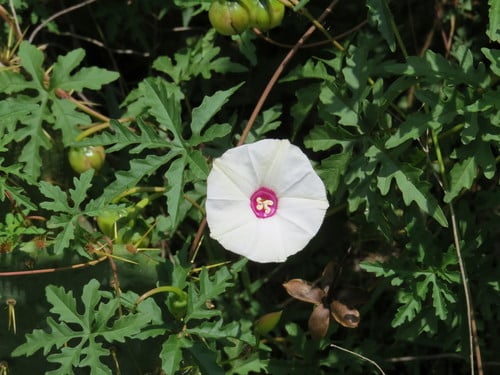
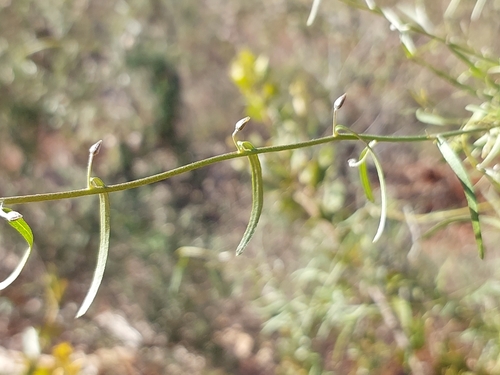
Distimake tuberosus
(L.) A. R. Simoes & Staples
Spanish woodbine
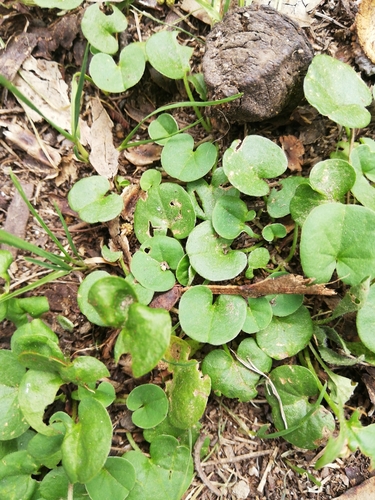
iNaturalist· cc-by-nc
(c) Edgar Miranda, some rights reserved (CC BY-NC), uploaded by Edgar Miranda
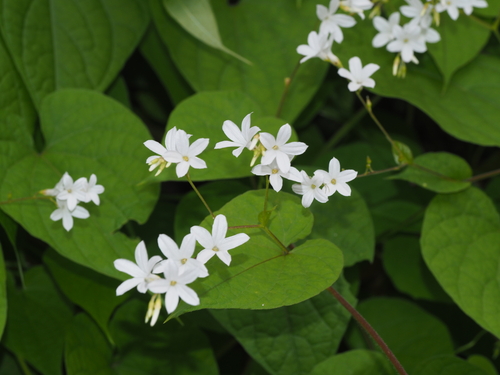
iNaturalist· cc-by-nc
(c) Frederico Acaz Sonntag, some rights reserved (CC BY-NC), uploaded by Frederico Acaz Sonntag
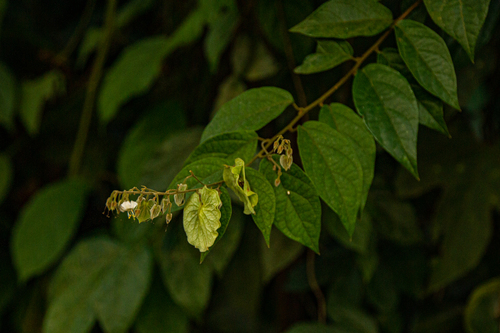
iNaturalist· cc-by-nc
(c) alfcast, some rights reserved (CC BY-NC)
Summary
Source: WikipediaDistimake tuberosus, also known as Spanish arborvine or wood rose, is a vine in the family Convolvulaceae. It is native to the Americas, from Florida and Texas to Brazil, although considered by the USDA as introduced to the United States. It is an invasive species in a number of islands in the Indian and Pacific Ocean, such as New Caledonia.
Description
A twining vine. The leaves are alternate and heart shaped. They have 7 deep lobes at the top. The flowers are orange to yellow. The fruit capsules are large.
Edible Uses
The roots and tubers are eaten.
Distribution
A tropical plant. It suits seasonally dry tropical regions.
Where It Grows
Africa, Angola, Australia, Bahamas, Bangladesh, Belize, Bermuda, Bolivia, Brazil, Colombia, Comoros, Congo DR, Cook Island, Costa Rica, Cuba, Dominican Republic, Easter Island, Ecuador, Fiji, Guatemala, Guinea, Guyana, Haiti, Hawaii, Honduras, India, Indonesia, Jamaica, Kenya, Leeward Is., Madagascar, Malaysia, Marianas, Marshall Is., Mauritius, Mexico, Mozambique, Myanmar, New Caledonia, Nicaragua, Niue, North America, Pacific, Pakistan, Panama, Peru, Phoenix Is., Puerto Rico, Reunion, Rwanda, Sri Lanka, Sudan, Taiwan, Tanzania, Thailand, Uganda, USA, Venezuela,
Synonyms
References (4)
- Hedrick, U.P., 1919, (Ed.), Sturtevant's edible plants of the world. p 359 (As Ipomoea tuberosa)
- Marinelli, J. (Ed), 2004, Plant. DK. p 462 (As Merremia tuberosa)
- Sp. pl. 1:160. 1753
- Yuncker, T. G., 1943, The Flora of Niue Island. Bernice P. Bishop Museum Bulletin 178 p 99 (As Ipomoea tuberosa)