Crataegus orientalis
Pall. ex M. Bieb.
Eastern thorn, Silver hawthorn
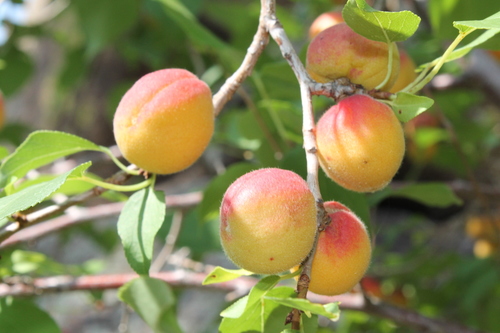
iNaturalist· cc-by-nc-sa
(c) Georgios Mesimeris, some rights reserved (CC BY-NC-SA), uploaded by Georgios Mesimeris
iNaturalist· cc-by-nc
(c) Юрій Бенгус, some rights reserved (CC BY-NC), uploaded by Юрій Бенгус
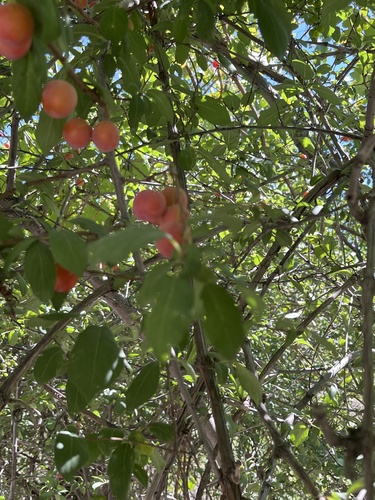
iNaturalist· cc-by-nc
(c) Еlena, some rights reserved (CC BY-NC), uploaded by Еlena
Summary
Source: WikipediaCrataegus orientalis, known as oriental hawthorn, is a species of hawthorn native to the Mediterranean region, Turkey, Caucasia, Crimea, and western Iran, with fruits that are orange or various shades of red. This species is highly variable. Knud Ib Christensen in his monograph divides it into four subspecies: C. orientalis subsp. orientalis C. orientalis subsp. pojarkovae (Kossych) Byatt has orange fruit. C. orientalis subsp. presliana K.I.Chr. C. orientalis subsp. szovitsii (Pojarkova) K.I.Chr.
Description
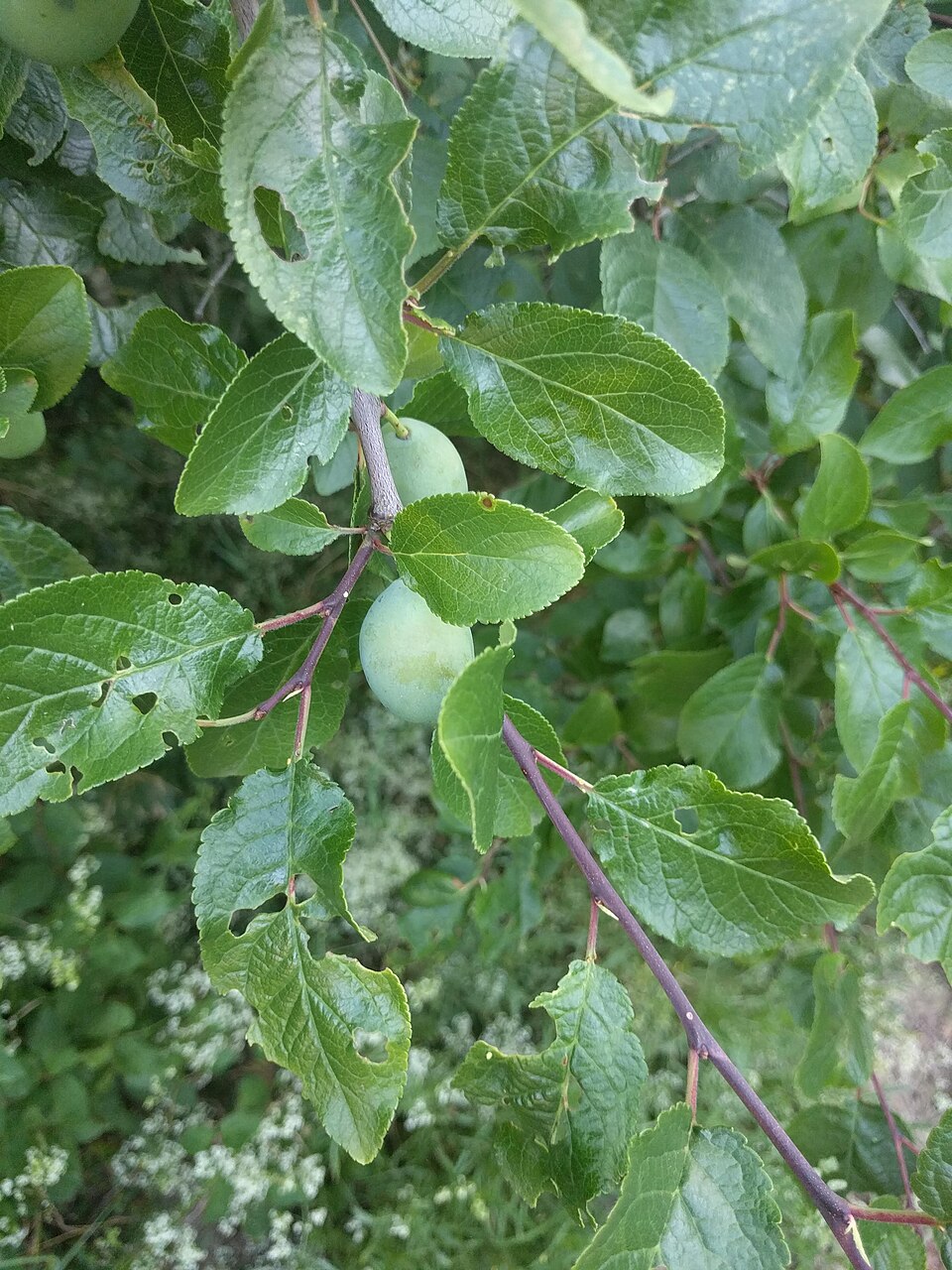
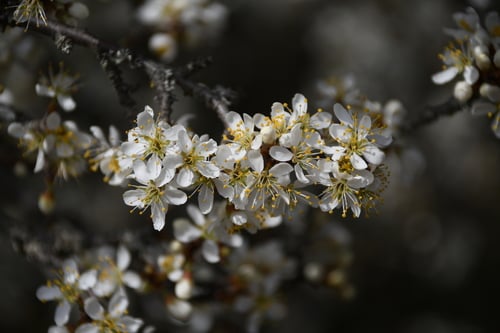
A small spreading tree. It loses its leaves during the year. It grows 5 m tall. It spreads 2 m wide. The leaves are furry and grey-green. The leaves turn yellow in autumn. They are 5 cm long and have lobes. There are teeth along the edge near the tip. The flowers are whitish-pink. They have 5 petals. The fruit are large orange-red berries. They are 2 cm long.
Edible Uses
In Caucasia the fruits are either eaten raw or used to make a type of sweet bread.
Traditional Uses
The fruit are eaten especially by children. The flowering shoots are used for tea.
This uses section is brief — help expand it
Distribution
A temperate plant. It will grow in most soils. It needs an open sunny position. It is resistant to frost and drought.
Where It Grows
Armenia, Australia, Azerbaijan, Britain, Caucasus, Europe*, Georgia, Greece, Mediterranean, Spain, Turkey, Türkiye,
Cultivation
Plants are grown from seed.
Other Information
It is sold in local markets.
Notes
Medlar is grafted onto this plant due to its hardiness.
Nutrition
| Part | Moisture | kJ | kcal | Protein | Vit A | Vit C | Iron | Zinc |
|---|---|---|---|---|---|---|---|---|
| Fruit | — | — | — | — | 5.4 | — | — | — |
Synonyms
Also Known As
Aluc, Heluje, Risok, Sari alic, Sez, Sinz
References (15)
- Bodkin, F., 1991, Encyclopedia Botanica. Cornstalk publishing, p 296
- Dogan, Y., et al, 2004, The Use of Wild Edible Plants in Western and Central Anatolia (Turkey). Economic Botany 58(4) pp. 684-690
- Ertug, F, Yenen Bitkiler. Resimli Türkiye Florası -I- Flora of Turkey - Ethnobotany supplement
- Fl. taur.-caucas. 1:387. 1808
- Gundogdu, M., et al, 2014, Organic acids, sugars, vitamin C and some pomological characteristics of eleven hawthorn species (Crataegus spp.) from Turkey. Biological Research 47:21
Show all 15 references Hide references
- Gunes, S. et al, 2018, Survey of wild food plants for human consumption in Karaisali (Adana-Turkey). Indian Journal of Traditional Knowledge. Vol. 17(2), April 2018, pp 290-298
- Hedrick, U.P., 1919, (Ed.), Sturtevant's edible plants of the world. p 224
- Kargioglu, M., et al, 2008, An Ethnobotanical Survey of Inner-West Anatolia, Turkey. Human Ecology 36:763-777
- Nanagulyan, S., et al, 2020, Wild plants and fungi sold in the markets of Yerevan (Armenia). Journal of Ethnobiology and Ethnomedicine 16:26
- Polat, R., et al, 2015, Survey of wild food plants for human consumption in Elazig (Turkey). Indian Journal of Traditional Knowledge. Vol. 1(1): 69-75
- Polat, R., et al, 2017, Survey of wild food plants for human consumption in Bingol, (Turkey). Indian Journal of Traditional Knowledge. Vol. 16(3) July 2017, pp. 378-384
- Postman, J. D., et al, 2012, Recent NPGS Coordinated Expeditions in the Trans-Caucasus Region to Collect Wild Relatives of Temperate Fruit and Nut Crops. In Acta Horticulturae Number 948 p 191-198
- Rivera, D. et al, 2006, Gathered Mediterranean Food Plants - Ethnobotanical Investigations and Historical Development, in Heinrich M, Müller WE, Galli C (eds): Local Mediterranean Food Plants and Nutraceuticals. Forum Nutr. Basel, Karger, 2006, vol 59, pp 18–74
- Ryan, S., 2008, Dicksonia. Rare Plants Manual. Hyland House. p 20
- Senkardes, I & Tuzlaci, E., 2016, Wild Edible Plants of Southern Part of Nevsehir inTurkey. Marmara Pharmaceutical Journal 20:34-43