Canarina canariensis
(L.) Vatke
Bicacaro, Canary Island bellflower
iNaturalist· cc-by-nc-sa
(c) ashitaka, some rights reserved (CC BY-NC-SA)
iNaturalist· cc-by-nc
(c) Felix Riegel, some rights reserved (CC BY-NC)
iNaturalist· cc-by-nc
(c) Felix Riegel, some rights reserved (CC BY-NC)
Summary
Source: WikipediaCanarina canariensis is a species of flowering plant in the bellflower family Campanulaceae, commonly known as the Canary Island bellflower, and known locally as bicácaro.
Description
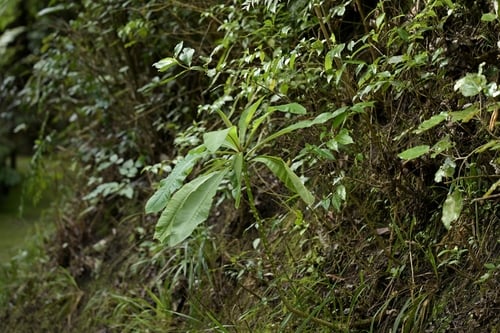
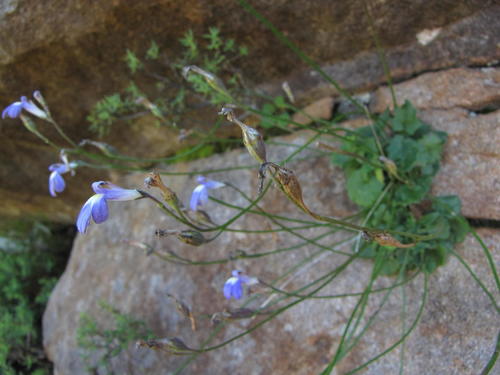
A fleshy climber. It can climb 3 m high. It has thick, tuberous roots. The stems are fleshy and branching. The leaves are opposite. The leaves are broad and wedge shaped. They taper to the tip. There are irregular lobes along the edge. They are 4-8 cm long. There are fine teeth along the edge. The flowers are bell shaped and hang down. They are orange to red with darker veins. They are 3-6 cm long. They have 6 petal lobes which curl back. The flower are in the upper axils of leaves. The fruit are black berries. They are edible.
Edible Uses
The fruit are eaten raw or made into preserves. The fleshy capsule, roots, young shoots, and leaves are also edible.
Traditional Uses
The fleshy capsule, roots and young shoots are eaten. The fruit are eaten raw or made into preserves.
This uses section is brief — help expand it
Distribution
It is a subtropical plant. It grows naturally in Tenerife in the Canary islands. It grows in shady ravines and woodland. It suits hardiness zones 9-11.
Where It Grows
Australia, Britain, Canary Islands, Europe, Mediterranean,
Cultivation
Plants are grown from seed planted as soon as they are ripe. It needs a temperature of 15-22°C. It can be grown from cuttings of the base.
Notes
There are 3 Canarina species.
Synonyms
References (8)
- Cundall, P., (ed.), 2004, Gardening Australia: flora: the gardener's bible. ABC Books. p 323
- Facciola, S., 1998, Cornucopia 2: a Source Book of Edible Plants. Kampong Publications, p 70
- Hedrick, U.P., 1919, (Ed.), Sturtevant's edible plants of the world. p 148 (As Canarina campanula)
- Lim, T. K., 2015, Edible Medicinal and Non Medicinal Plants. Volume 9, Modified Stems, Roots, Bulbs. Springer p 22
- Linnaea 38:700. 1874
Show all 8 references Hide references
- Kunkel,
- Marinelli, J. (Ed), 2004, Plant. DK. p 209
- Morley, B. & Everard, B., 1970, Wild Flowers of the World. Ebury press. Plate 43