Ficus ovata
Vahl
iNaturalist· cc-by-nc
(c) Mark Hyde, Bart Wursten and Petra Ballings, some rights reserved (CC BY-NC)
iNaturalist· cc-by-nc
(c) Nick Helme, some rights reserved (CC BY-NC)
iNaturalist· cc-by-nc
(c) Nick Helme, some rights reserved (CC BY-NC)
Description
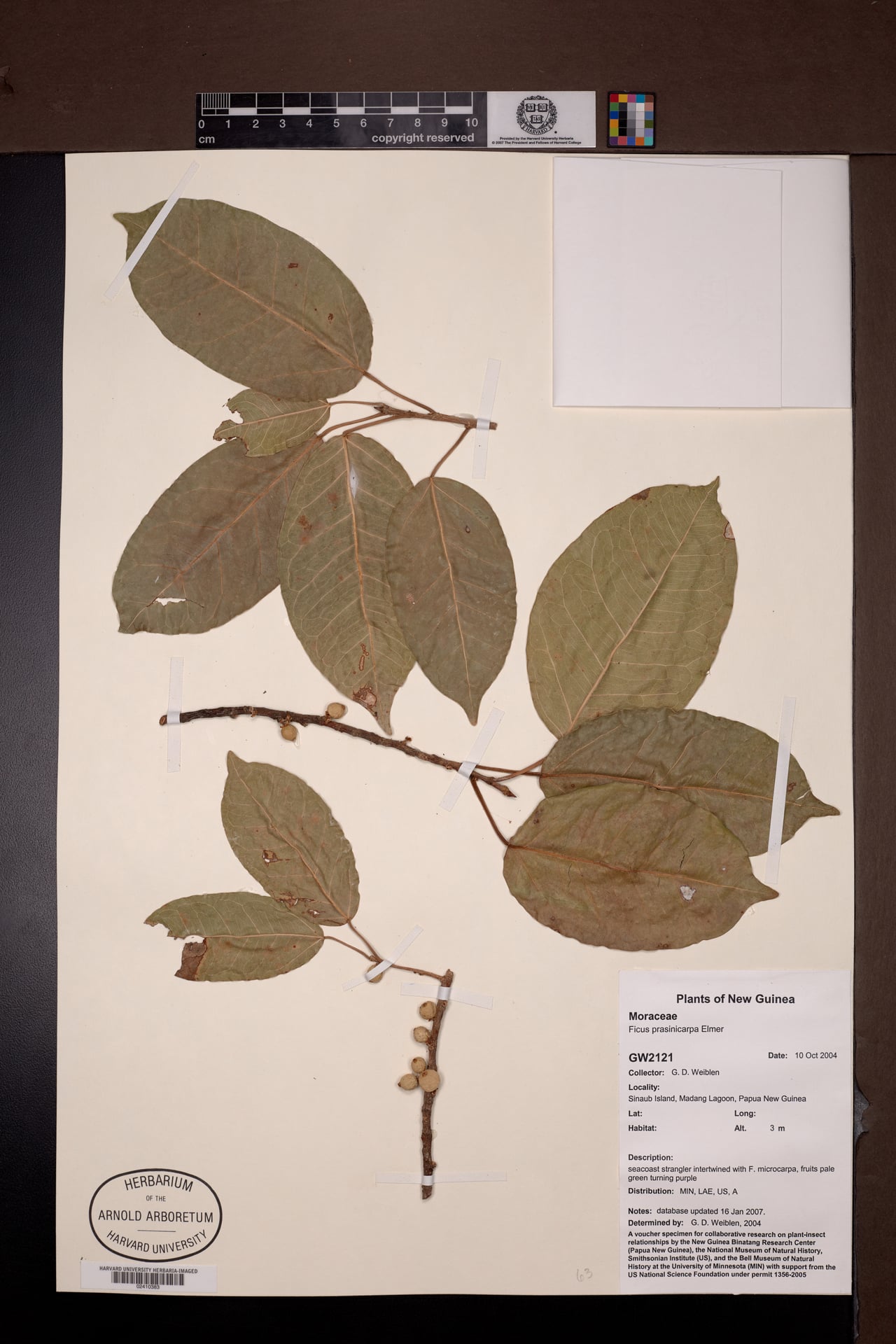
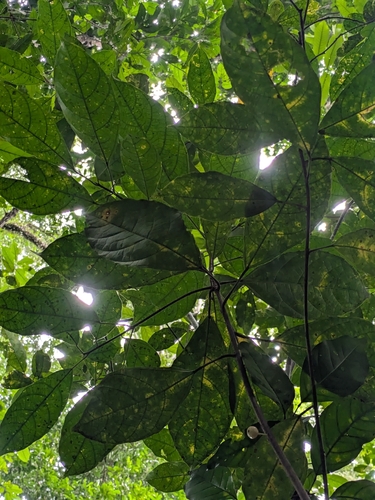
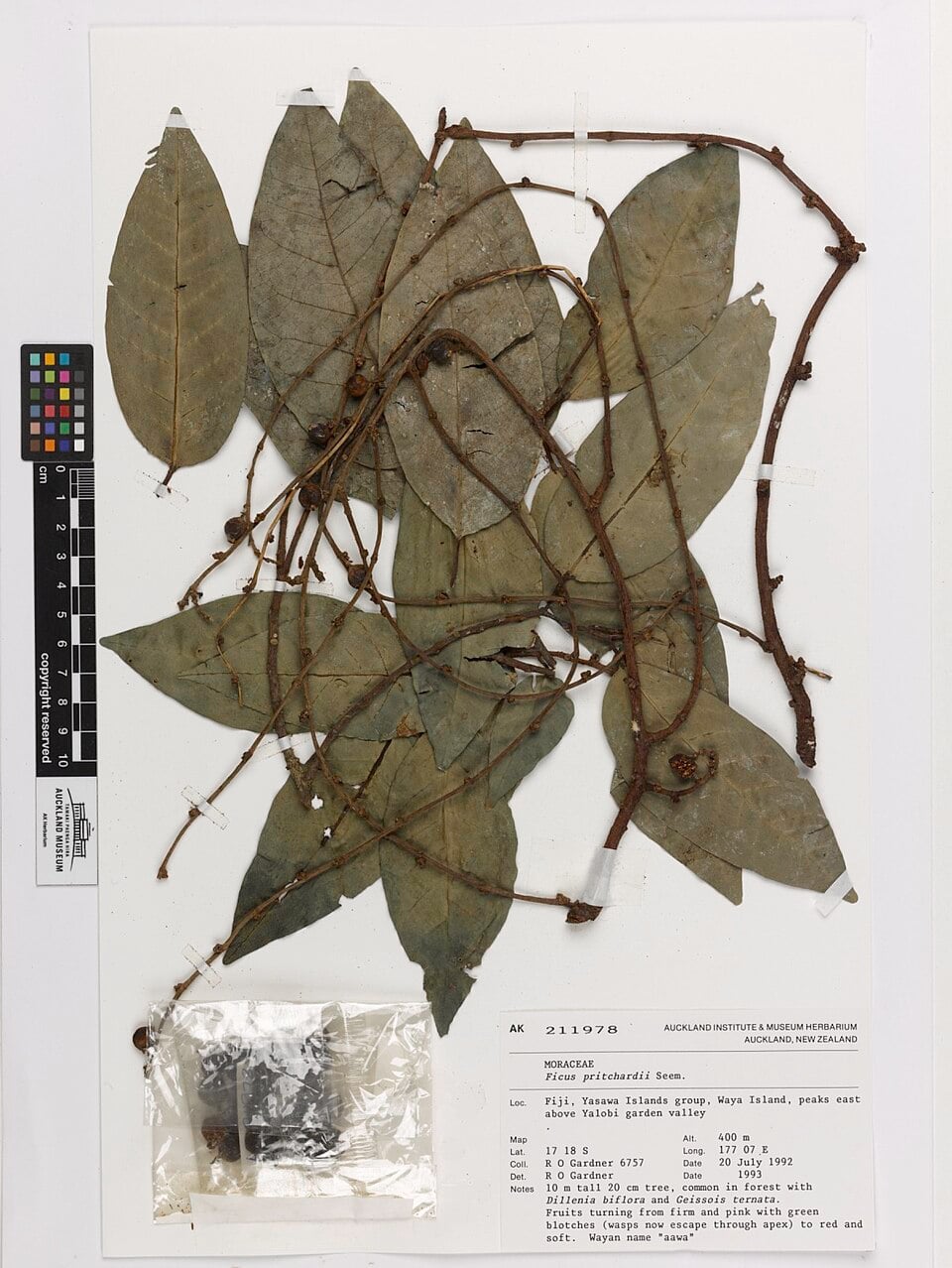
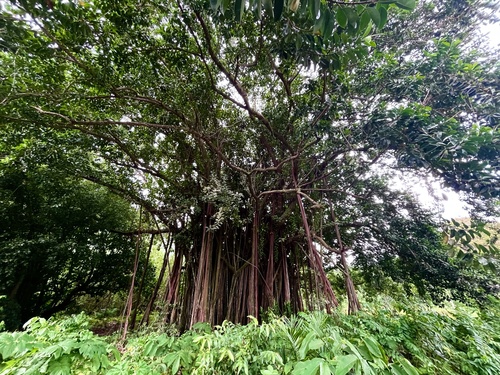
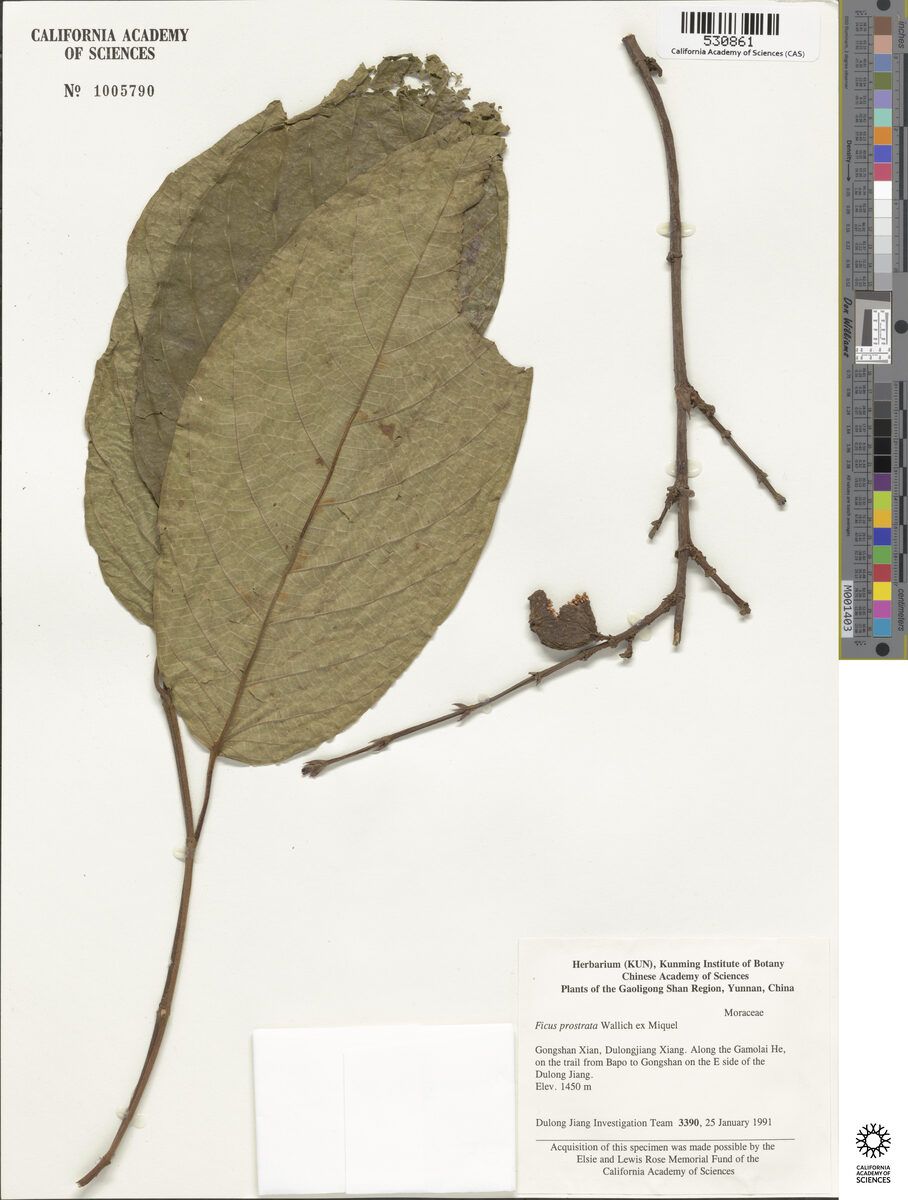
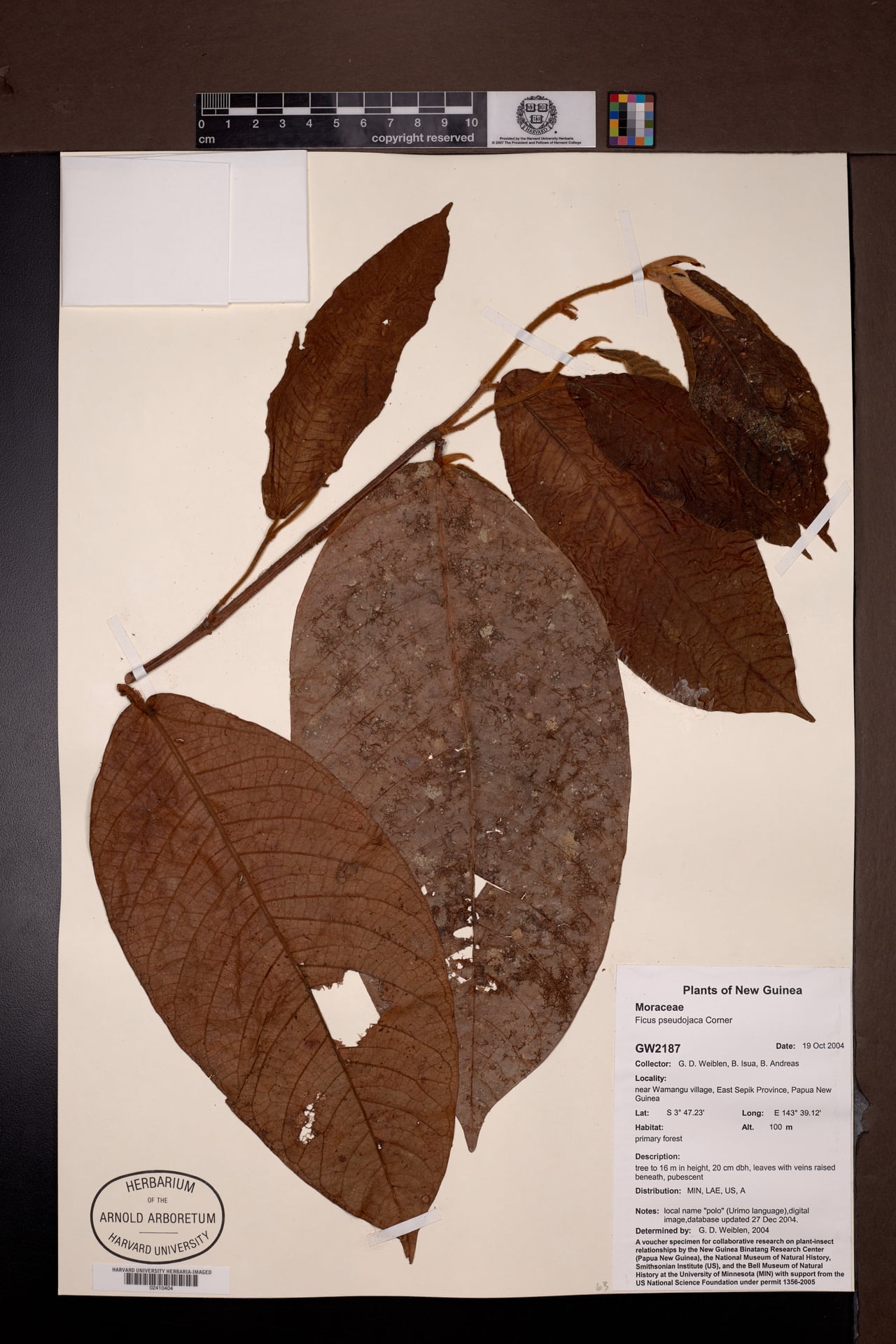
A tree that is a strangler fig. It starts attached to other plants. It grows 12 m high. It has a straight trunk and broad crown. The branches are stout. There are hanging aerial roots. The bark is rough and has cracks along it. They are narrowly oval to oblong and 10-30 cm long by 6-20 cm wide. The fruit (figs) are in the axils of leaves and occur singly or in pairs. They are oval and 3 cm long. They have cream spots and short hairs.
Edible Uses
Both the fruit (figs) and bark are edible.
Medicinal Uses
Used as medicine.
Distribution
It is a tropical plant. It grows in damp sites in the dry zone forest in West Africa. It often grows on oil palm. It is often on termite mounts. They grow between 1,100-1,750 m above sea level.
Where It Grows
Wooded savannah; edge of gallery forests; river sides; secondary forests; rain-forest; evergreen bushland; farmbush; lakesides; swamp forest (mushitu) margins, dambos; at elevations up to 2,100 metres.
Cultivation
Found in the wild in a wide range of soils. Fig trees have a unique form of fertilization, each species relying on a single, highly specialized species of wasp that is itself totaly dependant upon that fig species in order to breed. The trees produce three types of flower; male, a long-styled female and a short-styled female flower, often called the gall flower. All three types of flower are contained within the structure we usually think of as the fruit. The female fig wasp enters a fig and lays its eggs on the short styled female flowers while pollinating the long styled female flowers. Wingless male fig wasps emerge first, inseminate the emerging females and then bore exit tunnels out of the fig for the winged females. Females emerge, collect pollen from the male flowers and fly off in search of figs whose female flowers are receptive. In order to support a population of its pollinator, individuals of a Ficus spp. must flower asynchronously. A population must exceed a critical minimum size to ensure that at any time of the year at least some plants have overlap of emmission and reception of fig wasps. Without this temporal overlap the short-lived pollinator wasps will go locally extinct.
Other Uses
A fibre is obtained from the bark. Long strips of the bark are used to make traditional garments of the aSukwa women. The garment consists of a belt about 10cm wide stiffened with a strip of harder bark inside and coloured with various bright designs, looped over this belt at back and front is a very long strip of bark softened and sewn with string into a thick belt
Synonyms
Also Known As
Cilemba, Dioge, Dualim-o, Kobo, Sholla, Warka, Warka fere
References (13)
- Asfaw, Z. and Tadesse, M., 2001, Prospects for Sustainable Use and Development of Wild Food Plants in Ethiopia. Economic Botany, Vol. 55, No. 1, pp. 47-62
- Burkill, H. M., 1985, The useful plants of west tropical Africa, Vol. 4. Kew.
- Dalziel, 1937,
- Fowler, D. G., 2007, Zambian Plants: Their Vernacular Names and Uses. Kew. p 49
- Grivetti, L. E., 1980, Agricultural development: present and potential role of edible wild plants. Part 2: Sub-Saharan Africa, Report to the Department of State Agency for International Development. p 24
Show all 13 references Hide references
- Le Houerou, H. N., (Ed.), 1980, Browse in Africa. The current state of knowledge. International Livestock Centre for Africa, Ethiopia. p 163
- Lulekal, E., et al, 2011, Wild edible plants in Ethiopia: a review on their potential to combat food insecurity. Afrika Focus - Vol. 24, No 2. pp 71-121
- Ojelel, S., et al, 2019, Wild edible plants used by communities in and around selected forest reserves of Teso-Karamoja region, Uganda. Journal of Ethnobiology and Ethnomedicine (2019) 15:3
- Peters, C. R., O'Brien, E. M., and Drummond, R.B., 1992, Edible Wild plants of Sub-saharan Africa. Kew. p 150
- Seyoum, Y., et al, 2015, Edible Wild Fruit Trees and Shrubs and Their Socioeconomic Significance in Central Ethiopia. Ethnobotany Research & Applications. 14:183-197
- von Katja Rembold, 2011, Conservation status of the vascular plants in East African rain forests. Dissertation Universitat Koblenz-Landau p 166
- White, F., Dowsett-Lemaire, F. and Chapman, J. D., 2001, Evergreen Forest Flora of Malawi. Kew. p 387
- www.figweb.org