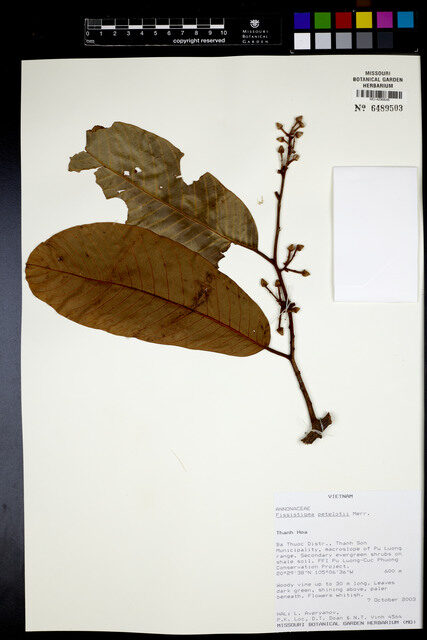
Guatteria punctata
(Aubl.) R. A. Howard
Pinaou
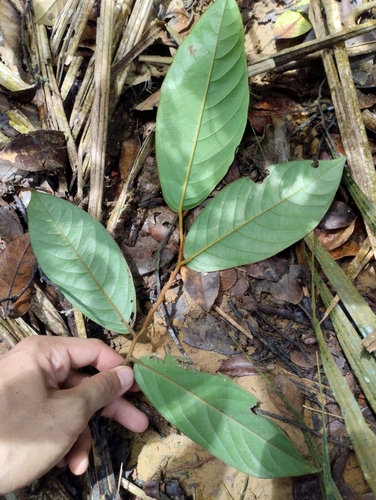
iNaturalist· cc-by-nc
(c) Alice Bello, some rights reserved (CC BY-NC), uploaded by Alice Bello
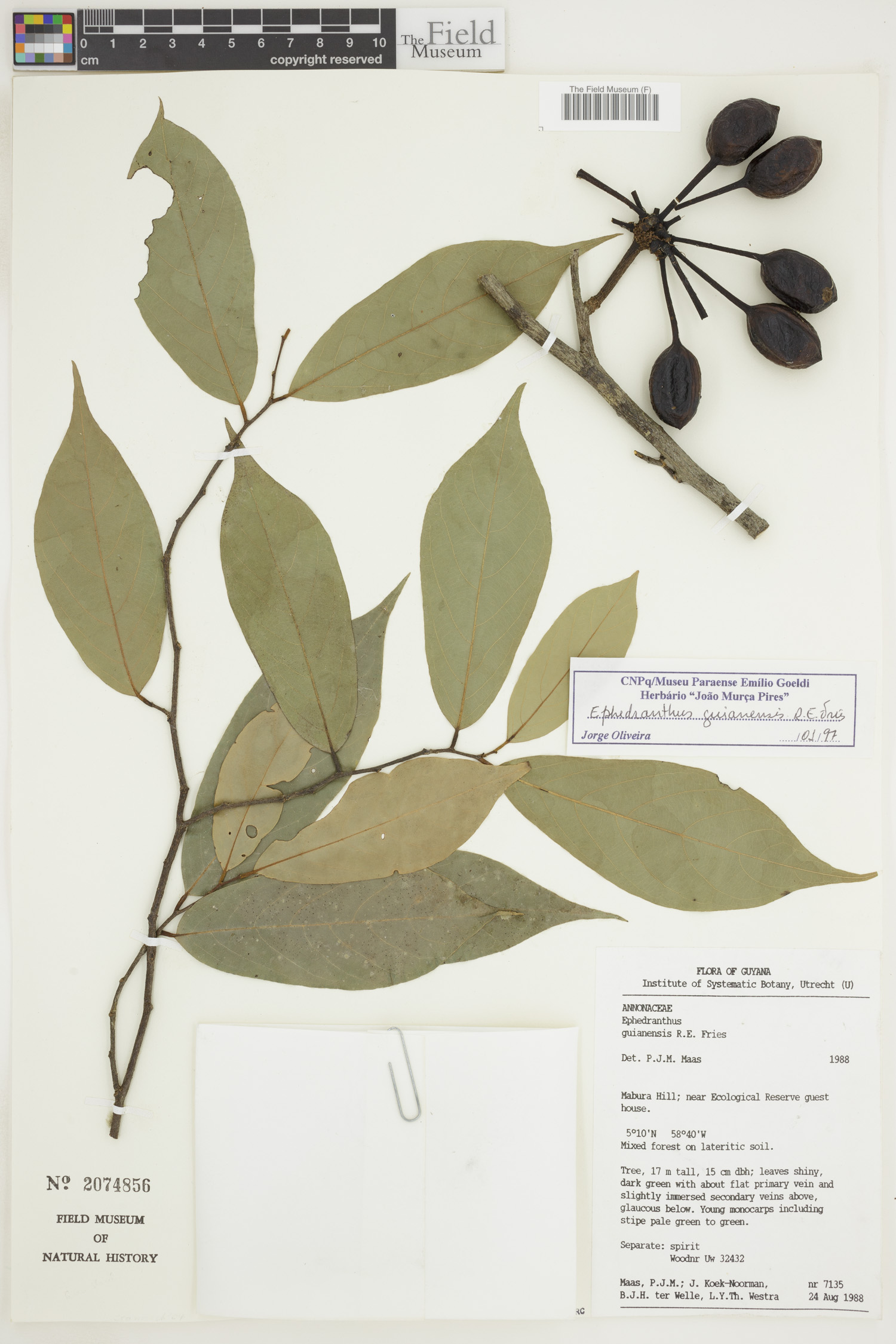
iNaturalist· cc-by-nd
(c) Roy Erkens, some rights reserved (CC BY-ND), uploaded by Roy Erkens
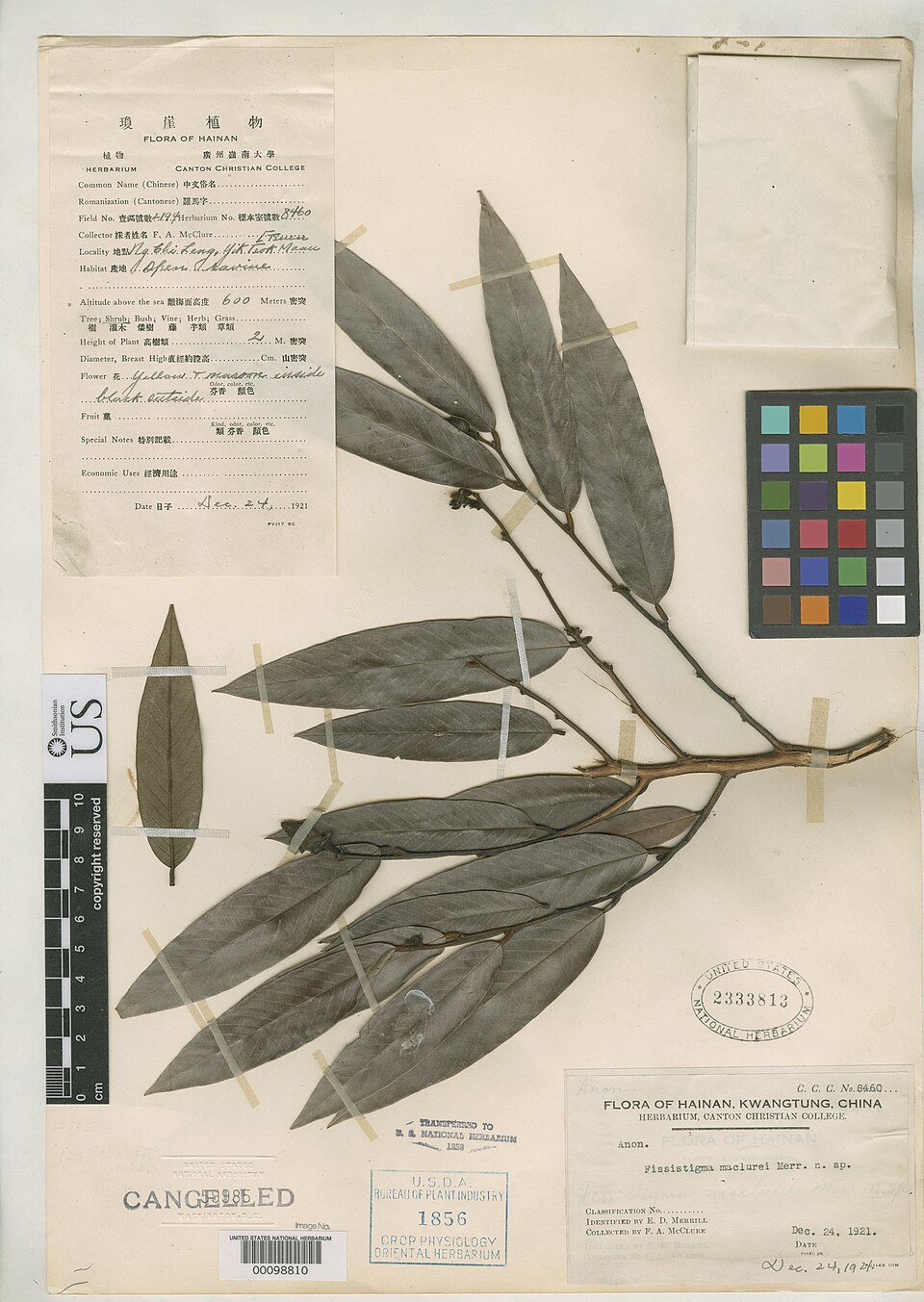
iNaturalist· cc-by-nd
(c) Roy Erkens, some rights reserved (CC BY-ND), uploaded by Roy Erkens
Description
A tree. The fruit are oval, brown and smooth. They are 8 cm across. There are slight net like marks on the surface. The flesh is red. It has many seeds.
Edible Uses
Fruit - raw. The thin layer of flesh is eaten. The fruits are produced in bunches of 5 - 100, becoming black to purple-black when fully ripe. Each fruit is ellipsoid to subglobose, 7 - 20mm long and 4 - 15 mm wide, containing a single, large seed.
Traditional Uses
The pulp of the fruit is eaten.
This uses section is brief — help expand it
Medicinal Uses
The leaves are used in herbal baths. No further information is given.
Distribution
A tropical plant. In Bolivia it has been recorded at 850 m above sea level.
Where It Grows
Bolivia, Brazil, Colombia, Ecuador, Guiana, Guianas, Guyana, Peru, South America, Suriname, Venezuela,
Cultivation
Plants can flower and produce fruit all year round.
Other Uses
A fibre is obtained from the bark. It is used for a range of purposes. The fibrous bark can be used to make rope. The stems are split to make stakes and used as the palisade walls of traditional houses. The wood isused to make boards.
Notes
There are about 100-150 Annona species.
Synonyms
References (4)
- Hedrick, U.P., 1919, (Ed.), Sturtevant's edible plants of the world. p 58
- Kermath, B. M., et al, 2014, Food Plants in the Americas: A survey of the domesticated, cultivated and wild plants used for Human food in North, Central and South America and the Caribbean. On line draft. p 400 (Also as Guatteria buchtienii)
- Martin, F. W., et al, 1987, Perennial Edible Fruits of the Tropics. USDA Handbook 642 p 80 (As Annona punctata)
- Roa, J. A. G. & Boada, D. S. G., 2018, Fundación para el Fortalecimiento de la Fruticultura y Plantas Alimenticias no Convencionales en Colombia.