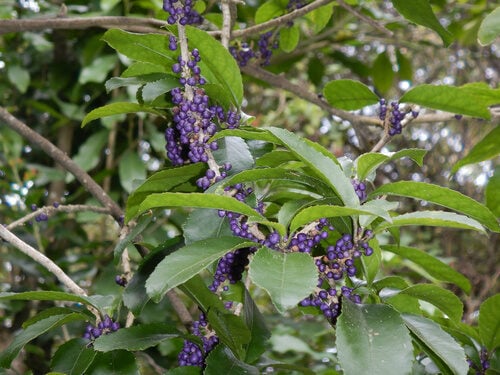
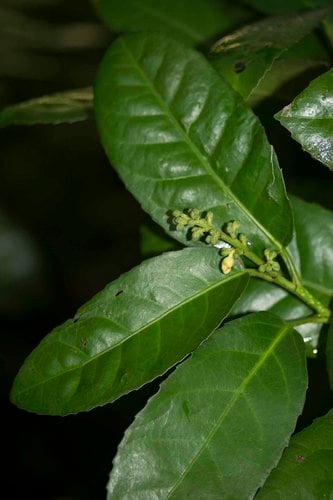
Leonia glycycarpa
Ruiz. & Pav.
Achocon
iNaturalist· cc-by-nc-sa
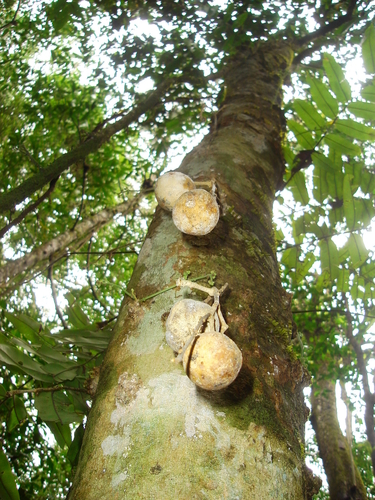
(c) Mateo Hernandez Schmidt, some rights reserved (CC BY-NC-SA), uploaded by Mateo Hernandez Schmidt
iNaturalist· cc-by-nc
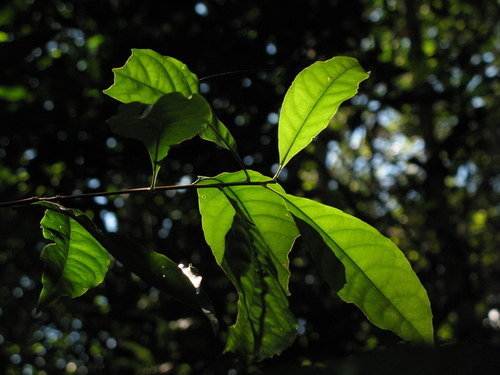
(c) Rob Westerduijn, some rights reserved (CC BY-NC)
iNaturalist· cc-by-nc
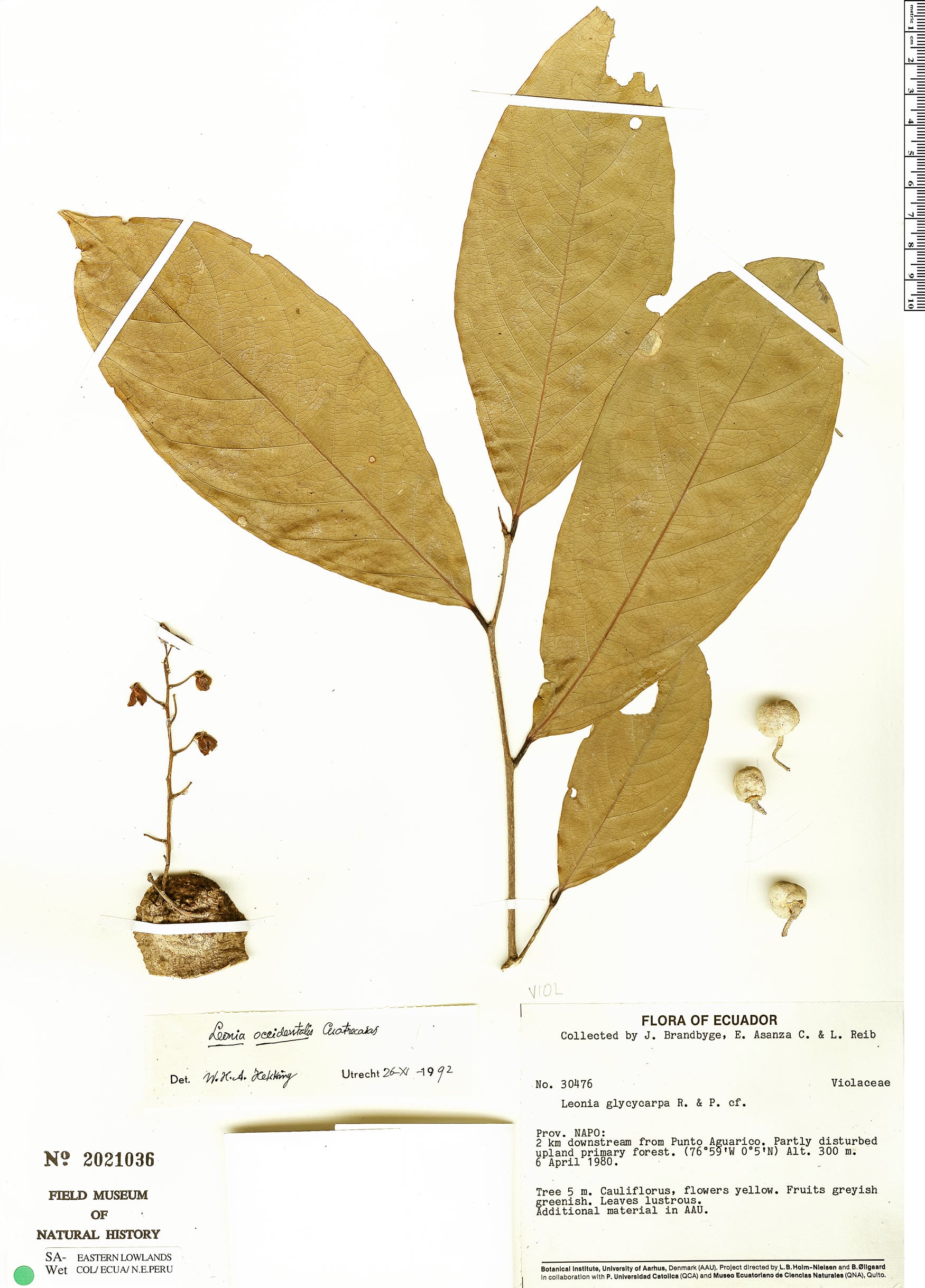
(c) Rob Westerduijn, some rights reserved (CC BY-NC)
Description
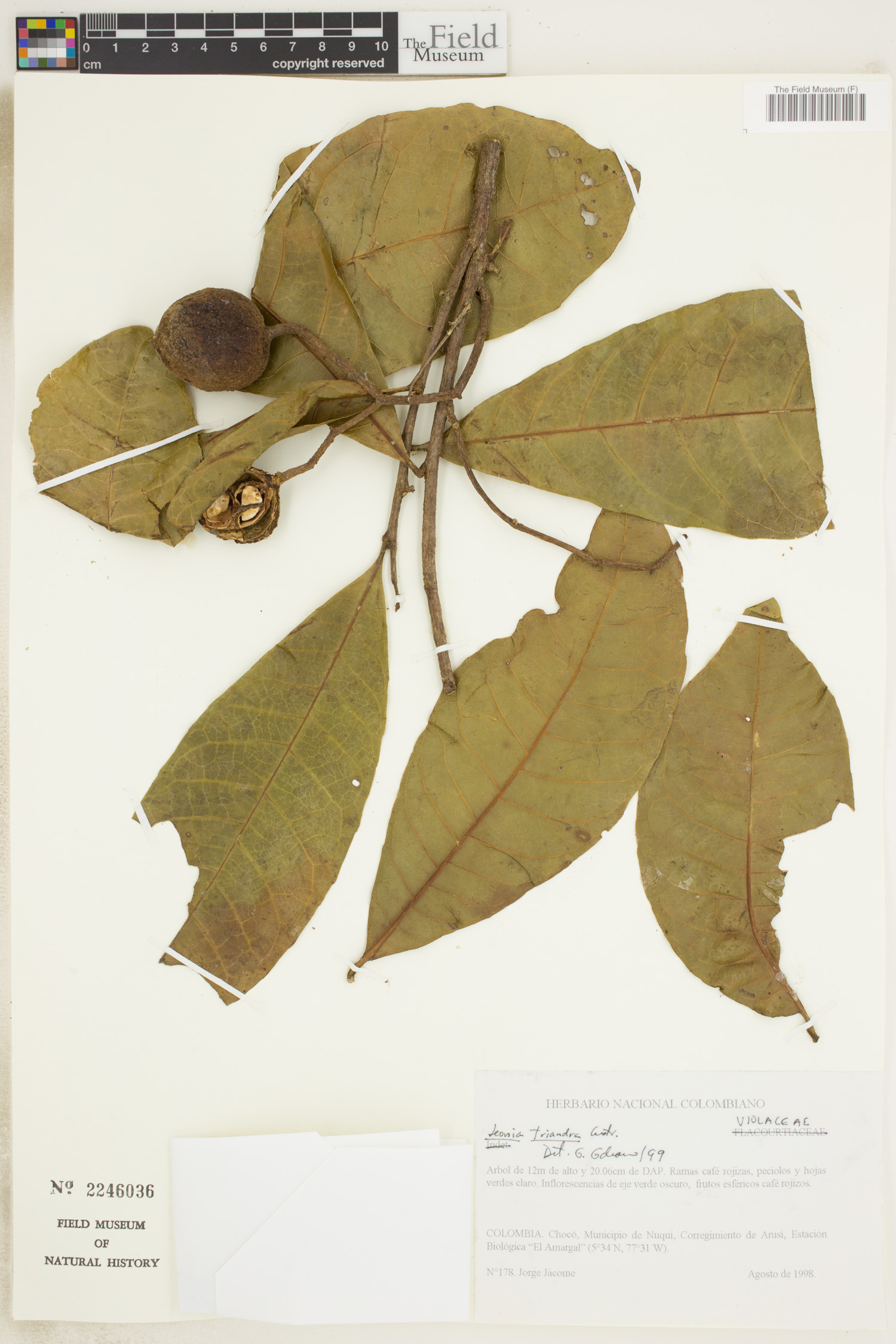
A tree. It grows 20 m tall. The flower panicles can be single or in groups. They are on leafless twigs. The fruit is oval or round. The fruit are 8-10 cm long. They have a rough netted skin. The pulp is white or yellow. The pulp is sweet. There are about 7 seeds. They are narrowly oval or kidney shaped. They are 1.6 cm long.
Edible Uses
The fruit is eaten for its sweet pulp.
Distribution
A tropical plant. It grows in rainforest especially near marshes and creeks.
Where It Grows
Amazon, Bolivia, Brazil, Central America, Colombia, Ecuador, Guiana, Guianas, Guyana, Nicaragua, Panama, Peru, South America*, Suriname, Venezuela,
Synonyms
Also Known As
Anakasha, Begowe, Cata pisi, Cumala colorada, Coracao-de-negro, Fruto-de-macaco, Geme, Gogo-de-guariba, Guagua de peta, Guapo mosillo, Huevo de perro, Kunkuim nujint, Llushka muyu, Manan-shoro, Mercurillo, Nina caspi, Palo de sapo, Puma kaspi, Pu'supira, Requia colorada, Tamara, Tamara amarillo, Tamiya muyu, Yanengawe, Yemenca
References (9)
- Grandtner, M. M. & Chevrette, J., 2013, Dictionary of Trees, Volume 2: South America: Nomenclature, Taxonomy and Ecology. Academic Press p 346
- Hedrick, U.P., 1919, (Ed.), Sturtevant's edible plants of the world. p 376
- Kermath, B. M., et al, 2014, Food Plants in the Americas: A survey of the domesticated, cultivated and wild plants used for Human food in North, Central and South America and the Caribbean. On line draft. p 479
- Lopez-Diago, D. & Garcia, N., 2021, Wild edible fruits of Colombia. Biota ColomBiana 22 (2) p 53
- Roa, J. A. G. & Boada, D. S. G., 2018, Fundación para el Fortalecimiento de la Fruticultura y Plantas Alimenticias no Convencionales en Colombia.
Show all 9 references Hide references
- Smith, N., Mori, S.A., et al, 2004, Flowering Plants of the Neotropics. Princeton. p 392
- Spichiger, R., et al, 1990, Contribucion a la Flora de la Amazonia Peruana. Boissiera 44. p 248
- Torre, de la, L., et al, 2008, Enciclopedia de las Plantas Útiles del Ecuador. Herbario QCA. Pontificia Universidad Católica del Ecuador. p 620
- van Roosmalen, M.G.M., 1985, Fruits of the Guianan Flora. Utrecht Univ. & Wageningen Univ. p 433