Gustavia speciosa
DC.
Chupa, Chupo, Chopeira
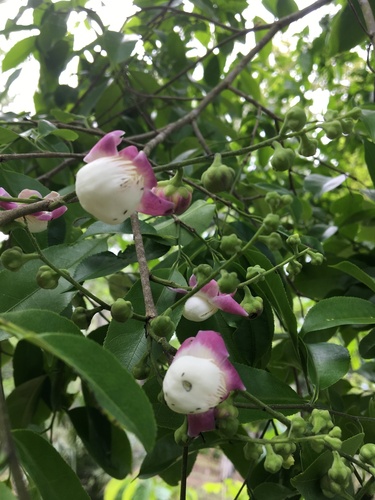
iNaturalist· cc-by-nc
(c) Apipa, some rights reserved (CC BY-NC), uploaded by Apipa
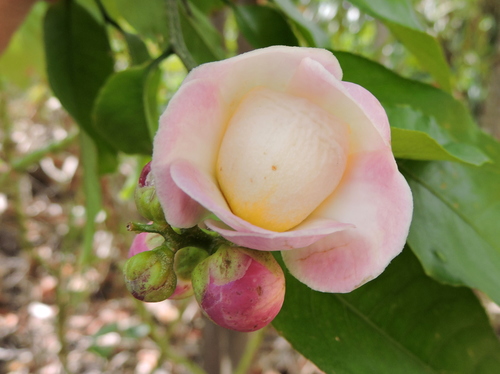
iNaturalist· cc-by-nc
(c) Apipa, some rights reserved (CC BY-NC), uploaded by Apipa
Description
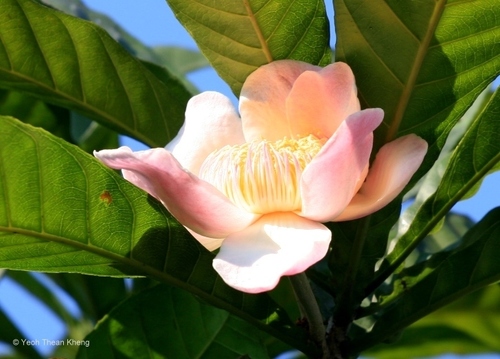
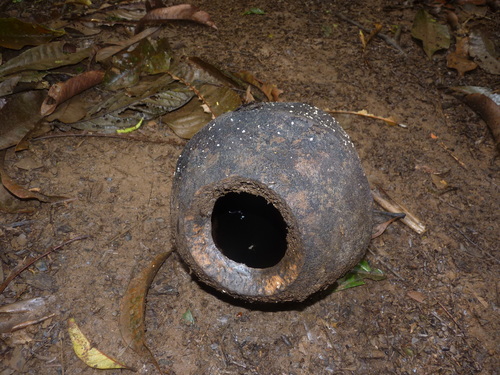
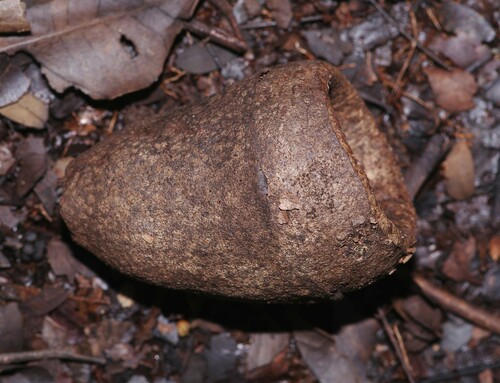
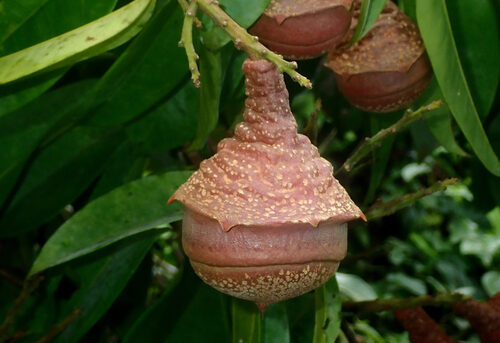
A tree. It grows 10-20 m tall. The crown is dense and oval. The trunk is 30-40 cm across. The leaves are narrowly oval. They are 2-44 cm long by 6-10 cm wide. The flowers usually have 4 rounded lobes. The fruit are round and 4-6 cm across. They are yellow. They contain 1-4 seeds in a fleshy yellow pulp.
Edible Uses
Fruit - raw or cooked. The globose, yellow-green fruit is around 8cm in diameter with a fleshy, yellow pulp surrounding 1 - 4 seeds. Eating the fruit can cause the body of the eater to turn yellow, and, after it remains 24 or 48 hours nothing can erase the colour.
Traditional Uses
CAUTION: The fruit affects the colour of the skin. The flesh of the fruit is eaten raw or cooked with meat and rice.
This uses section is brief — help expand it
Known Hazards
The fruit affects the colour of the skin.
Distribution
A tropical plant. It grows on the flood plain in humid forest in Brazil.
Where It Grows
Amazon, Australia, Brazil, Central America, Colombia, Ecuador, Nicaragua, Peru, South America,
Cultivation
Plants are grown from seeds. They are collected from ripe fruit. The fruit are often allowed to rot in a heap of put in a plastic bag to make it easy to remove the flesh off the seeds. The seeds are washed then planted fresh. They are best put in light shade. Seedlings emerge in 20-35 days.
Propagation
Seed - best sown as soon as it is ripe in a partially shaded position in a nursery seedbed. A germination rate of more than 50% can be expected, with the seed sprouting within 20 - 35 days.
Other Uses
The wood is medium-textured, straight-grained, moderately heavy, hard to cut, slightly susceptible to the attacks of wood-eating insects. It is used as beams and scantlings in general construction.
Production
Plants grow at a moderate rate.
Other Information
It is a cultivated fruit crop. Fruit are sold in markets.
Notes
There are 40 Gustavia species.
Synonyms
Also Known As
Paco
References (11)
- Grandtner, M. M. & Chevrette, J., 2013, Dictionary of Trees, Volume 2: South America: Nomenclature, Taxonomy and Ecology. Academic Press p 285
- Hedrick, U.P., 1919, (Ed.), Sturtevant's edible plants of the world. p 335
- Lopez-Diago, D. & Garcia, N., 2021, Wild edible fruits of Colombia. Biota ColomBiana 22 (2) p 40
- Lorenzi, H., 2009, Brazilian Trees. A Guide to the Identification and Cultivation of Brazilian Native Trees. Instituto Plantarum de Estuados da Flora Ltda. Vol. 3 p 188
- Martin, F. W., et al, 1987, Perennial Edible Fruits of the Tropics. USDA Handbook 642 p 98
Show all 11 references Hide references
- Prance, G. T. and Scott A. Mori, 1979 Lecythidaceae: Part I: The Actinomorphic-Flowered New World Lecythidaceae (Asteranthos, Gustavia, Grias, Allantoma, & Cariniana): Flora Neotropica, Vol. 21, No. 1, Lecythidaceae: pp. 111
- Ricker, M., et al, 1997, The Case for Borojoa patinoi (Rubiaceae) in the Choco Region, Colombia. Economic Botany 51(1) pp 39-48
- Roa, J. A. G. & Boada, D. S. G., 2018, Fundación para el Fortalecimiento de la Fruticultura y Plantas Alimenticias no Convencionales en Colombia.
- Smith, N., Mori, S.A., et al, 2004, Flowering Plants of the Neotropics. Princeton. p 209
- Torre, de la, L., et al, 2008, Enciclopedia de las Plantas Útiles del Ecuador. Herbario QCA. Pontificia Universidad Católica del Ecuador. p 404
- World Checklist of Useful Plant Species 2020. Royal Botanic Gardens, Kew