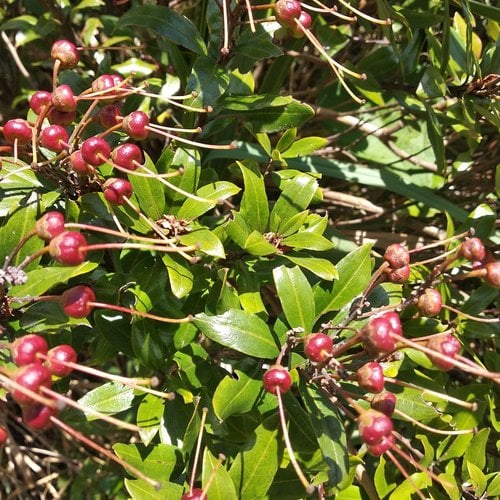
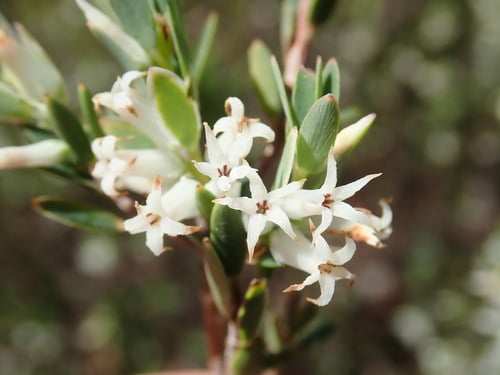
Chamaedaphne calyculata
(L.) Moench
Leatherleaf, Bog rosemary
iNaturalist· cc-by
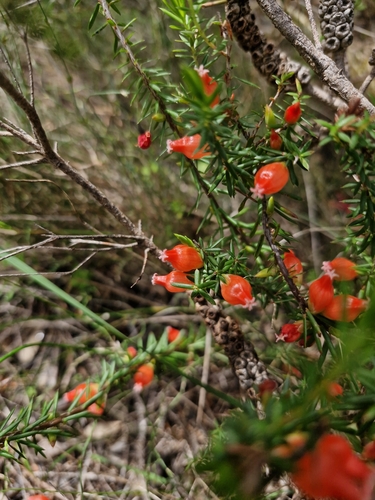
(c) aarongunnar, some rights reserved (CC BY), uploaded by aarongunnar
iNaturalist· cc-by-nc
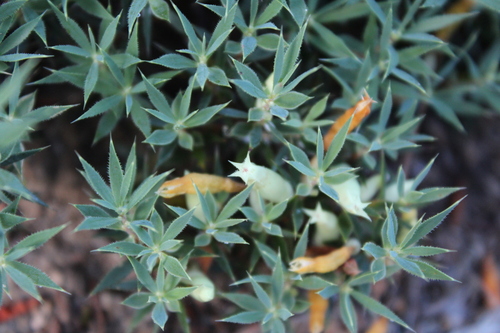
(c) cgbb2004, some rights reserved (CC BY-NC), uploaded by cgbb2004
iNaturalist· cc-by-sa
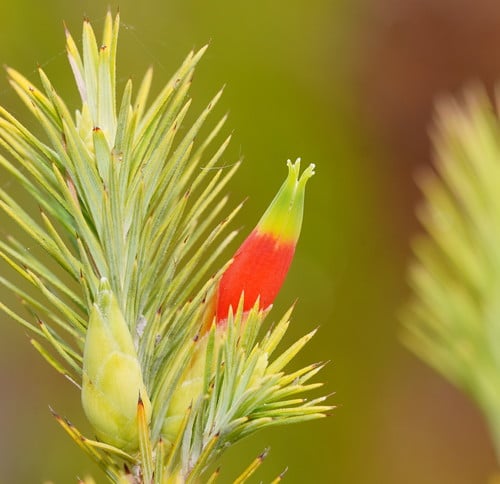
(c) Douglas Goldman, some rights reserved (CC BY-SA), uploaded by Douglas Goldman
Summary
Source: WikipediaAn evergreen shrub growing to 0.8 m tall by 1 m wide, hardy to UK zone 7. Year-round foliage with flowers April to June. Hermaphroditic flowers are insect-pollinated. Tolerates light sandy, medium loamy, and heavy clay soils, preferring well-drained conditions and mildly acid to very acid pH. Grows in semi-shade or full sun, preferring moist soil.
Description
An evergreen shrub. The leaves are thick and leathery. They are green above and have rusty scales underneath. The flowers are bell shaped and white. They occur in rows along new growth.
Edible Uses
An aromatic, tea-like beverage can be brewed from the fresh or dried leaves. Some reports indicate that boiling or steeping may extract a harmful toxin called andromedotoxin; it is therefore recommended to place the leaves in a jar of water and leave it in a sunny spot to brew as a 'sun-tea' instead.
Traditional Uses
CAUTION Boiling can release a harmful toxin called andromedotoxin. To avoid the toxin the leaves are put into water and put in direct sunlight to produce "sun tea".
Medicinal Uses
A poultice of the leaves has been applied to inflammations. An infusion of the leaves has been used to treat fevers.
Known Hazards
Leatherleaf is used as a food plant by the larvae of some Lepidoptera species including Coleophora ledi. In ornamental usage, leatherleaf is widely used by florists as a filler green in bouquets and arrangements. Ethnobotanically, the plant has usage as "sun-tea," a drink in which dried or fresh leaves are steeped in cool water in a sunny location. This technique is used to avoid boiling it as a traditional infusion, which carries the danger of releasing andromedotoxin, a common toxin present in plants of the family Ericaceae. Leatherleaf also has limited medicinal use among some Native American tribes as a poultice of leaves for inflammation.
Distribution
It is a temperate plant. It needs moist, acid soil. It needs a protected shaded position. It is resistant to frost but damaged by drought.
Where It Grows
Asia, Australia, China, Europe, Japan, Korea, Mongolia, North America, Russia, Siberia, USA,
Cultivation
Plants can be grown by seed or by division. It can be cut back after flowering.
Propagation
Sow seed in February in a lime-free compost in a greenhouse, barely covering it. Keep the compost moist and the pot in a shaded position. Germination is generally fair, taking 1–12 months at 15°C, though 4 weeks of cold stratification may reduce this time. Once large enough to handle, prick seedlings into individual pots and grow on in the greenhouse for at least their first winter before planting out in late spring or early summer after the last expected frosts. Cuttings of almost ripe side-shoots, 4–5cm long with a heel, taken in August in a frame have a variable success rate; lightly pruning plants after flowering to encourage vigorous new growth can improve results. Layering in August takes 18 months but gives a high success rate.
Other Uses
None known.
Synonyms
References (8)
- Beckstrom-Sternberg, Stephen M., and James A. Duke. "The Foodplant Database." http://probe.nalusda.gov:8300/cgi-bin/browse/foodplantdb.(ACEDB version 4.0 - data version July 1994)
- Bodkin, F., 1991, Encyclopedia Botanica. Cornstalk publishing, p 242
- Brickell, C. (Ed.), 1999, The Royal Horticultural Society A-Z Encyclopedia of Garden Plants. Convent Garden Books. p 254
- Facciola, S., 1998, Cornucopia 2: a Source Book of Edible Plants. Kampong Publications, p 95
- Lord, E.E., & Willis, J.H., 1999, Shrubs and Trees for Australian gardens. Lothian. p 215
Show all 8 references Hide references
- Methodus 457. 1794
- Toupal, R. S. & Hollenback, K., 2009, An Ethnobotany of Indiana Dunes National Lakeshore: Plant Uses of the Ojibwa People. Bureau of Applied Research in Anthropology. University of Arizona
- Urgamal, M., Oyuntsetseg, B., Nyambayar, D. & Dulamsuren, Ch. 2014. Conspectus of the vascular plants of Mongolia. (Editors: Sanchir, Ch. & Jamsran, Ts.). Ulaanbaatar, Mongolia. “Admon“ Press. 334pp. (p. 79-90).