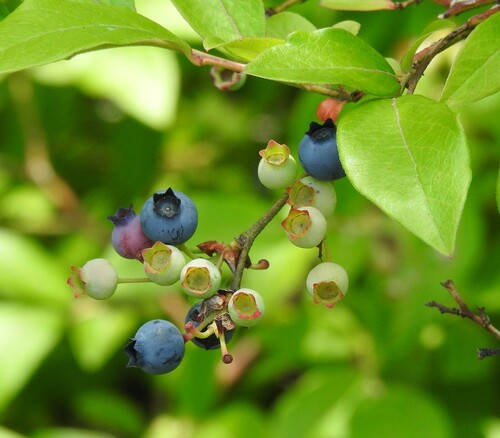
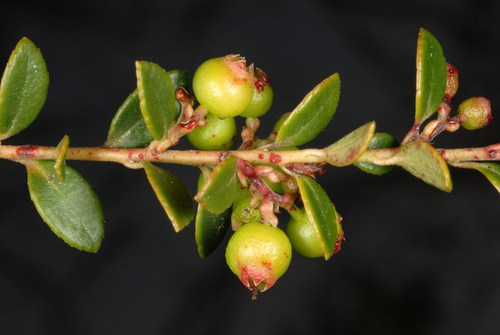
Chimaphila maculata
(L.) Pursh
Spotted wintergreen
iNaturalist· cc-by
(c) Patrick Hanly, some rights reserved (CC BY), uploaded by Patrick Hanly
iNaturalist· cc-by-nc
(c) jeansimonrichard, some rights reserved (CC BY-NC)
iNaturalist· cc0
no rights reserved
Summary
Source: WikipediaChimaphila maculata (spotted wintergreen, also called striped wintergreen, striped prince's pine, spotted pipsissewa, ratsbane, or rheumatism root) is a small, perennial, evergreen herb native to eastern North America and Central America, from southern Quebec west to Illinois, and south to Florida and Panama.
Description
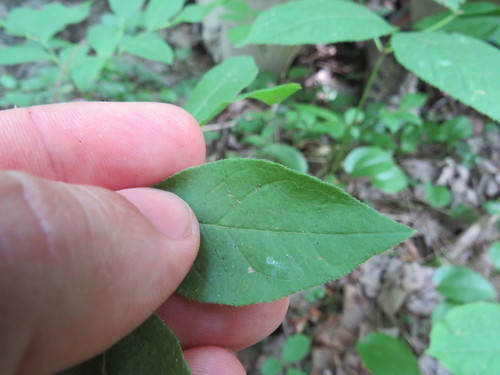
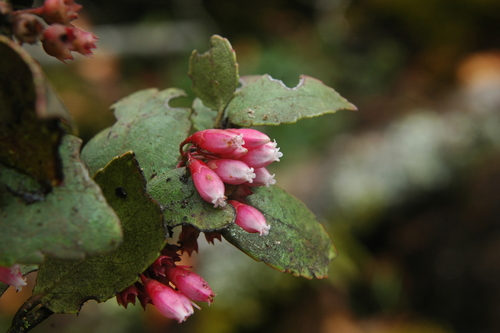
A herb. It grows 10-25 cm tall. The stems come from creeping rhizomes. The leaves are dark green with lighter patches along the veins and 2-7 cm long by 1-3 cm wide. The flowers are almost round and white or pink. They are on long stalks. The fruit are small capsules 6-8 mm across.
Edible Uses
The leaves are used as a snack, nibbled for their refreshing qualities. In Mexico the herb is used as a catalyst in the preparation of tesguino, an alcoholic beverage produced from sprouted maize.
Traditional Uses
The leaves are used for tea. They are also used as a catalyst in the making of an alcoholic drink using maize. Caution: Alcohol is a cause of cancer.
Medicinal Uses
The plant is analgesic, antibacterial, astringent, diaphoretic, diuretic, febrifuge, rubefacient, stimulant, and tonic. It has an antiseptic effect on the urinary system and is sometimes used in the treatment of cystitis. An infusion of the plant has been drunk for rheumatism and colds. A poultice of the root has been applied to relieve pain, and the plant has been used as a wash on ulcers, scrofula, and cancers. All parts of the plant can be used medicinally, though only the leaves are officinal. The plant contains the biologically active compounds arbutin, sitosterol, and ursolic acid. Arbutin hydrolyzes to hydroquinone, a toxic urinary antiseptic.
Distribution
It is a temperate plant. It can grow in acid soils. It suits hardiness zones 5-8.
Where It Grows
Canada, Central America, Mexico, North America, Panama, USA,
Cultivation
A plant mainly of the temperate zone, also growing at higher elevations in the tropics of Central America. Requires a light moist but well-drained lime-free soil and shade from direct sunlight. This species is difficult to propagate and grow in cultivation, mainly because it has certain mycorrhizal associations in the wild and these are necessary if the plant is to thrive. It is best to use some soil collected from around an established plant when sowing seed or planting out into a new position. The plant has wide-spreading fibrous feeding roots and will often die or fail to increase in size if these are disturbed. The flowers are deliciously scented.
Propagation
Seed is very difficult to germinate and is best sown on moist sphagnum peat. Once seedlings are large enough to handle, prick them out into individual pots and grow on in a shady position in the greenhouse for at least the first winter, then plant out in late spring or early summer after the last expected frosts. Division is also possible but difficult, as the plant is very sensitive to root disturbance; attempt it in spring as growth begins. Softwood cuttings can be taken in June in a frame — use some soil taken from around an established plant.
Other Uses
The plant's stoloniferous root system and low, spreading habit make it a useful ground cover, though it is difficult to establish and grow well.
Notes
There are 6 Chimaphila species. They are in Europe and North America. The leaves are used as medicine.
Synonyms
Also Known As
Encinilla, Hierba de madrono, Spotted pipsissewa, Ratsbane
References (6)
- Facciola, S., 1998, Cornucopia 2: a Source Book of Edible Plants. Kampong Publications, p 189
- Fl. Amer. sept. 1:300. 1813-1814
- Jackes, D. A., Edible Forest Gardens
- Kermath, B. M., et al, 2014, Food Plants in the Americas: A survey of the domesticated, cultivated and wild plants used for Human food in North, Central and South America and the Caribbean. On line draft. p 219
- Kiple, K.F. & Ornelas, K.C., (eds), 2000, The Cambridge World History of Food. CUP p 1835
Show all 6 references Hide references
- Plants for a Future database, The Field, Penpol, Lostwithiel, Cornwall, PL22 0NG, UK. http://www.scs.leeds.ac.uk/pfaf/