Berberis aristata
DC.
Indian barberry, Nepal Barberry
iNaturalist· cc-by-nc
(c) Rajendra Koranga, some rights reserved (CC BY-NC), uploaded by Rajendra Koranga
iNaturalist· cc-by-nc
(c) Suresh Ghimire, some rights reserved (CC BY-NC), uploaded by Suresh Ghimire
iNaturalist· cc-by
(c) P Jeganathan, some rights reserved (CC BY), uploaded by P Jeganathan
Summary
Source: WikipediaBerberis aristata, also known as Indian barberry, Mara manjal (மரமஞ்சள்), chutro, sumba, sumbal Daruharidra, or tree turmeric, is a shrub belonging to the family Berberidaceae and the genus Berberis. B. aristata is native to the Himalayas in India and in Pakistan and in Nepal. It is also naturally found in the Nilgiri Mountains of southern India and in Sri Lanka.
Description
A spiny deciduous shrub. It grows to 3-5 m high. The branches are usually red. The leaves are almost without stalks. They are clustered together and are 2-7 cm long by 0.5-2 cm wide. The are oval with 3 pronged spines. Leaves are smooth and taper to the base. They can have teeth along the edge and be spiny. The flowers are yellow and drooping. The fruit is oval and blue-black when ripe.
Edible Uses
Edible Parts: Flowers Fruit Edible Uses: Fruit - raw or cooked. A well-flavoured fruit, it has a sweet taste with a blend of acid, though there is a slight bitterness caused by the seeds[194, K]. The fruit is much liked by children[194, K]. It is dried and used like raisins in India. The fruit contains about 2.3% protein, 12% sugars, 2% ash, 0.6% tannin, 0.4% pectin. There is 4.6mg vitamin C per 100ml of juice.The fruit is about 7mm x 4mm - it can be up to 10mm long. Plants in the wild yield about 650g of fruit in 4 pickings. Flower buds - added to sauces. References More on Edible Uses Composition Figures in grams (g) or miligrams (mg) per 100g of food. Fruit (Fresh weight) 0 Calories per 100g Water : 0% Protein: 2.3g; Fat: 0g; Carbohydrate: 12g; Fibre: 0g; Ash: 2g; Minerals - Calcium: 0mg; Phosphorus: 0mg; Iron: 0mg; Magnesium: 0mg; Sodium: 0mg; Potassium: 0mg; Zinc: 0mg; Vitamins - A: 0mg; Thiamine (B1): 0mg; Riboflavin (B2): 0mg; Niacin: 0mg; B6: 0mg; C: 0mg; Reference: Notes:
Traditional Uses
The ripe fruit is eaten raw and also pickled. They are used in preserves, desserts and sauces. The fruit are dried and eaten. Alcohol is distilled from ripe fruit. Caution: Alcohol is a cause of cancer. The flower buds are used in sauces. The seeds are roasted and pickled.
Medicinal Uses
Alterative Antibacterial Antiperiodic Bitter Cancer Deobstruent Diaphoretic Dysentery Laxative Malaria Ophthalmic Tonic Vitamin C The dried stem, root bark and wood are alterative, antiperiodic, deobstruent, diaphoretic, laxative, ophthalmic and tonic (bitter). An infusion is used in the treatment of malaria, eye complaints, skin diseases, menorrhagia, diarrhoea and jaundice. Berberine, universally present in rhizomes of Berberis species, has marked antibacterial effects. Since it is not appreciably absorbed by the body, it is used orally in the treatment of various enteric infections, especially bacterial dysentery. It should not be used with Glycyrrhiza species (Liquorice) because this nullifies the effects of the berberine. Berberine has also shown antitumour activity.
Distribution
It is a temperate plant. It grows in Nepal between 1800-3000 m altitude. It grows on open hillsides. It suits moist places. It suits hardiness zones 6-9.
Where It Grows
Asia, Australia, Bhutan, Britain, Europe, Himalayas, India, Nepal, Northeastern India, NW India, Pakistan, Sri Lanka, Turkey, Türkiye,
Cultivation
Prefers a warm moist loamy soil and light shade but it is by no means fastidious, succeeding in thin, dry and shallow soils. Grows well in heavy clay soils. Plants are very hardy, they survived the severe winters of 1986-1987 without problems in most areas of Britain. Plants can be pruned back quite severely and resprout well from the base. The fruits are sometimes sold in local markets in India. Hybridizes freely with other members of this genus. Most plants cultivated under this name are B. chitria., B. coriaria., B. glaucocarpa. and, more commonly, B. floribunda. The berries are typically harvested in late summer to early autumn when they are ripe. Barberry generally flowers in spring, depending on the species and local climate. Barberry is a moderately fast-growing plant, often reaching maturity in 3 to 5 years, depending on the species and growing conditions.
Propagation
Seed - best sown as soon as it is ripe in a cold frame, it should germinate in late winter or early spring. Seed from over-ripe fruit will take longer to germinate. Stored seed may require cold stratification and should be sown in a cold frame as early in the year as possible. When they are large enough to handle, prick the seedlings out into individual pots and grow them on in the greenhouse or cold frame for at least their first winter. Once they are at least 20cm tall, plant them out into their permanent positions in late spring or early summer, after the last expected frosts. The seedlings are subject to damping off, so be careful not to overwater them and keep them well ventilated. Cuttings of half-ripe wood, July/August in a frame. Very difficult, if not impossible. Cuttings of mature wood of the current season's growth, preferably with a heel, October/November in a frame. Very difficult, if not impossible.
Other Uses
Dye Fuel Tannin A yellow dye is obtained from the root and the stem. An important source of dyestuff and tannin, it is perhaps one of the best tannin dyes available in India. The wood is used as a fuel. The spiny branches are used for making fencing around fields. 1. Nectary - Flowers rich in nectar and pollen: Yes – Barberry flowers are small but rich in nectar and pollen, attracting bees and other pollinators. 2. Wildlife - Food (Fruit, Seeds, Leaf litter, Shelter, Nesting, Roosting): Yes – Barberry produces edible berries that are a food source for birds and other wildlife. The dense, thorny branches provide good shelter and protection for nesting and roosting birds. 3. Invertebrate Shelter (Overwintering sites, Leaf litter, Groundcover): Yes – The dense structure of Barberry shrubs and their leaf litter can offer overwintering sites and shelter for invertebrates. 4. Pest Confuser (Smell): No – Barberry is not known for emitting a smell that confuses pests. Special Uses Food Forest
Other Information
Fruit are sold in local markets. The fruit are especially eaten by children.
Notes
There are about 450-500 Berberis species.
Synonyms
Also Known As
Akhray, Barberry (Zirishk), Chitra, Chompairaim, Chotto, Chutro, Chutrum, Dar-hald, Darhaldi, Daruhald, Daruhalli, Darukaridra, Gruch, Himalayan berberry, Kanchan, Karya, Kashmal, Kimor, Kingor, Kyerkar, Kyerwa, Marpyashi, Musa lede, Nepal Berberis, Pichyar, Rasanjan, Rasaut, Shamle, Simlu, Tishya, Trikhula
References (44)
- Agarwal, R. & Chandra, V., 2019, Diversity of wild edible plants in the Mandal-Chopta forest, Uttarakhand. Journal of Medicinal Plants Studies 2019; 7(1): 89-92
- Ahmed, M., et al, 2013, Characterization of indigenous barberry germplasm in Pakistan: variability in morphological characteristics and nutritional composition. Fruits Vol. 68 pp 409-422
- Ambasta S.P. (Ed.), 2000, The Useful Plants of India. CSIR India. p 71
- Aryal, K. P., et al, 2018, Diversity and use of wild and non-cultivated edible plants in the Western Himalaya. Journal of Ethnobiology and Ethnomedicine (2018) 14:10
- Bahuguna, A. et al, 2010, Floristic Diversity and Indigenous uses of Forest Vegetation of Dabka Watershed in Indian Central Himalayas. Ethnobotanical Leaflets 14:491-510
Show all 44 references Hide references
- Bhattarai, S and Chaudary, R. P., 2009, Wild Edible Plants Used by the People of Manang District, Central Nepal. Ecology of Food and Nutrition, 48:1-20 (Also as Berberis ceratophylla)
- Bircher, A. G. & Bircher, W. H., 2000, Encyclopedia of Fruit Trees and Edible Flowering Plants in Egypt and the Subtropics. AUC Press. p 57
- Dangol, D. R. et al, 2017, Wild Edible Plants in Nepal. Proceedings of 2nd National Workshop on CUAOGR, 2017.
- DARLINGTON & AMMAL,
- Etherington, K., & Imwold, D., (Eds), 2001, Botanica's Trees & Shrubs. The illustrated A-Z of over 8500 trees and shrubs. Random House, Australia. p 123
- Facciola, S., 1998, Cornucopia 2: a Source Book of Edible Plants. Kampong Publications, p 48
- Gautam, R. S., et al, 2020, Wild Edible Fruits of Nepal. Int. J. Appl. Sci. Biotechnol. Vol 8(3): 289-304 (Also as Berberis ceratophylla)
- Gautam, R. S., et al, 2022, Ethnobotanical Review of Wild Edible Plants of Nepal. Journal of Natural History Museum Volume 32, 2021-22 p 107 (Also as Berberis ceratophylla)
- Ghimire, S. K., et al, 2008, Non-Timber Forest Products of Nepal Himalaya. WWF Nepal p 29
- Glowinski, L., 1999, The Complete Book of Fruit Growing in Australia. Lothian. p 179
- GUPTA
- Hedrick, U.P., 1919, (Ed.), Sturtevant's edible plants of the world. p 97
- Khakurel, D., et al, 2021, Foods from the wild: Local knowledge, use pattern and distribution in Western Nepal. PLOS ONE.
- Khan, M. & Hussain, S., 2014, Diversity of wild edible plants and flowering phenology of district Poonch (J & K) in the northwest Himalaya. Indian Journal of Sci, Res. 9(1): 032-038
- Kunkel,
- Lord, E.E., & Willis, J.H., 1999, Shrubs and Trees for Australian gardens. Lothian. p 206 (As Berberis chitria)
- Lyle, S., 2006, Discovering fruit and nuts. Land Links. p 88
- Manandhar, N.P., 2002, Plants and People of Nepal. Timber Press. Portland, Oregon. p 108
- Manandhar, N.P., 2002, Plants and People of Nepal. Timber Press. Portland, Oregon. p 109 (As Berberis chitria)
- Mehta, P. S. et al, 2010, Native plant genetic resources and traditional foods of Uttarakhand Himalaya for sustainable food security and livelihood. Indian Journal or Natural products and Resources. Vol 1(1), March 2010 pp 89-96
- Mukhia, P.K., et al, 2013, Wild plants as Non Wood Forest Products used by the rural community of Dagana, a southern foothill district of Bhutan, SAARC Journal, 27 pages
- Negi, P. S. & Subramani, S. P., 2015, Wild Edible Plant Genetic Resources for Sustainable Food Security and Livelihood of Kinnaur District, Himachal Pradesh, India, International Journal of Conservation Science. 6 (4): 657-668
- Parmar, C., & Kaushel, M. K., 1982, In Wild Fruits. Kalyani Publishers, New Delhi, India. p 10
- Plants for a Future database, The Field, Penpol, Lostwithiel, Cornwall, PL22 0NG, UK. http://www.scs.leeds.ac.uk/pfaf/ (As Berberis chitria)
- Plants for a Future database, The Field, Penpol, Lostwithiel, Cornwall, PL22 0NG, UK. http://www.scs.leeds.ac.uk/pfaf/
- Radha, B., et al, 2013, Wild Edible Plant Resources of the Lohba Range of Kedarnath Forest Division (KFD), Garhwal Himalaya, India. Int. Res J. Biological Sci. Vol. 2 (11), 65-73
- Rana, D., et al, 2020, Use of medicinal plants for treating different ailments by the indigenous people of Churah subdivision of district Chamba, Himachal Pradesh, India. Environment, Development and Sustainability. Springer.
- Rashid, A., Anand, V.K. & Serwar, J., 2008, Less Known Wild Plants Used by the Gujjar Tribe of District Rajouri, Jammu and Kashmir State. International Journal of Botany 4(2):219-244
- Sharma, P., et al, 2013, Wild edibles of Murari Devi and surrounding areas in Mandi district of Himachal Pradesh, India. International Journal of Biodiversity and Conservation. Vol. 5(9), pp. 580-592, September 2013
- Shrestha, S., 2021, Wild Edible Plants of Dhankuta, Eastern Nepal. Rupantaran : A Multidisciplinary Journal Vol. V : pp 100-109, September, 2021 p 103
- Singh, H.B., Arora R.K.,1978, Wild edible Plants of India. Indian Council of Agricultural Research, New Delhi. p 50
- Singh, V. B., et al, (Ed.) Horticulture for Sustainable Income and Environmental Protection. Vol. 1 p 214
- Syst. nat. 2:8. 1821
- Thakur, D., et al, 2017, Why they eat, what they eat: patterns of wild edible plants consumption in a tribal area of Western Himalaya. Journal of Ethnobiology and Ethnomedicine (2017) 13:70
- Thapa, L. B., et al, 2014, Wild Edible Plants used by endangered and Indigenous Raji Tribe in Western Nepal. International Journal of Applied Sciences and Biotechnology. Vol 2(3):243-252
- Tsering, J., et al, 2017, Ethnobotanical appraisal on wild edible plants used by the Monpa community of Arunchal Pradesh. Indian Journal of Traditional Knowledge. Vol 16(4), October 2017, pp 626-637
- Upreti, K., et al, 2010, Diversity and Distribution of Wild Edible Fruit Plants of Uttarakhand. Bioversity Potentials of the Himalaya. p 162
- Uprety, Y., et al, 2016, Traditional use and management of NTFPs in Kangchenjunga Landscape: implications for conservation and livelihoods. Journal of Ethnobiology and Ethnomedicine (2016) 12:19
- Watt,
More from Berberidaceae
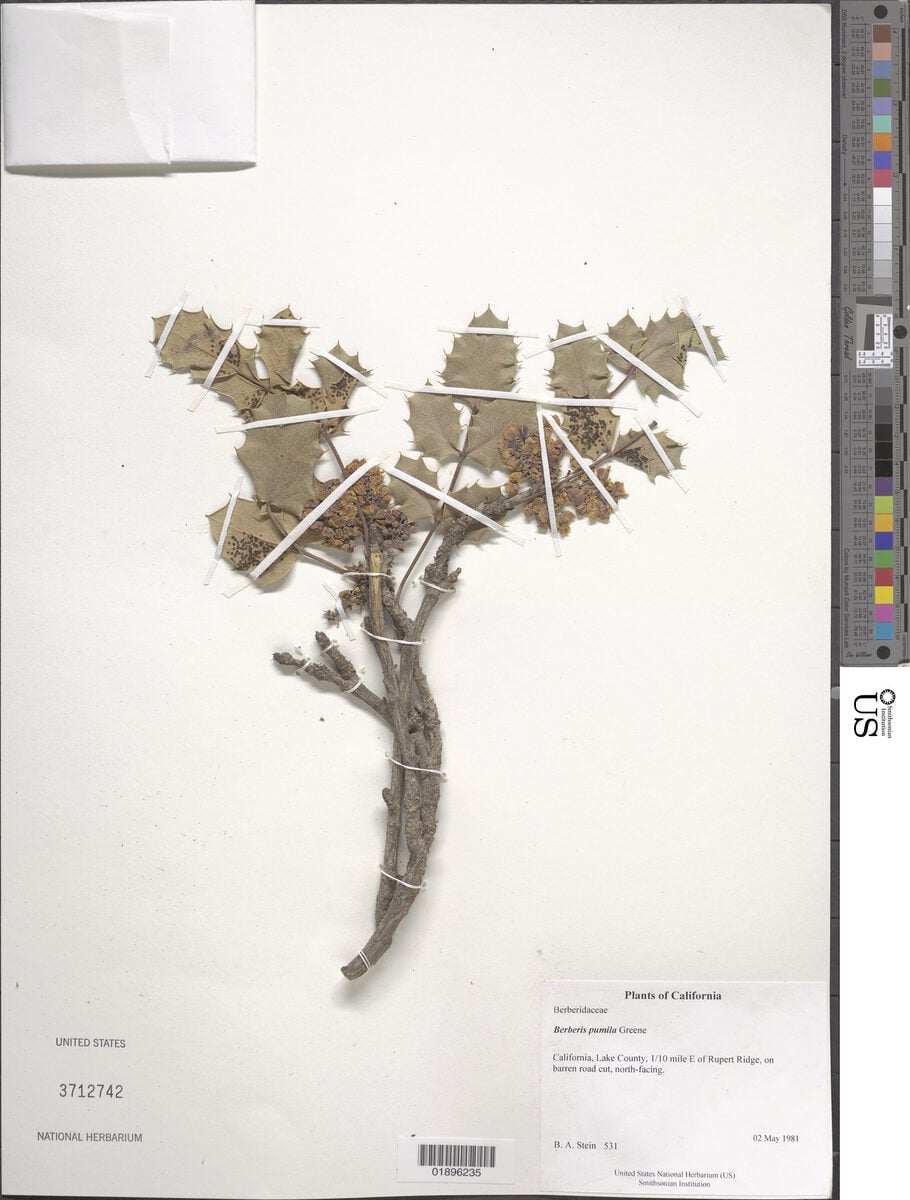
Mahonia pumila - (Greene.)Fedde.
Dwarf Barberry
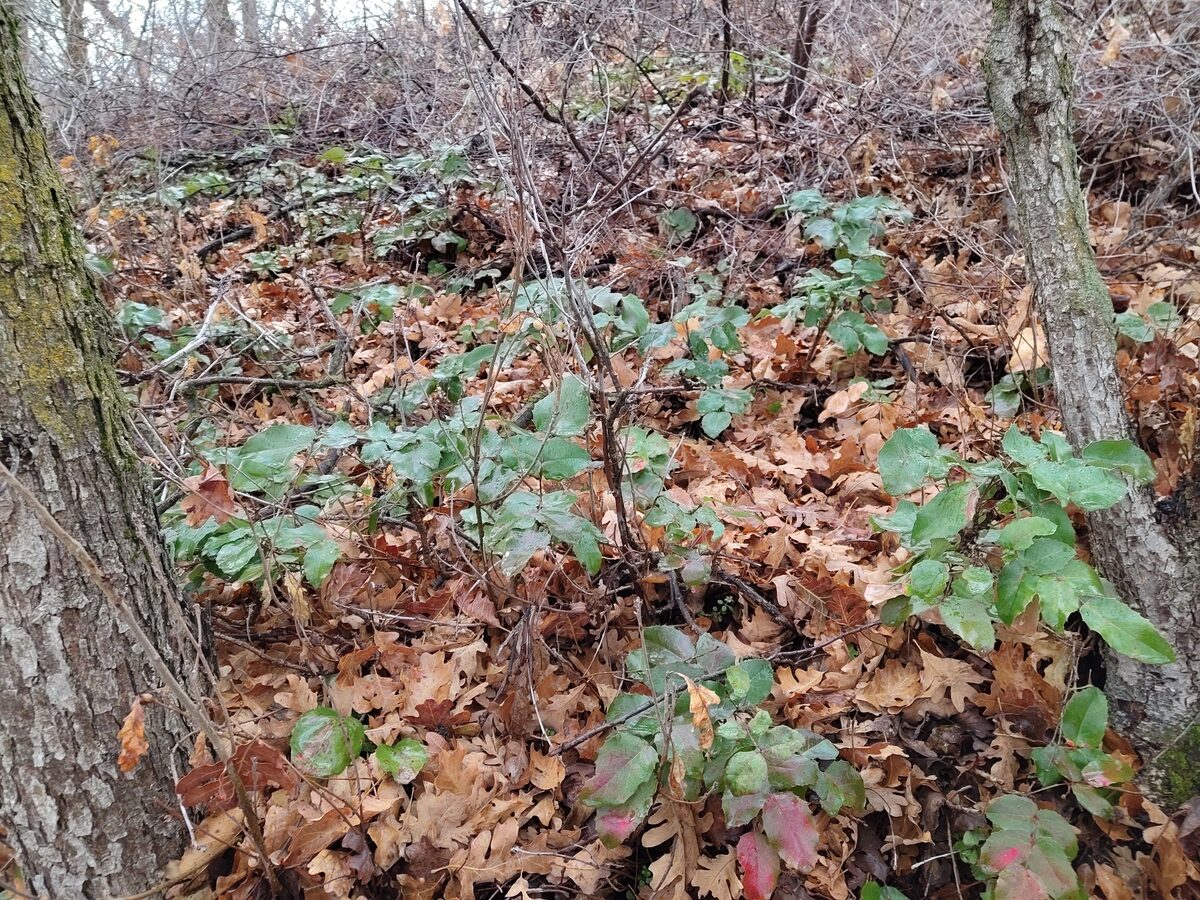
Mahonia repens - (Lindl.)G.Don.
Creeping Oregon Grape, Creeping barberry, Grape Oregon
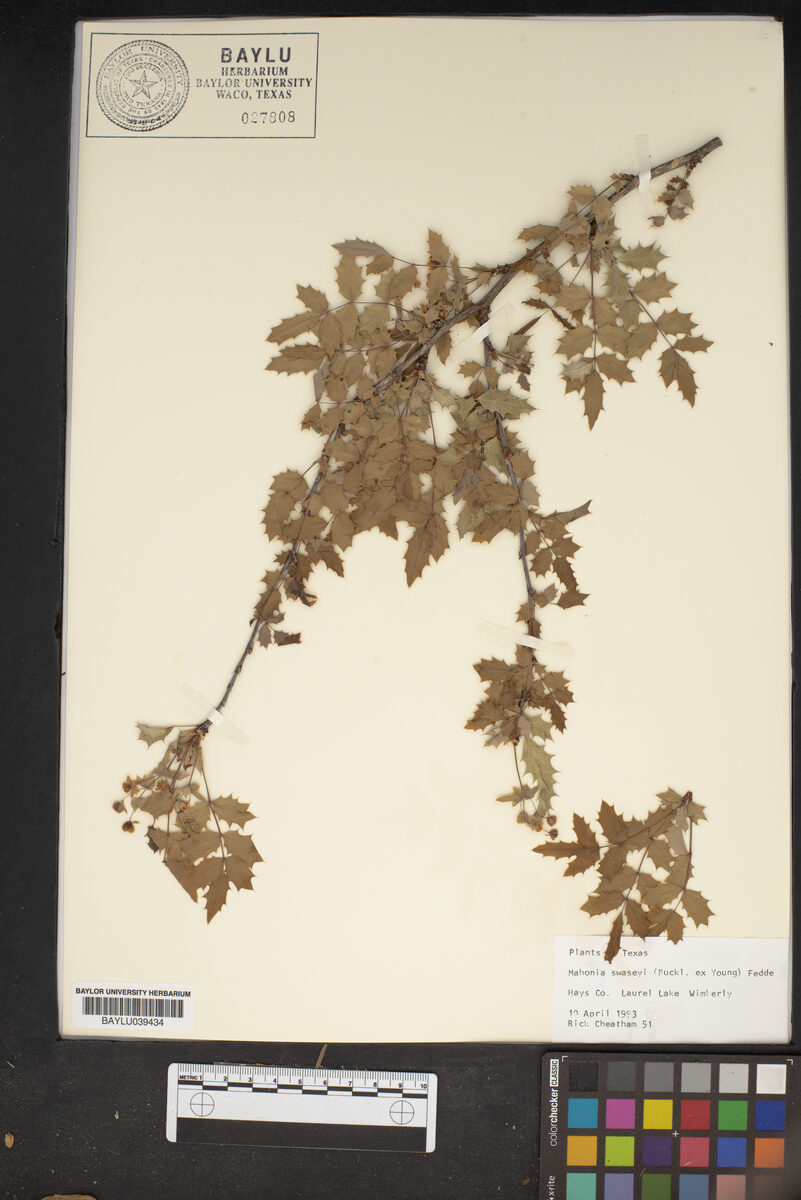
Mahonia swaseyi - (Buckley.)Fedde.
Texas Mahonia, Texas barberry
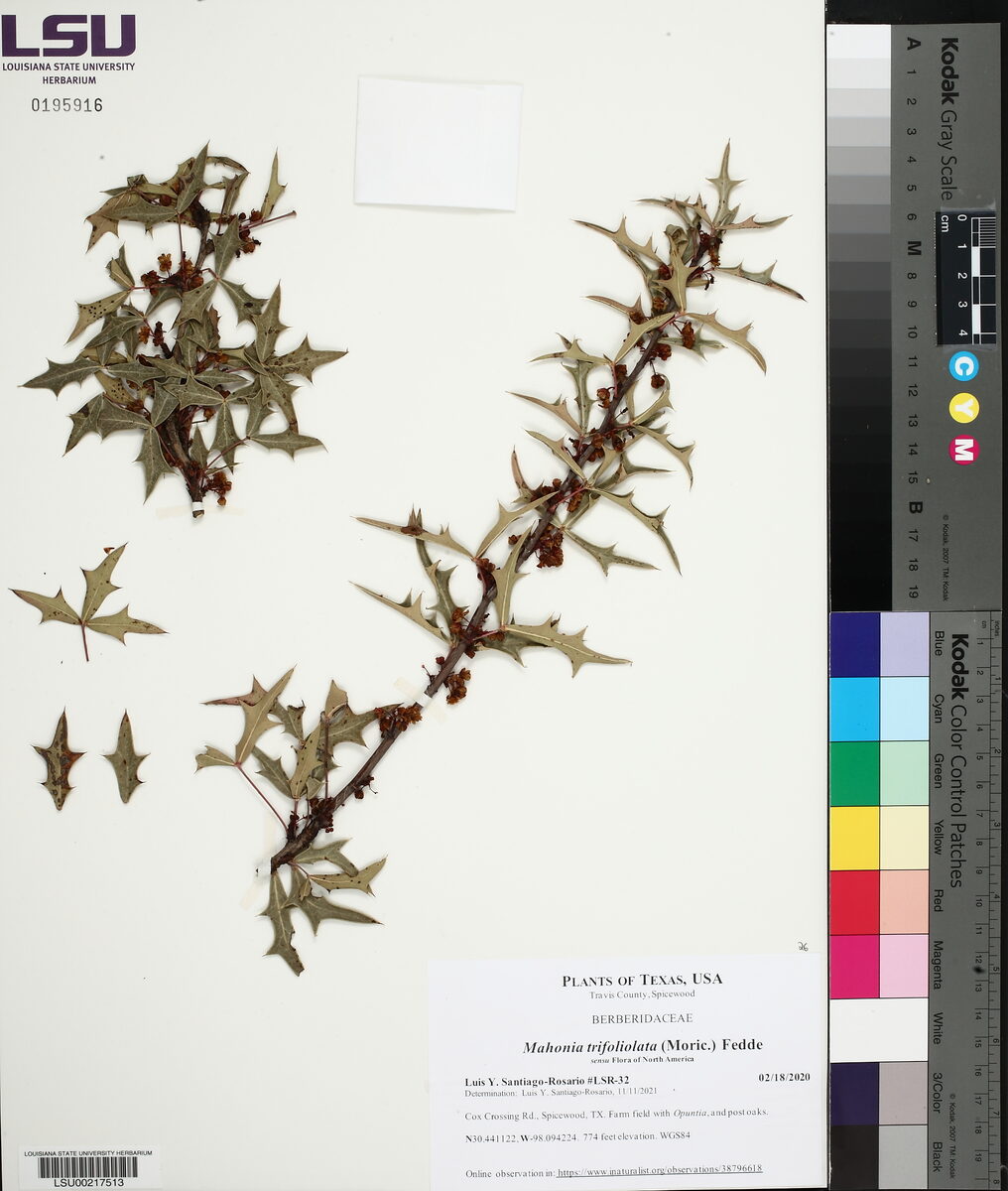
Mahonia trifoliolata - (Moric.)Fedde.
Threeleaf Barberry, Mexican Barberry, Algerita
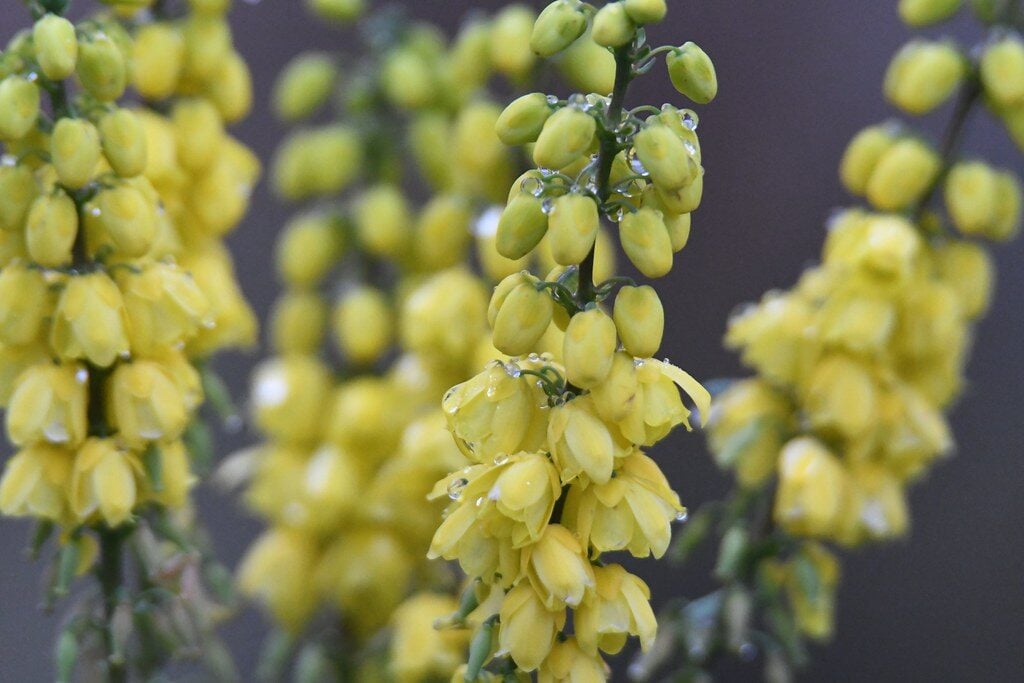
Mahonia x media
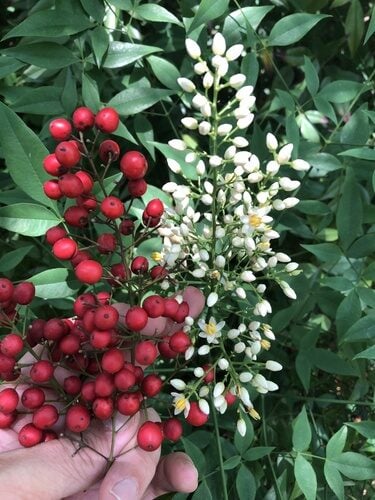
Nandina domestica
Sacred Bamboo, Heavenly Bamboo