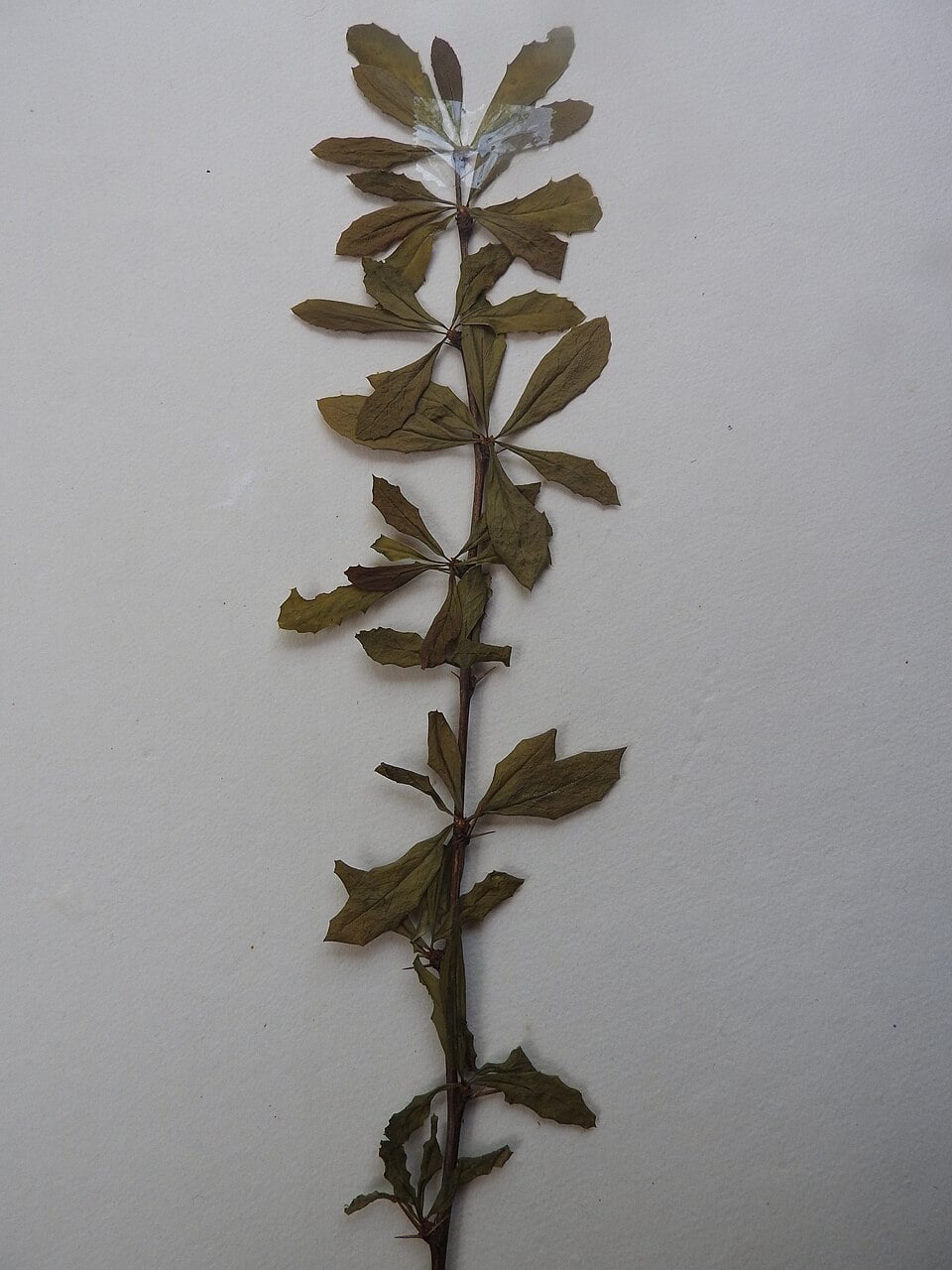
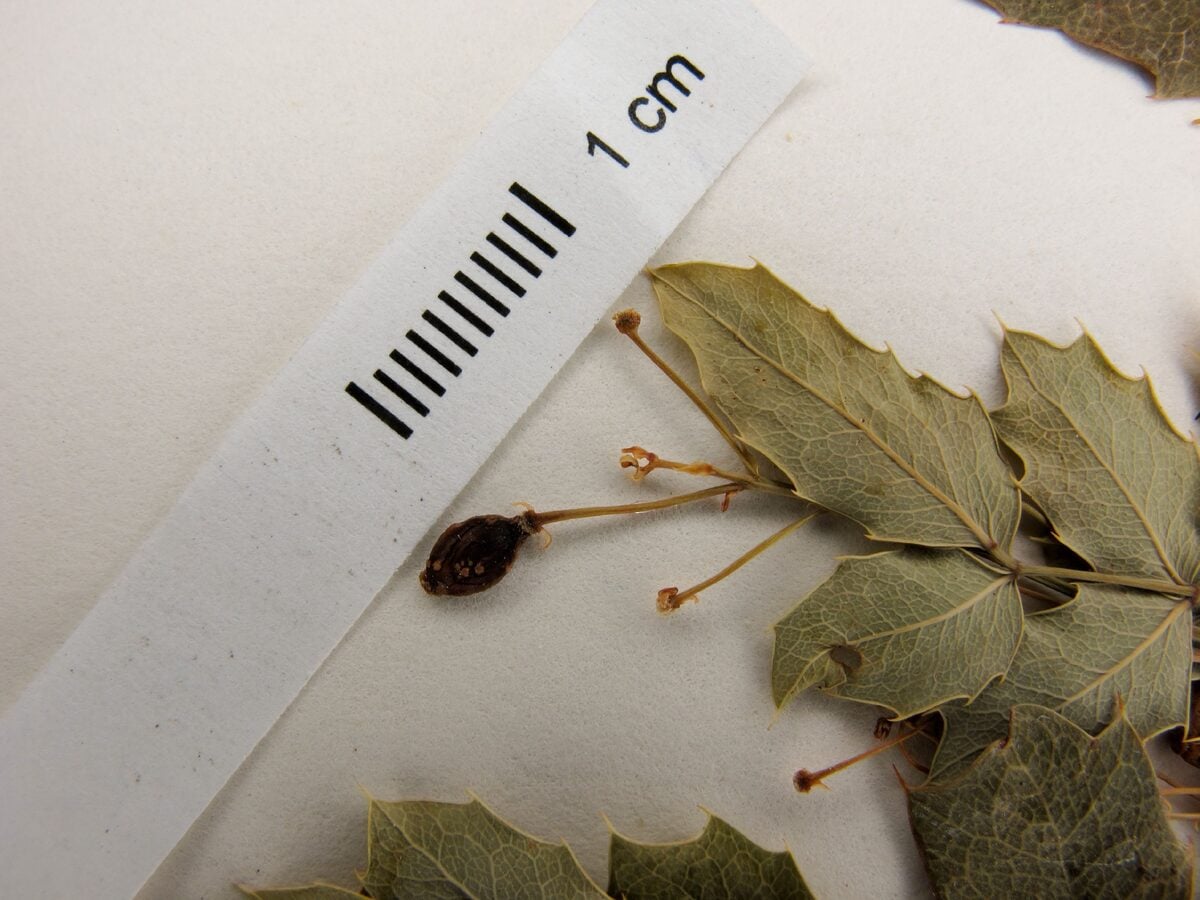
Berberis thunbergii
DC.
Japanese barberry
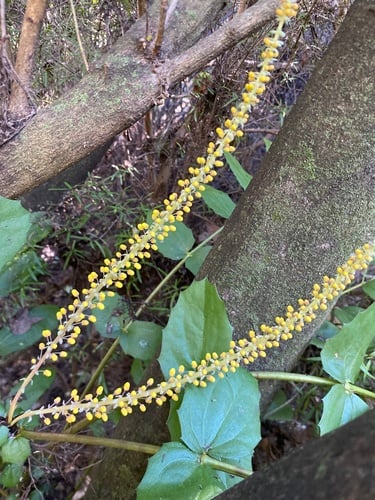
iNaturalist· cc-by-nc
(c) Mark Kluge, some rights reserved (CC BY-NC), uploaded by Mark Kluge
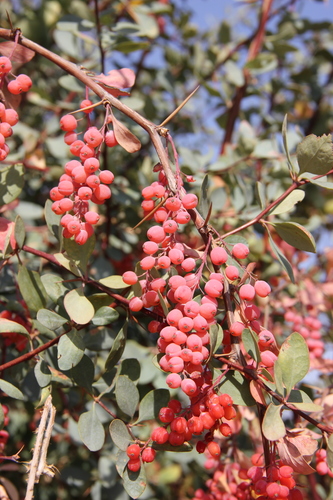
iNaturalist· cc-by-nc-sa
(c) Rob Curtis, some rights reserved (CC BY-NC-SA), uploaded by Rob Curtis
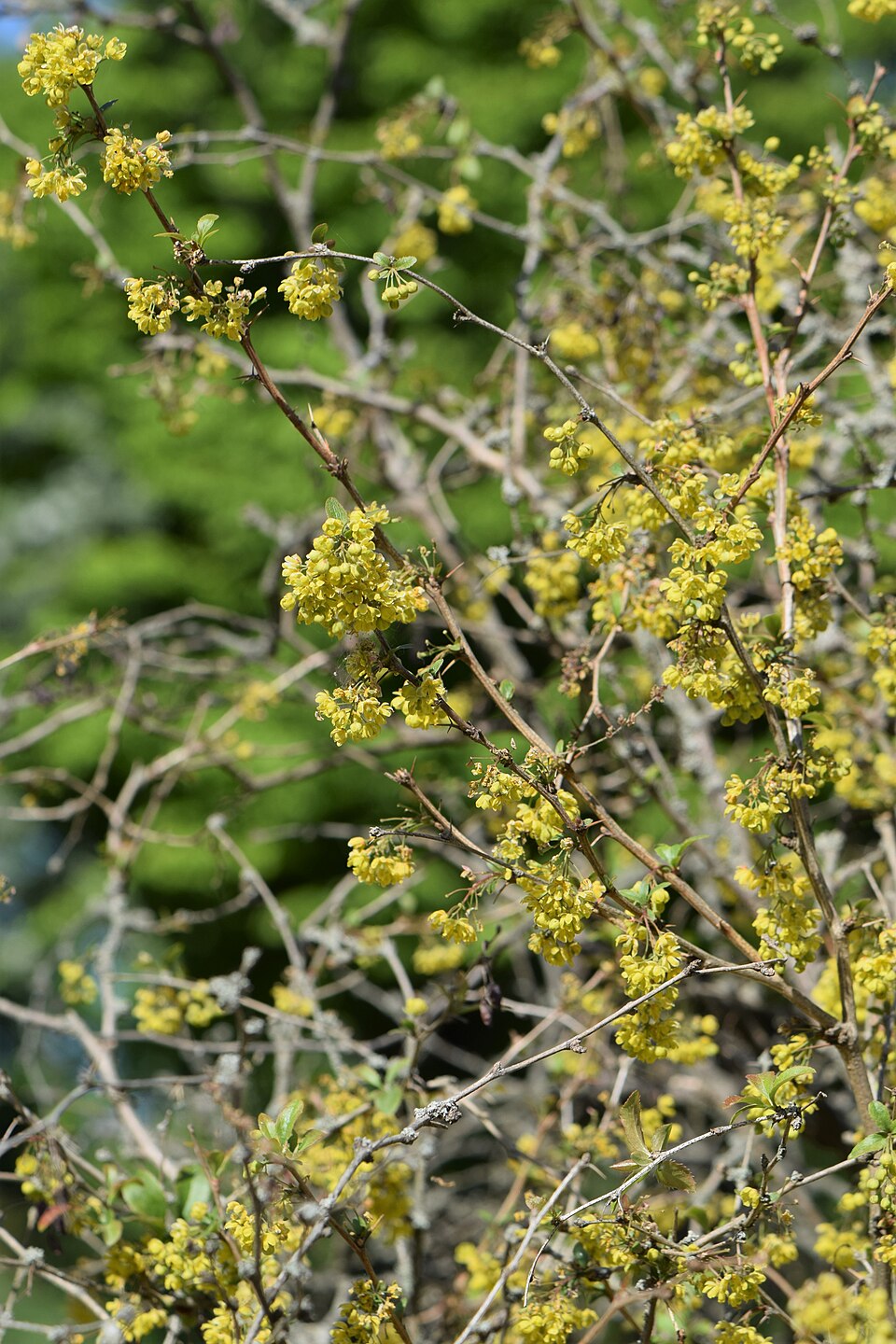
iNaturalist· cc-by-sa
(c) F. D. Richards, some rights reserved (CC BY-SA)
Summary
Source: WikipediaBerberis thunbergii, the Japanese barberry, Thunberg's barberry, or red barberry, is a species of flowering plant in the barberry family Berberidaceae, native to Japan and eastern Asia, though widely naturalized in China and North America, where it has become a problematic invasive in many places, leading to declines in species diversity, increased tick habitat, and soil changes. Growing to 1 m (3 ft 3 in) tall by 2.5 m (8 ft 2 in) broad, it is a small deciduous shrub with green leaves turning red in the autumn, brilliant red fruits in autumn and pale yellow flowers in spring.
Description
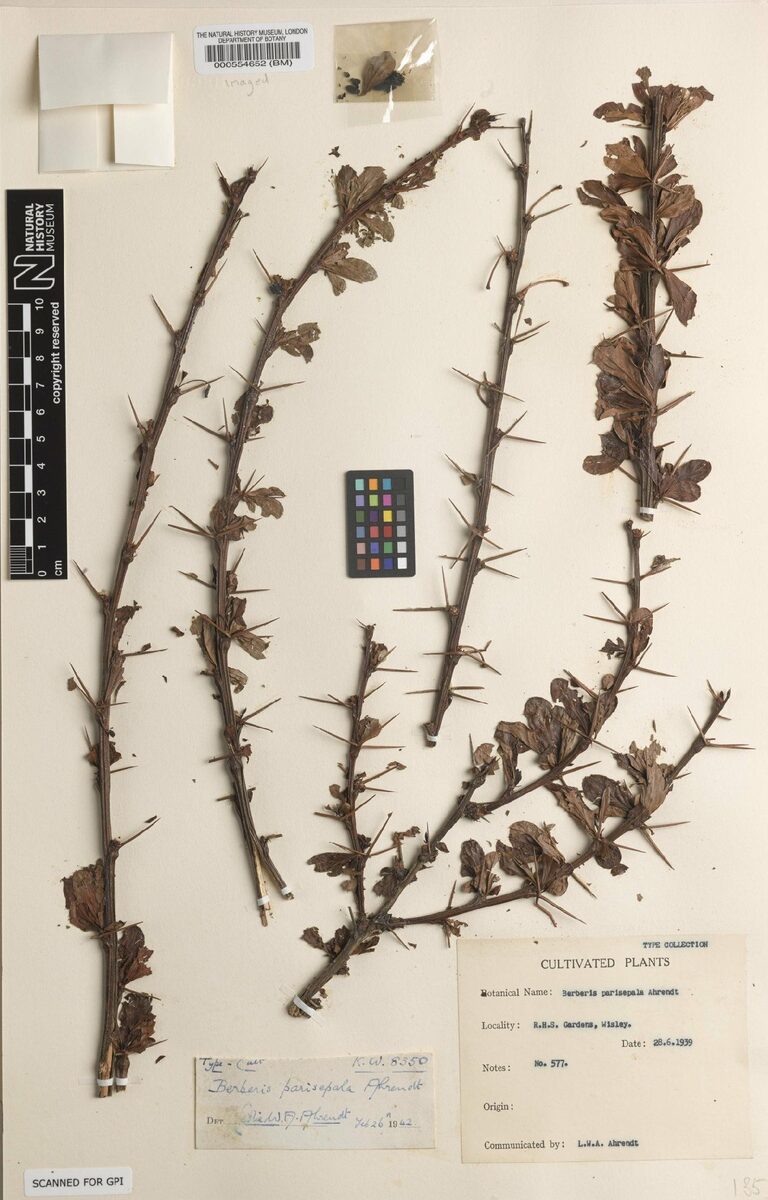
A shrub. It grows 1.2-1.8 m tall. It is spiny and loses its leaves during the year. It spreads 1.8-2.5 m wide. The leaves are small and neatly rounded. The leaves turn bright red or orange in autumn. The flowers are straw coloured with dull red stripes. They are small and bell shaped. The fruit are small oval berries which turn scarlet. Several named varieties occur.
Edible Uses
Edible Parts: Fruit Leaves Edible Uses: Fruit - raw or cooked. Dry with a very poor flavour. The fruits are about 8mm long. Leaves - cooked.
Traditional Uses
CAUTION: Plants in this group are slightly poisonous. The fruit are eaten fresh and used for jams and jellies. They are also dried.
This uses section is brief — help expand it
Medicinal Uses
Anthelmintic Antibacterial Antiseptic Cancer Dysentery Febrifuge The root bark is anthelmintic, antiseptic and febrifuge. Berberine, universally present in rhizomes of Berberis species, has marked antibacterial effects. Since it is not appreciably absorbed by the body, it is used orally in the treatment of various enteric infections, especially bacterial dysentery. It should not be used with Glycyrrhiza species (Liquorice) because this nullifies the effects of the berberine. Berberine has also shown antitumour activity.
Distribution
It is a temperate plant. It is frost hardy. It is native to Japan. It suits light to medium well-drained soils. It is resistant to drought. It suits hardiness zones 4-9. Arboretum Tasmania. Burnie Rhodo gardens. Hobart Botanical Gardens.
Where It Grows
Asia, Australia, Canada, China, Japan*, Korea, Slovenia, Tasmania, USA,
Cultivation
Prefers a warm moist loamy soil but it is by no means fastidious, succeeding in thin, dry and shallow soils. Prefers a lime-free soil according to one report. Grows well in heavy clay soils. Succeeds in full sun or light shade. Plants are hardy to about -25°c. A commonly grown ornamental plant, there are many named varieties. Plants can be pruned back quite severely, they resprout well from the base. Unlike most other members of this genus, this plant does not usually hybridize with other species. An alternate host of 'black-stem rust' of wheat so it has been extensively grubbed up from its habitats. This species is notably resistant to honey fungus.
Propagation
Seed - best sown as soon as it is ripe in a cold frame, when it should germinate in late winter or early spring. Seed from over-ripe fruit will take longer to germinate, whilst stored seed may require cold stratification and should be sown in a cold frame as early in the year as possible. The seedlings are subject to damping off, so should be kept well ventilated. When the seedlings are large enough to handle, prick them out into individual pots and grow them on in a cold frame. If growth is sufficient, it can be possible to plant them out into their permanent positions in the autumn, but generally it is best to leave them in the cold frame for the winter and plant them out in late spring or early summer of the following year. Cuttings of half-ripe wood, July/August in a frame. Fairly easy. Cuttings of mature wood of the current season's growth, preferably with a heel, October/November in a frame. Fairly easy.
Other Uses
Dye Hedge Hedge Agroforestry uses: Barberry can be used as a hedge, providing dense foliage that offers shelter for wildlife. Additionally, its deep roots can help with soil stabilization. Plants can be grown as a medium-size hedge. They are very tolerant of trimming and have prickles, making them an effective barrier to larger creatures. The cultivar 'Atropurpurea Nana' can be used for ground cover. It makes a dense covering when planted 30cm apart each way. A yellow dye is obtained from the root and branches. An Ornamental plant. 1. Nectary - Flowers rich in nectar and pollen: Yes – Barberry flowers are small but rich in nectar and pollen, attracting bees and other pollinators. 2. Wildlife - Food (Fruit, Seeds, Leaf litter, Shelter, Nesting, Roosting): Yes – Barberry produces edible berries that are a food source for birds and other wildlife. The dense, thorny branches provide good shelter and protection for nesting and roosting birds. 3. Invertebrate Shelter (Overwintering sites, Leaf litter, Groundcover): Yes – Barberry shrubs' dense structure and leaf litter can offer overwintering sites and shelter for invertebrates. 4. Pest Confuser (Smell): No – Barberry is not known for emitting a smell that confuses pests. Special Uses Ground cover Hedge Hedge
Notes
There are about 450-500 Berberis species. This one can become invasive.
Also Known As
Riben Xiaobo, Thunbergov češmin
References (17)
- Bodkin, F., 1991, Encyclopedia Botanica. Cornstalk publishing, p 142
- Cundall, P., (ed.), 2004, Gardening Australia: flora: the gardener's bible. ABC Books. p 231
- Etherington, K., & Imwold, D., (Eds), 2001, Botanica's Trees & Shrubs. The illustrated A-Z of over 8500 trees and shrubs. Random House, Australia. p 126
- Fisk, J. R. & Hoover, E., 2015, Wild Fruits of Minnesota. A Field Guide. University of Minnesota p 35
- Hibbert, M., 2002, The Aussie Plant Finder 2002, Florilegium. p 43
Show all 17 references Hide references
- Joyce, D., 1998, The Garden Plant Selector. Ryland, Peters and Small. p 125
- Kiple, K.F. & Ornelas, K.C., (eds), 2000, The Cambridge World History of Food. CUP p 1727
- Kremer, B.P., 1995, Shrubs in the Wild and in Gardens. Barrons. p 138 (Fruit listed as inedible)
- Lord, E.E., & Willis, J.H., 1999, Shrubs and Trees for Australian gardens. Lothian. p 207
- MacKinnon, A., et al, 2009, Edible & Medicinal Plants of Canada. Lone Pine. p 98
- Marinelli, J. (Ed), 2004, Plant. DK. p 446
- Plants for a Future database, The Field, Penpol, Lostwithiel, Cornwall, PL22 0NG, UK. http://www.scs.leeds.ac.uk/pfaf/
- Ryan, S., 2008, Dicksonia. Rare Plants Manual. Hyland House. p 10
- Syst. nat. 2:9. 1821
- Valder, P., 1999, The Garden Plants of China. Florilegium. p 267
- Wilson, S., 1997, Some Plants are Poisonous. Reed. p 31
- Young, J., (Ed.), 2001, Botanica's Pocket Trees and Shrubs. Random House. p 134