Berberis angulosa
Wallich ex Hook.f. & Thomson
Large-flowered barberry
iNaturalist· cc-by-nc
(c) Suresh Ghimire, some rights reserved (CC BY-NC), uploaded by Suresh Ghimire
iNaturalist· cc-by-nc
(c) Elizabeth Byers, some rights reserved (CC BY-NC), uploaded by Elizabeth Byers
Summary
Deciduous shrub reaching 1 m tall at medium growth rate. Hardy to UK zone 6. Flowers in May. Hermaphroditic, insect-pollinated, self-fertile. Noted for attracting wildlife. Grows in light sandy, medium loamy, or heavy clay soils tolerating poor nutrition. Adapts to mildly acid through basic pH. Grows in semi-shade or full sun with dry or moist soil preference.
Description
A shrub. It grows 1-1.3 m high. The leaves turn golden red in autumn. The flowers and fruit are the largest of the Barberries in the Himalayas. The flowers are yellow and in clusters 2 cm long. The fruit are 1.2 cm across. They are a shiny red colour.
Edible Uses
Edible Parts: Fruit Edible Uses: Fruit - raw or cooked. The relatively large berries are freely borne and are more palatable than most barberries. The fruit is about 12mm in diameter.
Traditional Uses
The ripe fruit can be eaten fresh. The young twigs and flowers are eaten raw.
This uses section is brief — help expand it
Medicinal Uses
Antibacterial Cancer Dysentery Berberine, universally present in rhizomes of Berberis species, has marked antibacterial effects. Since it is not appreciably absorbed by the body, it is used orally in the treatment of various enteric infections, especially bacterial dysentery. It should not be used with Glycyrrhiza species (Liquorice) because this nullifies the effects of the berberine. Berberine has also shown antitumour activity.
Distribution
It is a temperate plant. It can grow in full sun or light shade. It grows between 3500-4,200 m altitude.
Where It Grows
Asia, Australia, China, Himalayas*, India, Nepal, Northeastern India, Sikkim, Tibet,
Cultivation
Prefers a warm moist loamy soil but it is by no means fastidious, succeeding in thin, dry and shallow soils. Grows well in heavy clay soils. Succeeds in full sun or light shade. Plants can be pruned back quite severely and will resprout well from the base. Hybridizes freely with other members of this genus. This species is closely related to B. ludlowii, B. cappilaris and B. parisepala. The berries are typically harvested in late summer to early autumn, when they are ripe. Barberry generally flowers in spring, depending on the species and local climate.
Propagation
Seed - best sown as soon as it is ripe in a cold frame, when it should germinate in late winter or early spring. Seed from over-ripe fruit will take longer to germinate, whilst stored seed may require cold stratification and should be sown in a cold frame as early in the year as possible. The seedlings are subject to damping off, so should be kept well ventilated. When the seedlings are large enough to handle, prick them out into individual pots and grow them on in a cold frame. If growth is sufficient, it can be possible to plant them out into their permanent positions in the autumn, but generally it is best to leave them in the cold frame for the winter and plant them out in late spring or early summer of the following year. Cuttings of half-ripe wood, July/August in a frame. Cuttings of mature wood of the current season's growth, preferably with a heel, October/November in a frame. Layering.
Other Uses
Dye Agroforestry uses: Yes, Barberry can be used as a hedge, as it provides dense foliage that offers shelter for wildlife. Additionally, its deep roots can help with soil stabilization. A yellow dye is obtained from the root. 1. Nectary - Flowers rich in nectar and pollen: Yes – Barberry flowers are small but rich in nectar and pollen, attracting bees and other pollinators. 2. Wildlife - Food (Fruit, Seeds, Leaf litter, Shelter, Nesting, Roosting): Yes – Barberry produces edible berries that are a food source for birds and other wildlife. The dense, thorny branches provide good shelter and protection for nesting and roosting birds. 3. Invertebrate Shelter (Overwintering sites, Leaf litter, Groundcover): Yes – The dense structure of Barberry shrubs and their leaf litter can offer overwintering sites and shelter for invertebrates. 4. Pest Confuser (Smell): No – Barberry is not known for emitting a smell that confuses pests. Special Uses Food Forest
Other Information
The fruit are eaten by children.
Notes
There are about 450-500 Berberis species.
Also Known As
Chotto, Chutre kada, Chutro, Kerba, Kyerkar, Kyernak, Kyerwa, Kyunudzu, Lae-kanchan, Skyer pa
References (13)
- Bhattarai, S and Chaudary, R. P., 2009, Wild Edible Plants Used by the People of Manang District, Central Nepal. Ecology of Food and Nutrition, 48:1-20
- Bircher, A. G. & Bircher, W. H., 2000, Encyclopedia of Fruit Trees and Edible Flowering Plants in Egypt and the Subtropics. AUC Press. p 57
- Boesi, A., 2014, Traditional knowledge of wild food plants in a few Tibetan communities. Journal of Ethnobiology and Ethnomedicine 10:75
- Fl. ind. 1:227. 1855 (J. D. Hooker, Fl. Brit. India 1:111. 1872)
- Gautam, R. S., et al, 2020, Wild Edible Fruits of Nepal. Int. J. Appl. Sci. Biotechnol. Vol 8(3): 289-304
Show all 13 references Hide references
- Gautam, R. S., et al, 2022, Ethnobotanical Review of Wild Edible Plants of Nepal. Journal of Natural History Museum Volume 32, 2021-22 p 107
- Ghimire, S. K., et al, 2008, Non-Timber Forest Products of Nepal Himalaya. WWF Nepal p 28
- Glowinski, L., 1999, The Complete Book of Fruit Growing in Australia. Lothian. p 179
- Hedrick, U.P., 1919, (Ed.), Sturtevant's edible plants of the world. p 97
- John, L., & Stevenson, V., 1979, The Complete Book of Fruit. Angus & Robertson p 74
- Lyle, S., 2006, Discovering fruit and nuts. Land Links. p 91
- Plants for a Future database, The Field, Penpol, Lostwithiel, Cornwall, PL22 0NG, UK. http://www.scs.leeds.ac.uk/pfaf/
- Tsering, J., et al, 2017, Ethnobotanical appraisal on wild edible plants used by the Monpa community of Arunchal Pradesh. Indian Journal of Traditional Knowledge. Vol 16(4), October 2017, pp 626-637
More from Berberidaceae
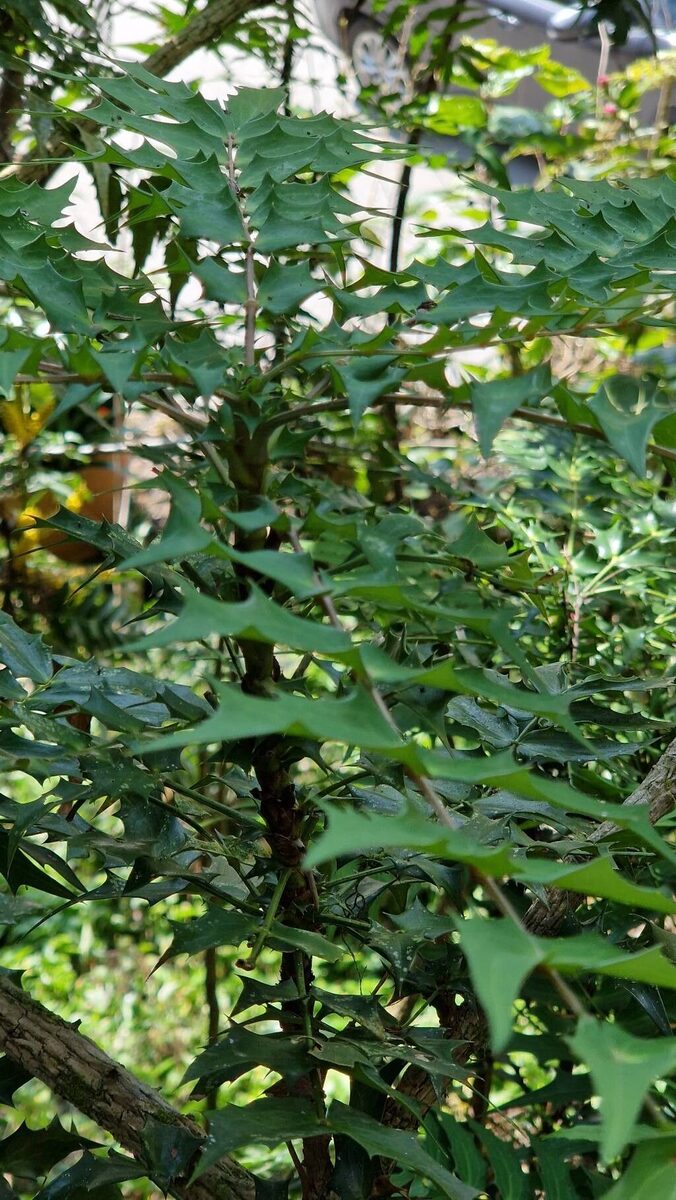
Mahonia japonica - (Thunb.)DC.
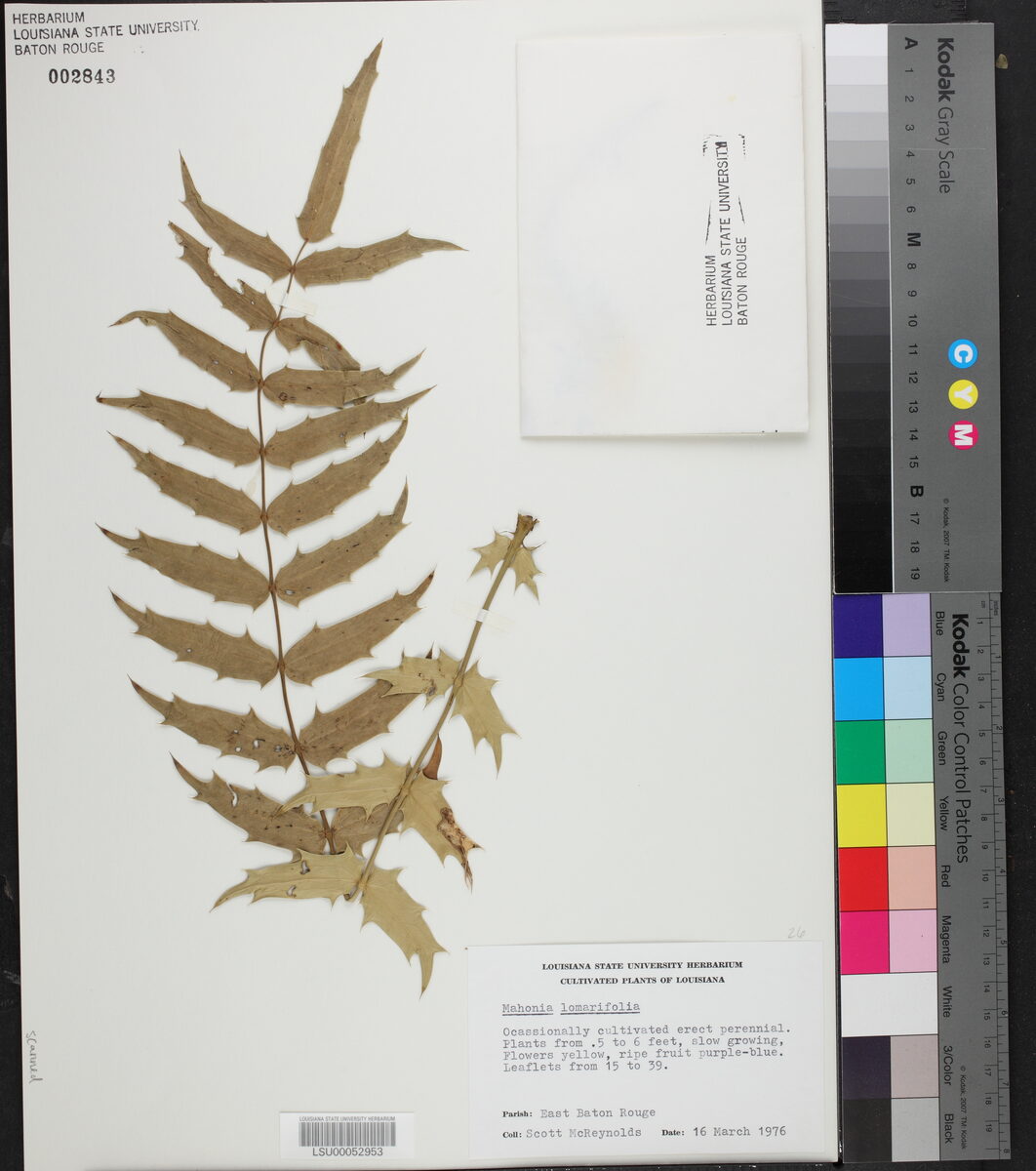
Mahonia lomariifolia
Chinese hollygrape
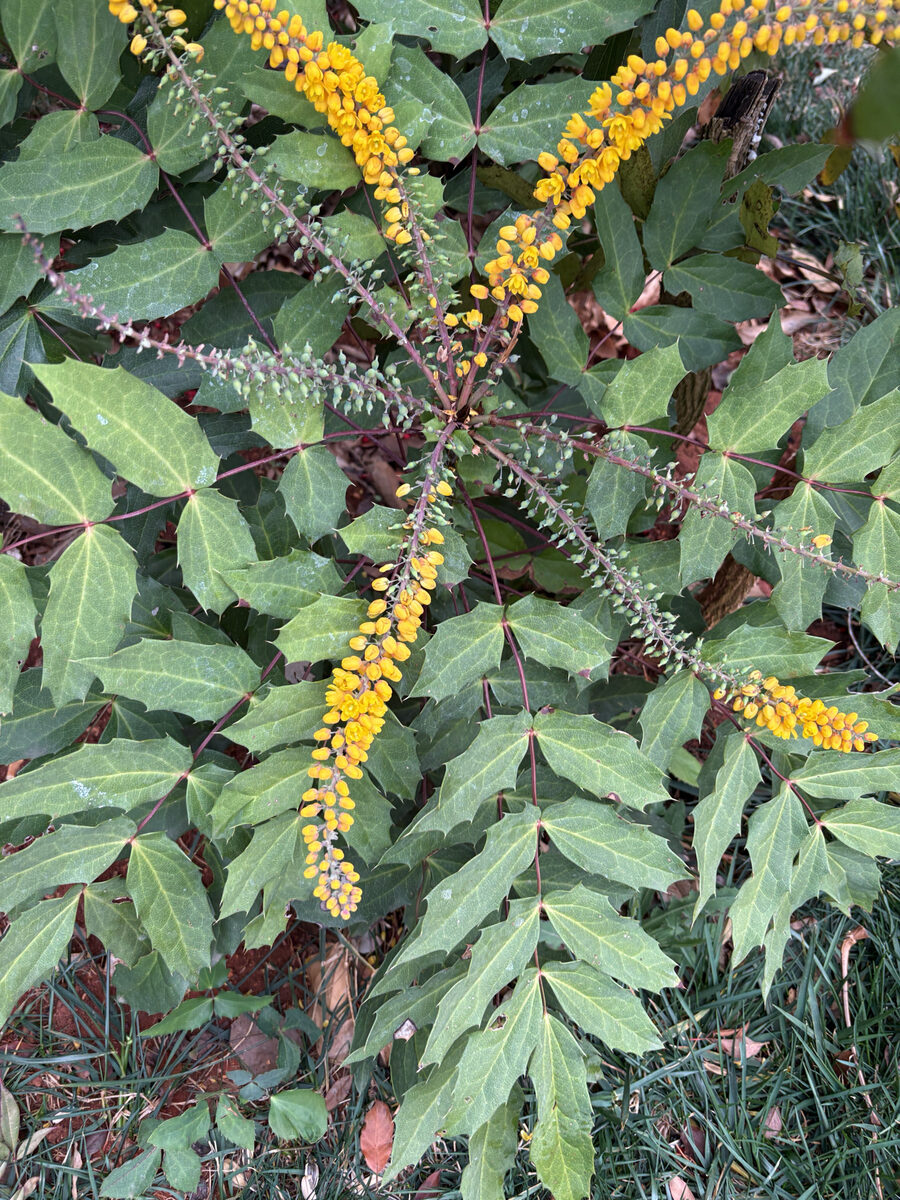
Mahonia napaulensis
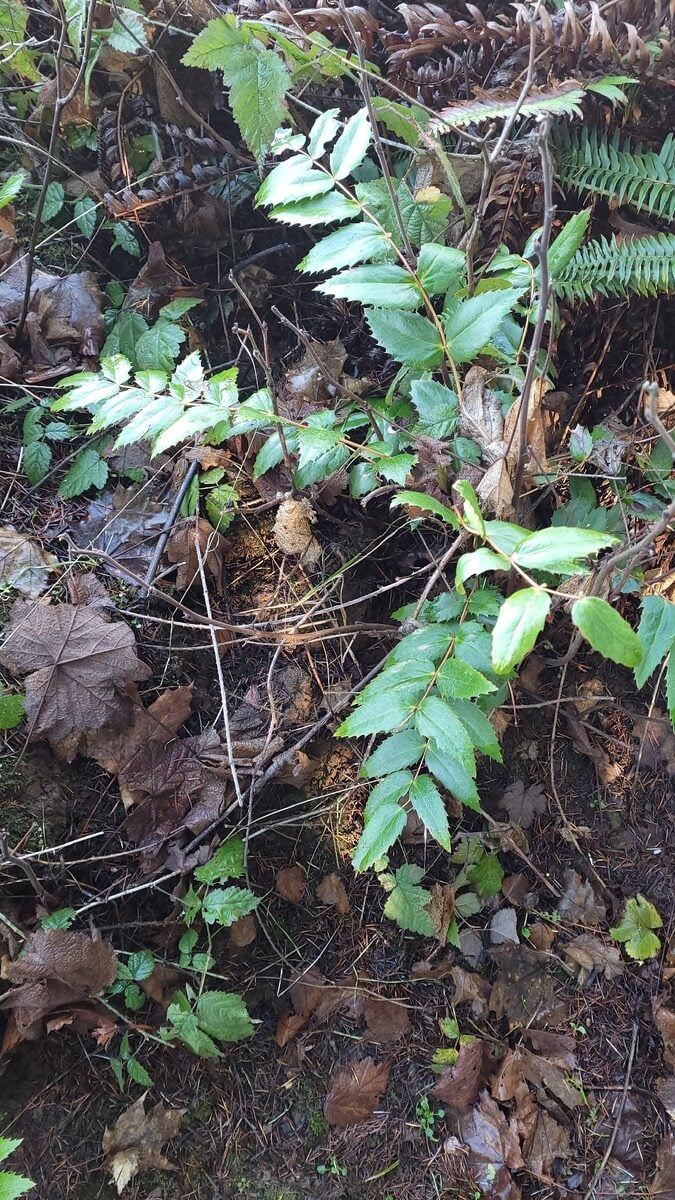
Mahonia nervosa - (Pursh.)Nutt.
Oregon Grape, Cascade barberry
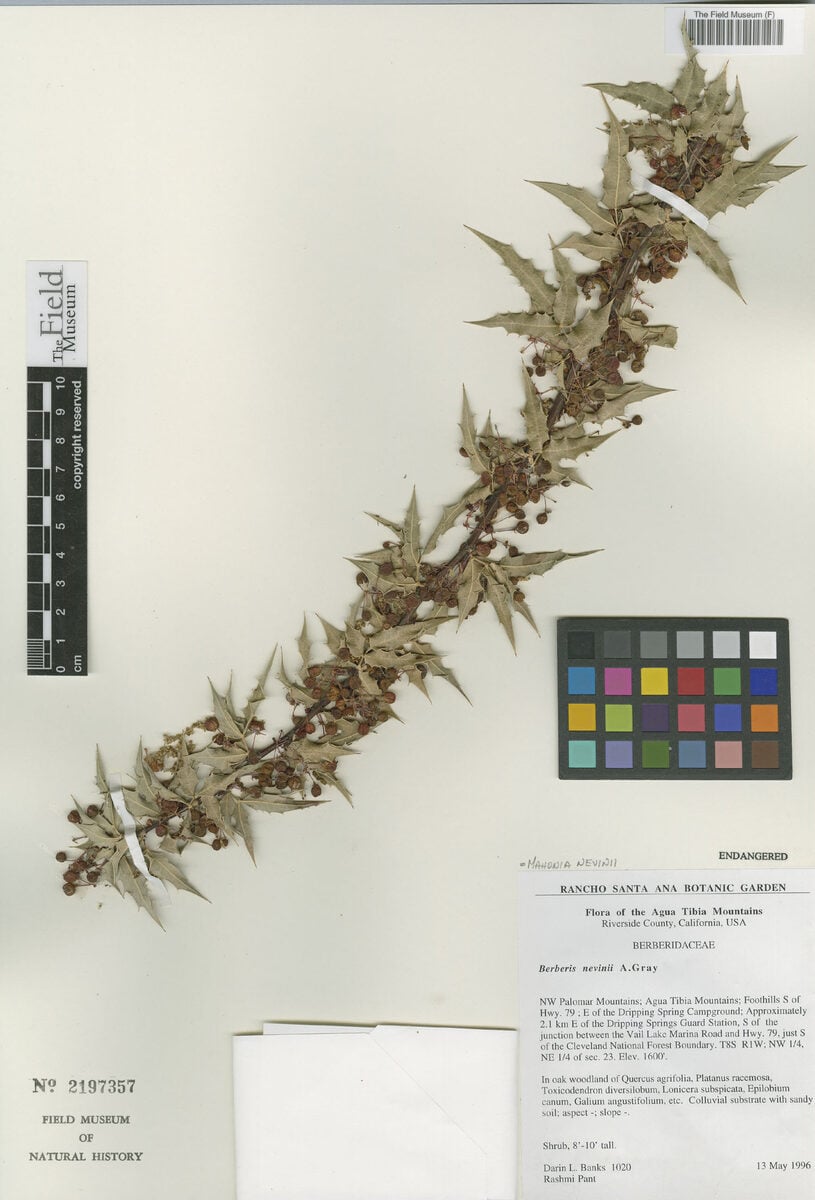
Mahonia nevinii - (Gray.)Fedde.
Nevin's barberry
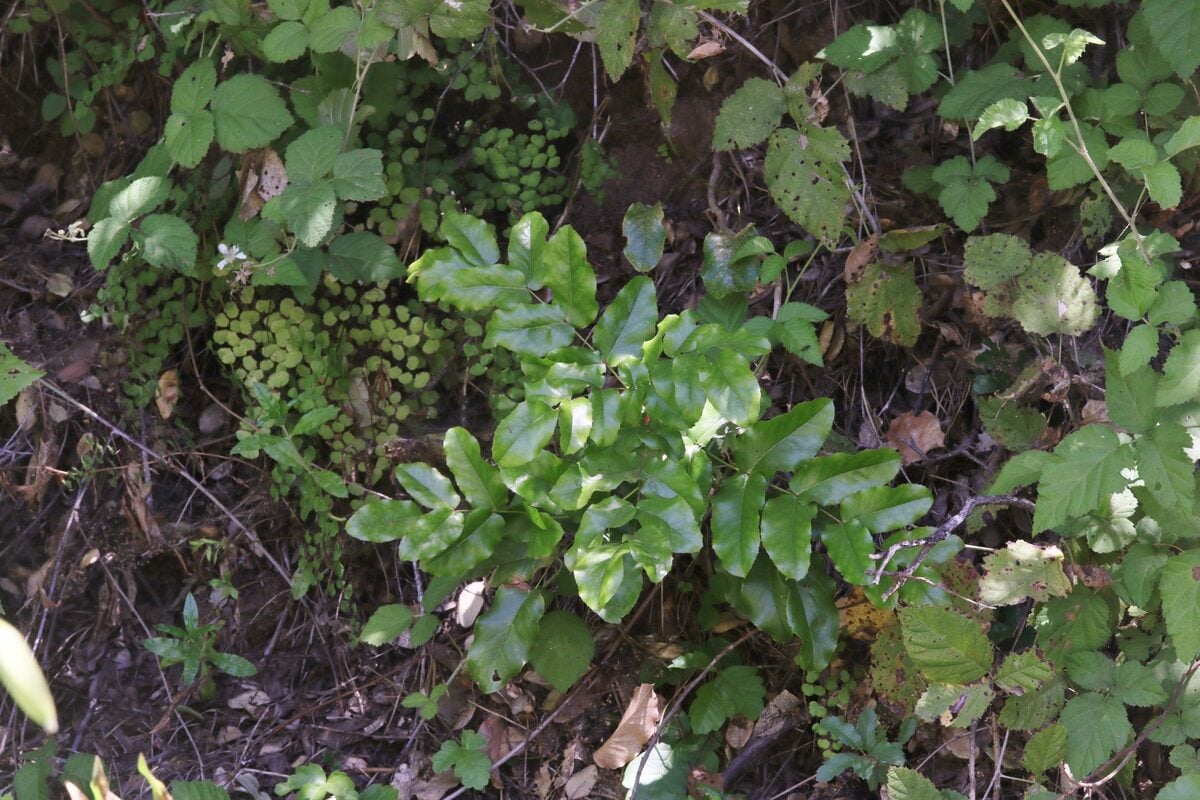
Mahonia pinnata - (Lag.)Fedde.
California Barberry, Wavyleaf barberry, Island barberry, Creeping Holly Grape