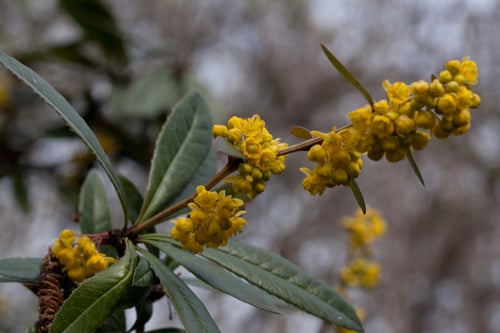
Caulophyllum robustum
Maxim.
Papoose root
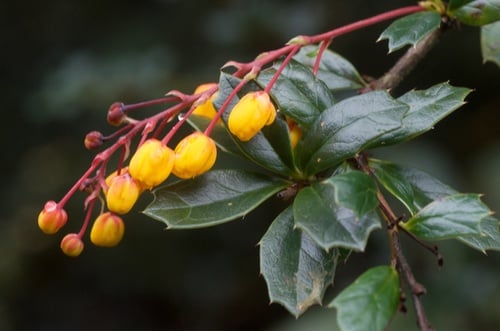
iNaturalist· cc-by-nc
(c) V.S. Volkotrub, some rights reserved (CC BY-NC), uploaded by V.S. Volkotrub
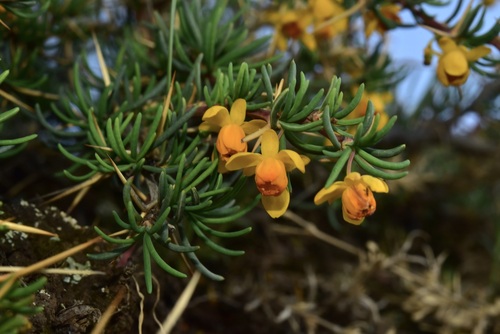
iNaturalist· cc-by-nc
(c) 들꽃ㅅr랑, some rights reserved (CC BY-NC), uploaded by 들꽃ㅅr랑
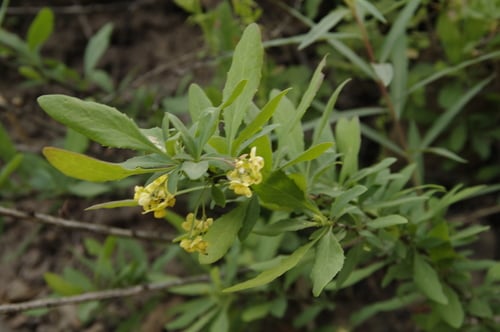
iNaturalist· cc-by-nc
(c) 들꽃ㅅr랑, some rights reserved (CC BY-NC), uploaded by 들꽃ㅅr랑
Summary
Source: WikipediaA perennial growing to 0.3 meters tall. Hardy to UK zone 7. Flowers in April with seeds ripening by September. Hermaphroditic. Suits light sandy and medium loamy soils with mildly acidic to basic pH. Grows in full shade (deep woodland) or semi-shade (light woodland). Prefers moist soil.
Description
A herb. It keeps growing from year to year. It grows 80 cm tall. It has underground stems or rhizomes. It has 2 stem leaves. It has leaflets that are pale green underneath. The leaflets are 4-8 cm long by 2-5 cm wide. The flowers are pale yellow.
Edible Uses
Young leaves are edible when cooked.
Medicinal Uses
This species is considered to have similar medicinal properties to Caulophyllum thalictroides. Papoose root is a traditional herb used extensively by North American Indigenous peoples to facilitate childbirth. It is described as an acrid, bitter, warming herb that stimulates the uterus, reduces inflammation, expels intestinal worms, and has diuretic effects. The root is anthelmintic, antispasmodic, diaphoretic, diuretic, emmenagogue, oxytocic, and sedative. An infusion of the root in warm water is taken for approximately 2 weeks before the expected birth date to ease labour. The same infusion can be used as an emmenagogue and uterine stimulant. It should be used with caution during earlier stages of pregnancy, as it can induce miscarriage or early delivery. The plant is also taken internally for pelvic inflammatory disease, rheumatism, and gout. It should not be prescribed for people with hypertension or heart disease. Use is best undertaken under the supervision of a qualified practitioner. Roots are normally harvested in autumn, when they are at their richest, and dried for later use. Roots harvested in early spring as new growth begins are used to prepare a homeopathic remedy, used especially in childbirth and certain forms of rheumatism.
Known Hazards
Some caution is advised, the following note relates to another member of this genus but could have relevance to this species. This plant should not be used during pregnancy prior to the commencement of labour.
Distribution
It is a temperate plant. It grows in forests, bamboo thickets and moist places in valleys between 900-3,500 m above sea level in China. In Sichuan and Yunnan.
Where It Grows
Asia, China, Japan, Korea, Russia, Tibet,
Cultivation
We have very little information on this species and do not know if it will be hardy in Britain, though judging by its native range it should succeed outdoors in most parts of this country. The following notes are based on the general needs of the genus. Easily grown in a damp light humus-rich woodland soil preferring a position in deep shade. One report says that it is best in a peat garden. The seeds rupture the ovary before they are fully ripe and continue to expand naked, they are bright blue when fully ripe.
Propagation
Seed is best sown as soon as it is ripe in a shady cold frame. Stored seed should be sown as soon as it is received. Germination can be erratic. Prick out seedlings when large enough to handle and grow on in a shady greenhouse or cold frame for at least their first winter. Plant out into permanent positions during autumn or early winter. Division can be carried out in spring or just after flowering, though plants are slow to increase.
Other Uses
None known
Notes
There are 2 Caulophyllum species. It is used in medicine.
References (2)
- Mem. Acad. Imp. Sci. St.-Petersbourg Divers Savans 9:33. 1859 (Prim. fl. amur.)
- Plants for a Future database, The Field, Penpol, Lostwithiel, Cornwall, PL22 0NG, UK. http://www.scs.leeds.ac.uk/pfaf/