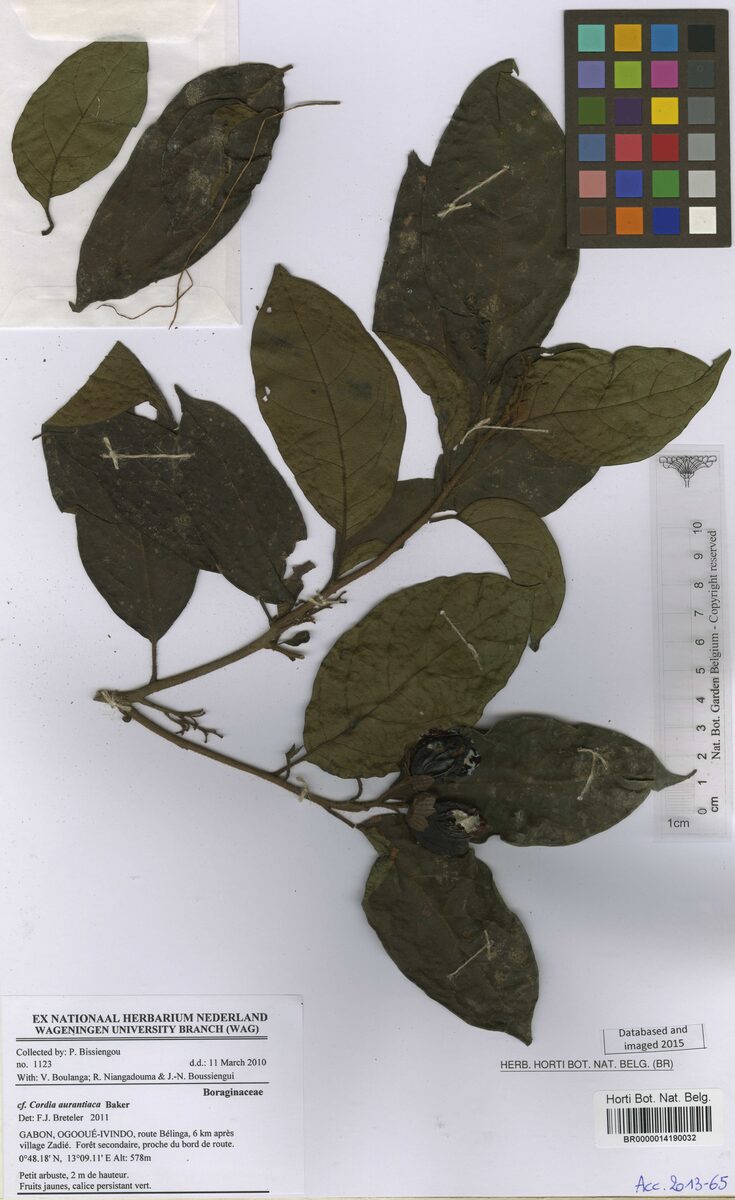
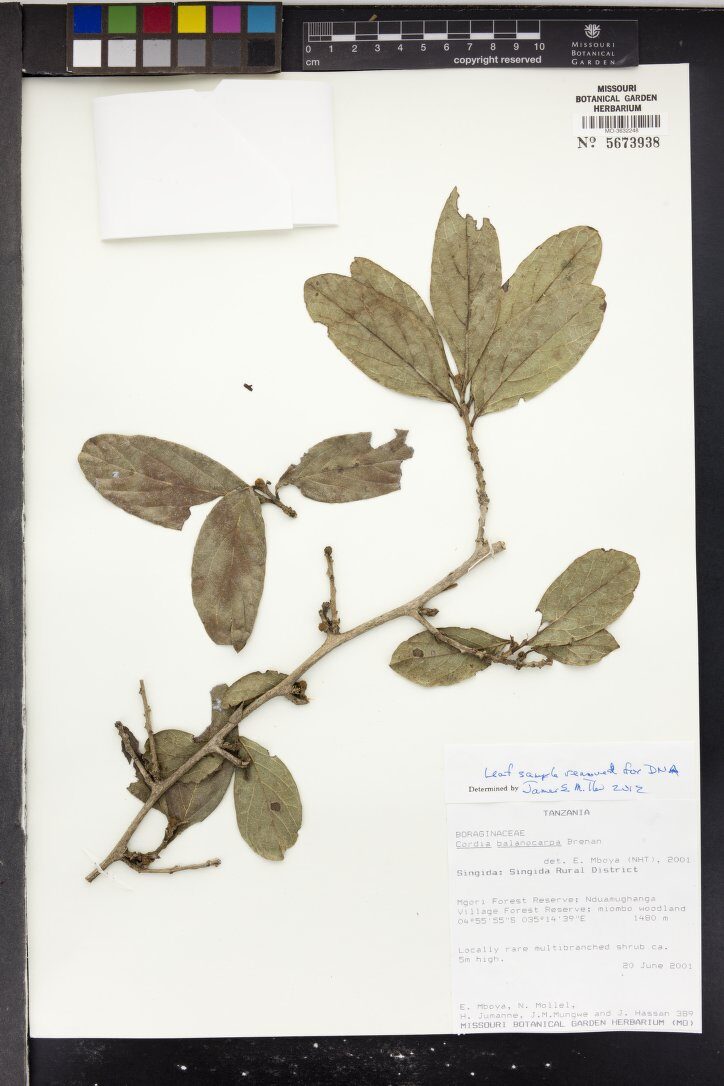
Cordia vestita
(DC.) Hook.f. & Thoms.
Bairola
gbif· cc-by
Royal Botanic Gardens, Kew
gbif· cc-by
Royal Botanic Gardens, Kew
gbif· cc-by
Royal Botanic Gardens, Kew
Description
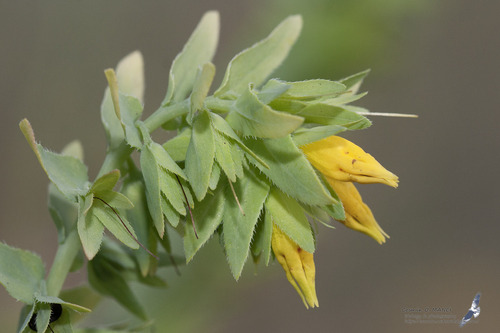
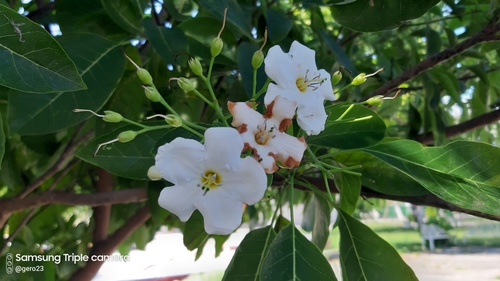
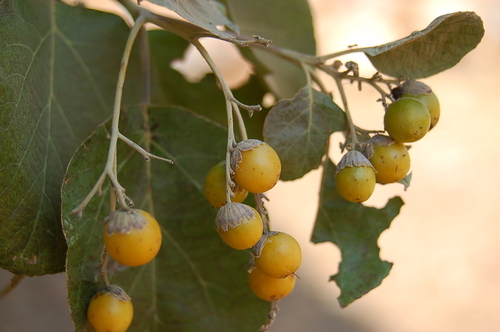
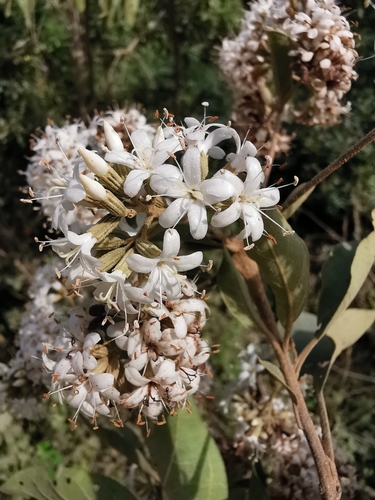
A tree. It grows 10 m tall. It loses its leaves during the year. The small branches have a dense covering. The leaves are 7-12 cm long by 5-12 cm wide. The base is wedge shaped and the edges are wavy. The leaves are grey white underneath. The leaf stalk is 3.5 cm long. The flowers are yellowish-white. The fruit are 15-17 mm long.
Edible Uses
Fruit - raw. Full of a gelatinous pulp, it is commonly eaten in some areas and is considered to be refreshing.
Distribution
it is a tropical plant. It grows in the Himalayas between 330m to 1,300 m above sea level.
Where It Grows
Asia, Himalayas, India, Pakistan,
Other Uses
The wood is of excellent quality and deserves to be better known as it is capable of making good furniture with a figured grain, not unlike good quality slow-grown Teak. It is strong and said to be used for wheel and well-work.
Notes
There are about 300 Cordia species.
Synonyms
Also Known As
Ajanta Bariul, Bairola, Karuk, Kumbi, Kumpaiman, Latora
References (6)
- Ambasta, S.P. (Ed.), 2000, The Useful Plants of India. CSIR India. p 141
- Anonymous, 2000, Selected edible wild plants of Pakistan north of Lahore, Including Pakistan-held Jammu-Kashmir. Central Intelligence Agency.
- Bajpai, O., et al, 2015, Tree species of the Himalayan Terai region of Uttar Pradesh, India: a checklist. Check List 11(4): 1718
- Hedrick, U.P., 1919, (Ed.), Sturtevant's edible plants of the world. p 217
- Upreti, K., et al, 2010, Diversity and Distribution of Wild Edible Fruit Plants of Uttarakhand. Bioversity Potentials of the Himalaya. p 166
Show all 6 references Hide references
- Wild edible plants of Himachal Pradesh