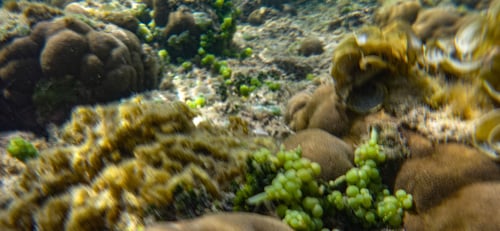
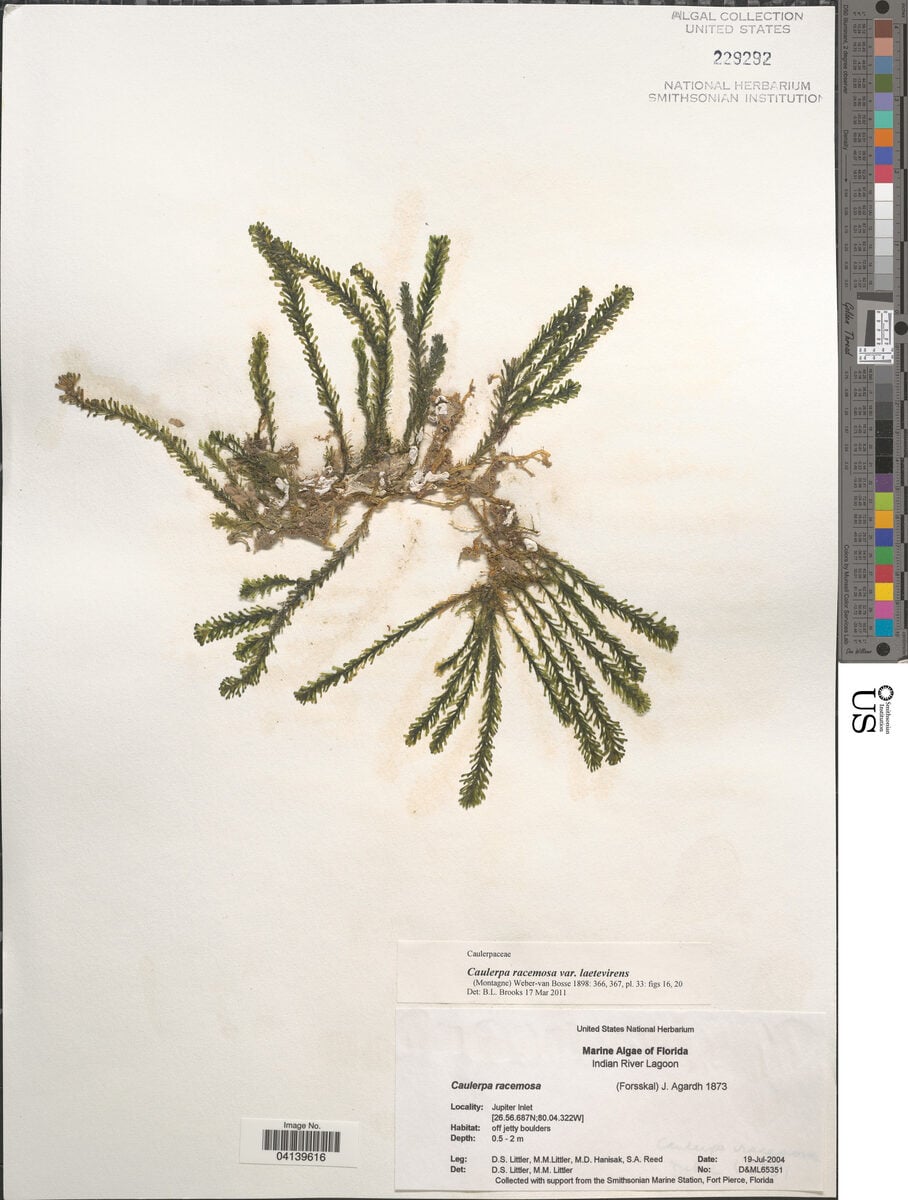
Caulerpa sertularioides
(Gmelin) Howe
Feather Caulerpa
iNaturalist· cc-by
(c) Pauline Walsh Jacobson, some rights reserved (CC BY), uploaded by Pauline Walsh Jacobson
iNaturalist· cc-by-nc
(c) Kerry Lewis, some rights reserved (CC BY-NC), uploaded by Kerry Lewis
iNaturalist· cc-by-nc
(c) Ben Eddy, some rights reserved (CC BY-NC), uploaded by Ben Eddy
Summary
Source: WikipediaCaulerpa sertularioides, also known as green feather algae, is a species of seaweed in the Caulerpaceae family found in warm water environments.
Description
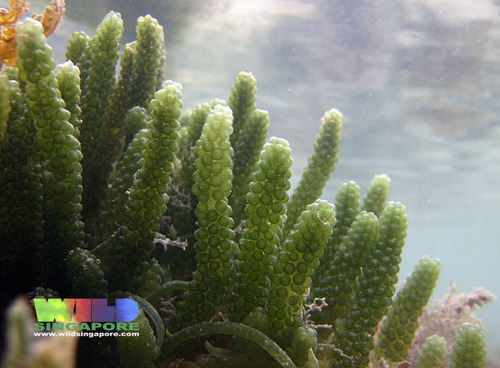
A green seaweed. The branches are erect. They are feather like. They are fine and not flattened. They are usually in 2 rows but can be in 3 rows.
This description is brief — help expand it
Edible Uses
The seaweed is eaten raw as a salad, typically served with lemon juice and coconut milk.
Traditional Uses
It is eaten raw or as a salad. It is eaten with lemon juice and coconut milk.
This uses section is brief — help expand it
Distribution
It is a tropical plant. It grows just below the tidal zones. It grows on sheltered and partly exposed shores.
Where It Grows
Africa, Angola, Asia, Australia, Bahamas, Bahrain, Bangladesh, Belize, Brazil, Cameroon, Caribbean, Central Africa, Central America, Chile, Colombia, Costa Rica, Cuba, East Africa, Egypt, Eritrea, Ethiopia, Europe, French Polynesia, Gambia, Ghana, Hawaii, Hispaniola, India, Indochina, Indonesia, Iran, Jamaica, Japan, Jordan, Kenya, Kuwait, Madagascar, Malaysia, Maldives, Mauritius, Mexico, Middle East, Mozambique, Myanmar, New Zealand, North Africa, North America, Oman, Pacific, Pakistan, Panama, Papua New Guinea, PNG, Philippines, Puerto Rico, Samoa, Saudi Arabia, SE Asia, Senegal, Sierra Leone, Singapore, Solomon Islands, Somalia, South Africa, Southern Africa, South America, Sri Lanka, Taiwan, Tanzania, Thailand, Tonga, Turkey, Türkiye, USA, Venezuela, Vietnam, West Africa, West Indies, Yemen,
Also Known As
Limu vai, Louango, Lounui, Remu, Remu haari, Remu palme, Tu'aniu
References (11)
- Ambasta S.P. (Ed.), 2000, The Useful Plants of India. CSIR India. p 112
- Burkill, H. M., 1985, The useful plants of west tropical Africa, Vol. 5. Kew.
- Cribb, A.B., 1996, Seaweeds of Queensland A Naturalist's Guide. The Queensland Naturalists' Club Handbook No. 2. p 21
- Daillande, C. de, et al, 2016, Caulerpa consumption, nutritional value and farming in the Indo-Pacific region. Journal of Applied Phycology. July 2016
- http://www.seavegetables.com
Show all 11 references Hide references
- Novaczek, I., 2001, A Guide to the Common Edible and Medicinal Plants of the Pacific Islands. SPC. p 5
- Ostraff, M., 2003, Contemporary Uses of Limu (marine algae) in Tonga. Ph. D. thesis. p 81
- Wang, Wei-Lung and Chiang, Young-Meng, 1994, Potential Economic Seaweeds of Hengchun Peninsula, Taiwan, Economic Botany, Vol. 48, No. 2, pp. 182-189
- Womersley, H.B. S. & Bailey, A., 1970, Marine algae of the Solomon Islands. Philosophical Transactions of the Royal Society of London. B. Biological Sciences 259:257-352
- www.algaebase/org
- Zemke-White, W. L. & Ohno, M., 1999, World seaweed utilisation: An end-of-century summary. Journal of Applied Phycology 11: 369-376