Caralluma edulis
(Edgew.) Benth. ex Hook. f.
wikimedia· cc-by-sa
Wikimedia Commons - Marie Portas
wikimedia· cc-by-sa
Wikimedia Commons - Marie Portas
Summary
Source: WikipediaCaralluma edulis is a succulent species in the plant family Apocynaceae, native to India and Pakistan. The leaves and stem are eaten in North Africa.
Description
An erect succulent herb. It grows 14-45 cm tall. The branches have 4 grooves. The leaves are opposite and simple. The leaves are 6-13 mm long and narrow. The flowers are in pairs in the axils of scale like bracts. The fruit are dry and have many seeds. They are 9-11 cm long.
Edible Uses
The leaves and stems are eaten as a vegetable, prepared either cooked or raw.
Traditional Uses
It is cooked and used as a vegetable. It is also eaten raw.
This uses section is brief — help expand it
Distribution
It is a subtropical plant. It can grow in arid places. It grows from sea level to 1,300 m above sea level.
Where It Grows
Afghanistan, Africa, Asia, East Africa, Eritrea, India, Iran, Mauritania, Middle East, Pakistan, Saudi Arabia, Somalia, Sudan, United Arab Emirates, UAE, West Africa,
Cultivation
The plant can flower and fruit all year round.
Notes
There are about 56-100 Caralluma species. These are sometimes put in the Asclepiadaceae.
Nutrition
| Part | Moisture | kJ | kcal | Protein | Vit A | Vit C | Iron | Zinc |
|---|---|---|---|---|---|---|---|---|
| Leaves | 4.1 | — | — | 17.34 | — | — | 2.3 | — |
Synonyms
Also Known As
Chang, Chaunga, Pamanai, Pamankai, Pippa, Pippu, Sittu
References (11)
- Al-Sodany, Y. M., et al, 2013, Medicinal Plants in Saudi Arabia: I. Sarrwat Mountains at Taif, KSA. Academic Journal of Plant Sciences 6 (4): 134-145
- Ambasta S.P. (Ed.), 2000, The Useful Plants of India. CSIR India. p 104
- Farooq, S., et al, 2012, Ethnobotanical Studies of the Flora of Tehsil Birmal in South Waziristan Agency, Pakistan. Pak. J. Weed Sci. Res. 18(3): 277-291
- Fl. Brit. India 4:76. 1883
- Grubben, G. J. H. and Denton, O. A. (eds), 2004, Plant Resources of Tropical Africa 2. Vegetables. PROTA, Wageningen, Netherlands. p 163
Show all 11 references Hide references
- Royal Botanic Gardens, Kew (1999). Survey of Economic Plants for Arid and Semi-Arid Lands (SEPASAL) database. Published on the Internet; http://www.rbgkew.org.uk/ceb/sepasal/internet [Accessed 28th March 2011]
- Shad, A. A., Shah, H. U., & Bakht, J., 2013, Ethnobotanical Assessment and Nutritive Potential of Wild Food Plants. The Journal of Animal & Plant Sciences, 23(1) pp. 92-97
- Sher, H. et al, 2011, Ethnobotanical and Economic Observations of Some Plant Resources from the Northern Parts of Pakistan. Ethnobotany research & Applications 9:027-041
- Sher, Z., Hussain, F., & Ibrar, M., 2014, Traditional knowledge on plant resources of Ashezai and Salarzai Valleys, District Buner, Pakistan. African Journal of Plant Science. Vol. 8(1), pp. 42-53, January 2014
- Ullah, I, et al, 2017, Analysis of nutrients and minerals of some wild edible plants. International Journal of Fauna and Biological Studies. 4(6):35-39
- Wiersema, J. H. & Leon, B., 2013, World Economic Plants. A Standard Reference CRC Press. 2nd Ed. p 141
More from Apocynaceae
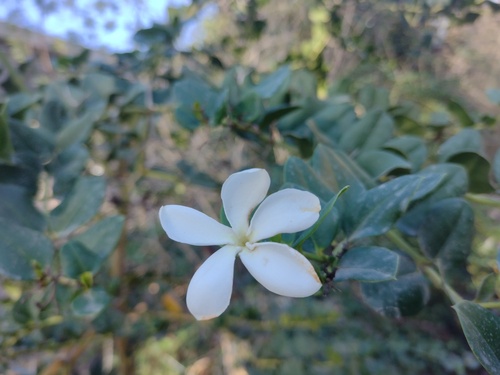
Carissa grandiflora
Carissa, Natal plum, Boxwood beauty
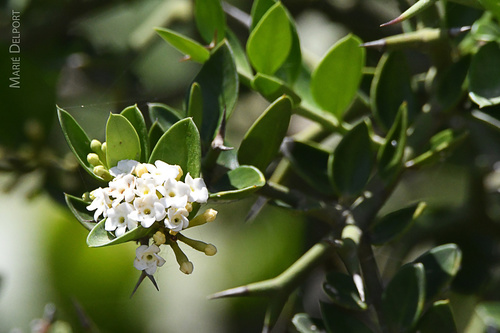
Carissa haematocarpa
Karoo num-num, Black num-num
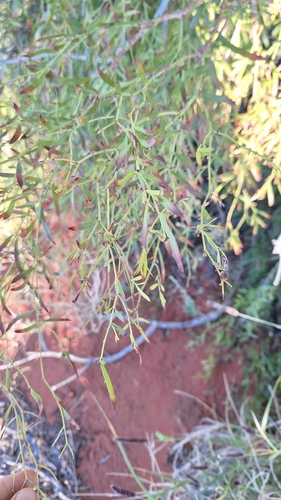
Carissa lanceolata
Konkleberry, Conkerberry, Currant bush, Kunkerberry, Aperlap, Perlap
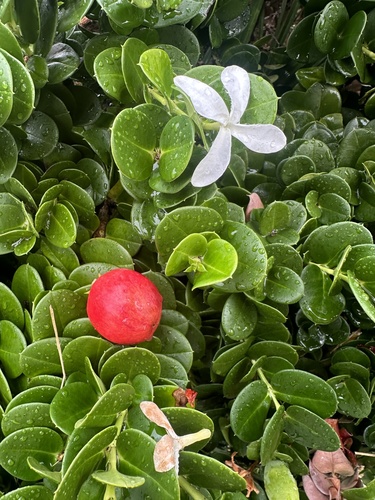
Carissa macrocarpa
Natal plum, Large num-num, Carissa
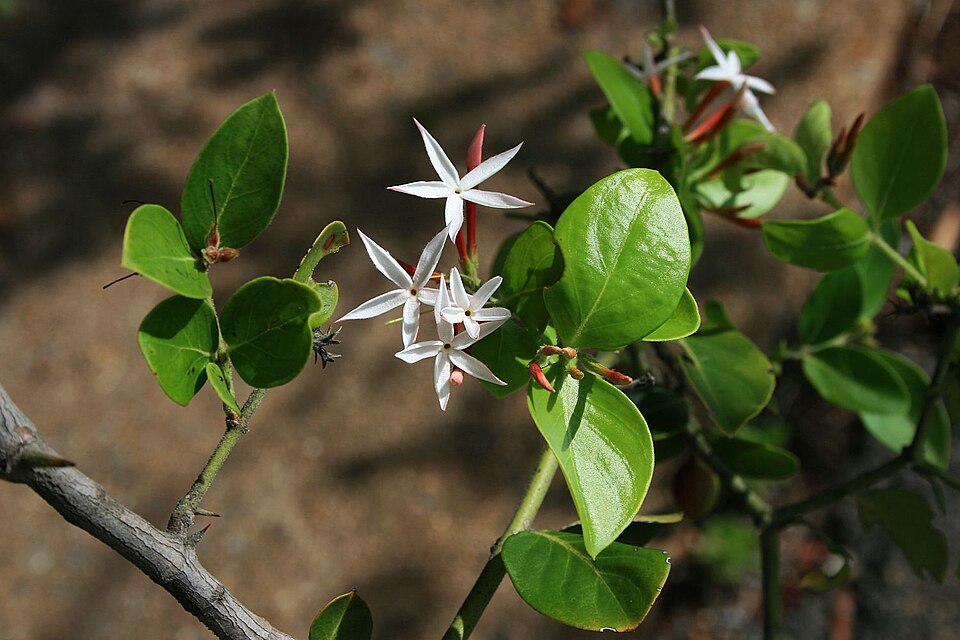
Carissa opaca
Karonda
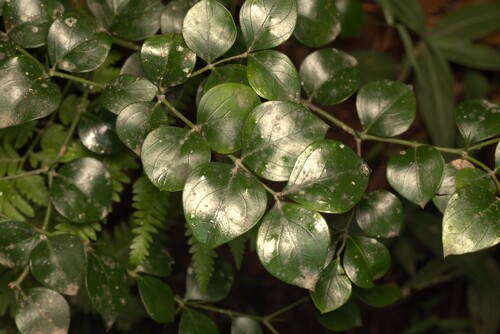
Carissa ovata
Currant bush, Carissa, Kunkerberry