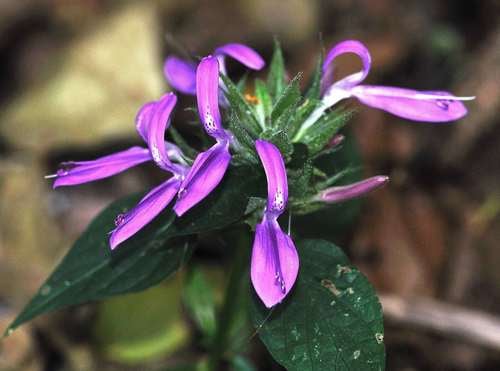
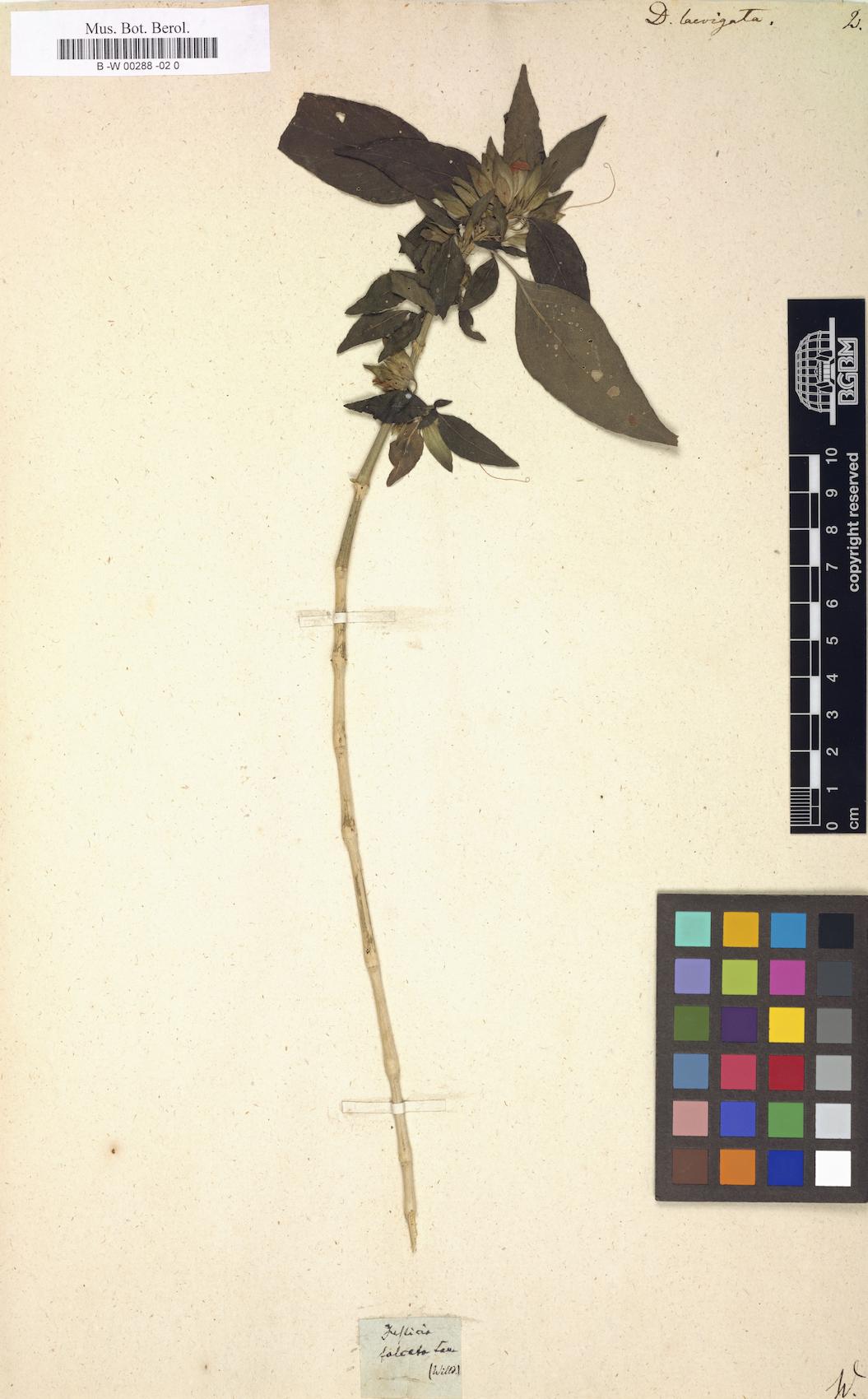
Asystasiella neesiana
(Wall.) Lindau
Obul-oing, Paco
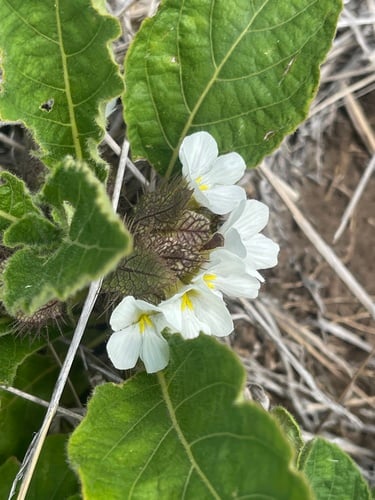
iNaturalist· cc-by-nc
(c) Dolordebarriga, some rights reserved (CC BY-NC)
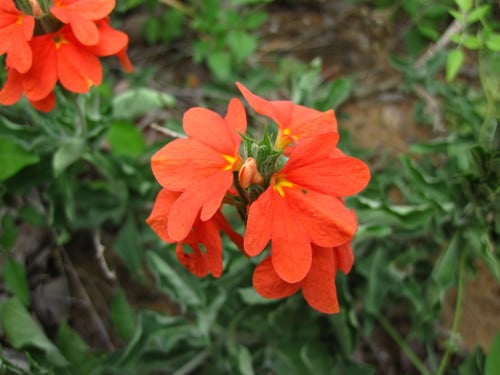
iNaturalist· cc-by-nc
(c) Dolordebarriga, some rights reserved (CC BY-NC)
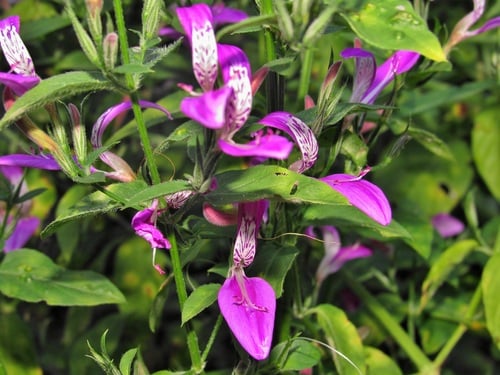
iNaturalist· cc-by-nc
(c) Dolordebarriga, some rights reserved (CC BY-NC)
Description
A herb. It grows 1 m tall. The stem is 4 angled. The leaf blades are narrowly oval and 4-25 cm long by 2-11 cm wide. The flowers are in a spike at the top. The fruit is a capsule 1.8-2.8 cm long. There are 4 seeds.
Edible Uses
The leaves and stems are used as a pot-herb.
Traditional Uses
The leaves are used as a pot-herb.
This uses section is brief — help expand it
Medicinal Uses
It is used in medicine.
Distribution
It is a tropical plant. It grows on broad-leaved evergreen forests and near streams. In southern China it grows between 100-1,800 m above sea level.
Where It Grows
Asia, China, India, Indochina, Indonesia, Laos, Malaysia, Myanmar, Northeastern India, SE Asia, Thailand, Vietnam,
Notes
There remains confusion over the naming. It is used in medicine.
Synonyms
Also Known As
Obul, Obul-oing, Pakkood, Se you can
References (7)
- Ambasta S.P. (Ed.), 2000, The Useful Plants of India. CSIR India. p 61
- Cheng, Z., et al, 2022, Ethnobotanical study on wild edible plants used by Dulong people in northwestern Yunnan, China. Journal of Ethnobiology and Ethnomedicine (2022) 18:3
- Jiwajinda, S., et al, 2002, Suppressive Effects of Edible Thai Plants on Superoxide and Nitric Oxide Generation. Asian Pacific Journal of Cancer Prevention, Vol 3, 2002
- Seidemann J., 2005, World Spice Plants. Economic Usage, Botany, Taxonomy. Springer. p 58
- Singh, H.B., Arora R.K.,1978, Wild edible Plants of India. Indian Council of Agricultural Research, New Delhi. p 28 (As Mackaya neesiana)
Show all 7 references Hide references
- Taram, M., et al, 2018, Wild Food Plant Resources of Komkar Adi Tribe of Upper Siang District in Arunachal Pradesh, India. Bulletin of Arunachal Forest Research, Vol. 33(2), 27-35 (As Asystasia neesiana)
- Wild edible plants of Himachal Pradesh (As Asystasia neesiana)