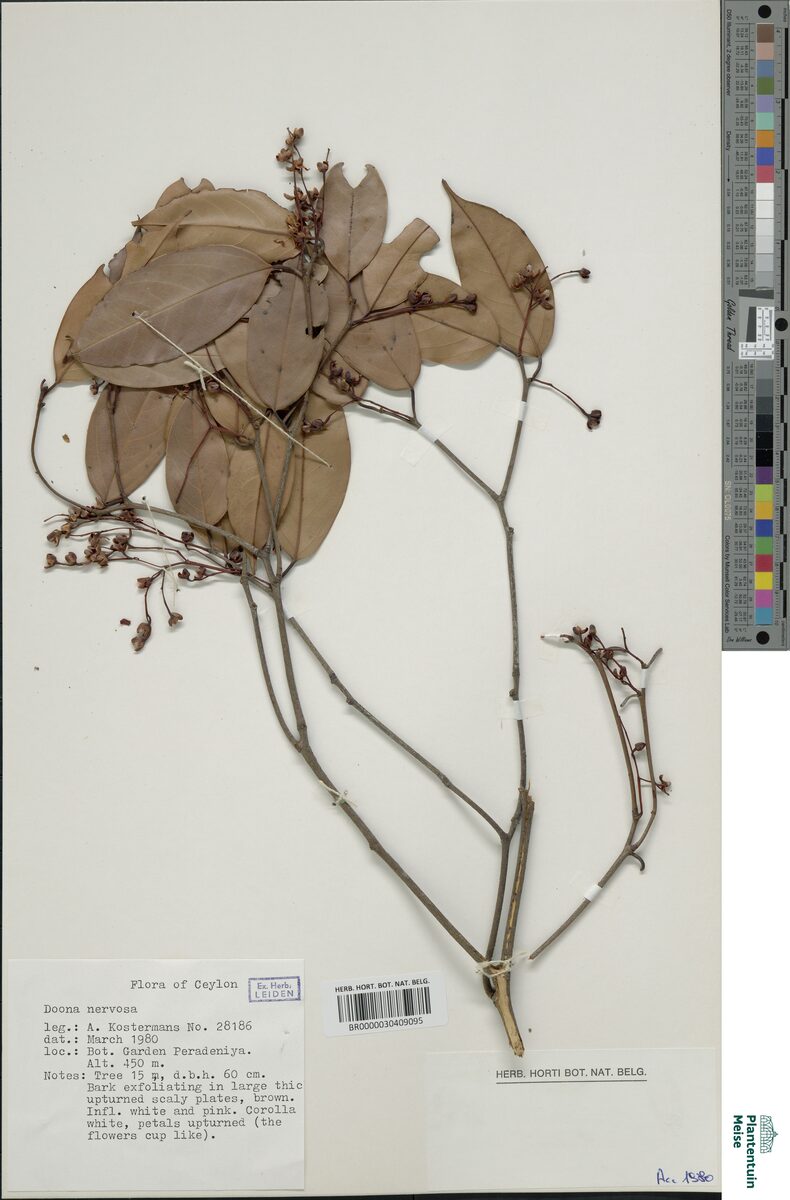
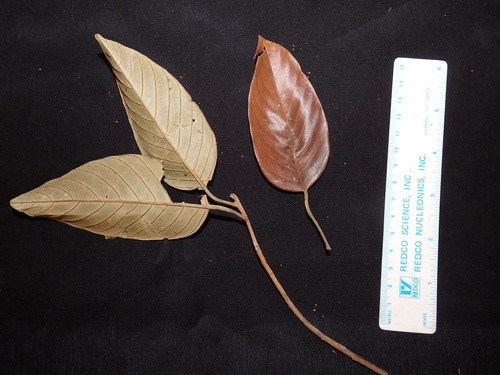
Dryobalanops oblongifolia
Dyer
Kapur kuras
iNaturalist· cc-by-nc
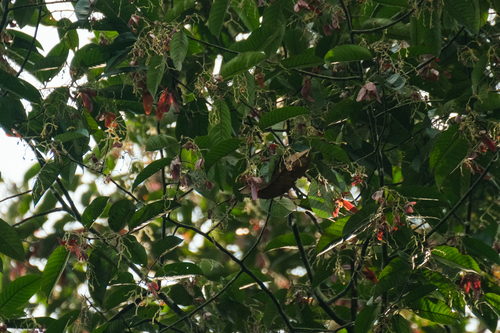
(c) airgel, some rights reserved (CC BY-NC), uploaded by airgel
iNaturalist· cc-by-nc
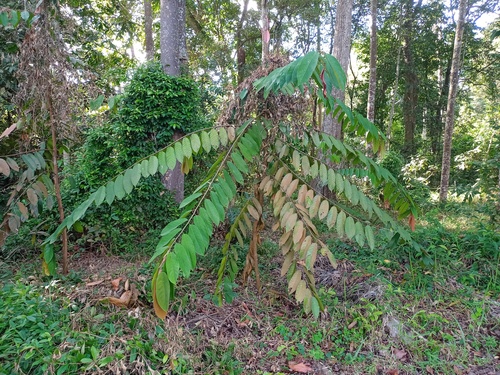
(c) tansh91, some rights reserved (CC BY-NC), uploaded by tansh91
Summary
Source: WikipediaDryobalanops oblongifolia is a species of flowering plant in the family Dipterocarpaceae. It is a tree native to Borneo, Peninsular Malaysia, and Sumatra. The species name is derived from Latin (oblongus = rather long and leaf (folium = leaf); and refers to the shape of the leaf.
Description
A tree. It grows 60 m tall. The trunk can be 150 cm across. The branches are 20 m above ground level. It has large buttresses. The bark is purplish-grey. The leaves are simple and oblong. They are 6-20 cm long by 2-5 cm wide. They are smooth and shiny. The flowers are white and in panicles. The fruit are 7 mm long. They are greenish yellow and a nut with 5 wings.
Edible Uses
The seeds, fruit, and nuts are edible.
Distribution
A tropical plant. It grows in hilly dipterocarp forests up to 600 m above sea level. It also grows along streams and swamps.
Where It Grows
Asia, Indonesia, Malaysia, SE Asia, Singapore,
Cultivation
Plants can be grown from seeds.
Other Uses
The wood is a source of kapur timber, though it is regarded as slightly inferior to other kapur timbers. The heartwood is reddish brown to pinkish brown; it is clearly demarcated from the 4 - 8cm wide band of whitish to yellowish brown sapwood. The texture is medium; the grain straight or interlocked; there is a strong camphor-like smell when freshly cut. The wood is moderately heavy; soft to moderately hard; moderately durable, being resistant to fungi and dry wood borers, and moderately resistant to termites. It seasons slowly with only a slight risk of checking or distortion; once dry it is stable in sevice. The wood has a fairly high blunting effect, stellite-tipped and tungsten carbide tools are recommended; it splits easily; nailing and screwing are good, but require pre-boring; gluing is correct, though resin exudation can cause problems. It is used for a wide range of applications including house construction, bridges, boards, heavy carpentry, joinery, panelling, turnery, tool handles and household utensils, boxes and crates.
Notes
There are 7 Dryobalanops species. They grow in rainforests in SE Asia.
Synonyms
Also Known As
Pohon kapur guras, Pohon petanang
References (4)
- Burkill, I.H., 1966, A Dictionary of the Economic Products of the Malay Peninsula. Ministry of Agriculture and Cooperatives, Kuala Lumpur, Malaysia. Vol 1 (A-H) p 882
- Slik, F., www.asianplant.net
- Sukarya, D. G., (Ed.) 2013, 3,500 Plant Species of the Botanic Gardens of Indonesia. LIPI p 248
- World Checklist of Useful Plant Species 2020. Royal Botanic Gardens, Kew