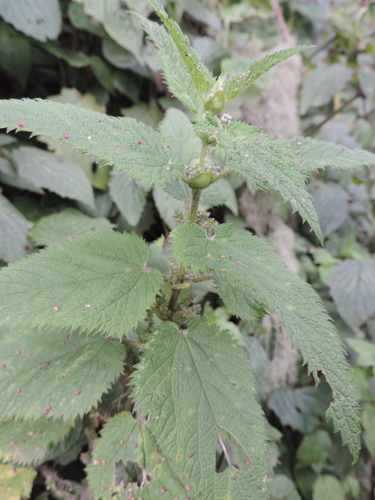
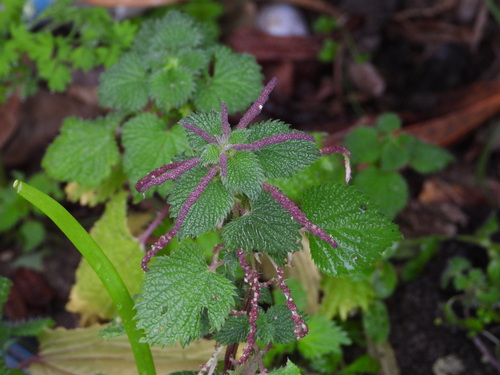
Cecropia palmata
Willd.
Snakewood tree, Trumpet tree
iNaturalist· cc-by-nc-nd
(c) Víctor de Paiva, some rights reserved (CC BY-NC-ND), uploaded by Víctor de Paiva
iNaturalist· cc-by-nc-nd
(c) Víctor de Paiva, some rights reserved (CC BY-NC-ND), uploaded by Víctor de Paiva
Description
A small tree. It grows 15 m tall. The branches are thick. The leaves are long and have blunt tips. They have 7-11 lobes. They are umbrella like and 60 cm across. They are dark green above and paler underneath. The fruit are shaped like long fingers.
Edible Uses
The fruit are eaten fresh or used as cake filling, with a flavor and texture similar to figs. The young buds are eaten as a potherb.
Traditional Uses
The fruit are eaten. They have the flavour and texture of figs. They are eaten fresh or used as a filling for cakes. The young buds are eaten as a potherb.
Medicinal Uses
The leaves are valued in traditional medicine for their anti-inflammatory properties and are often used to treat conditions such as rheumatism, kidney and lung inflammations. A tea made from the leaves is used to treat asthma and other upper respiratory complaints, as well as for diabetes. Applied externally, the tea has been used for sores on the mouth and tongue. A poultice of the large leaves is wrapped around bone fractures, bruises and wounds. The plant is known to contain glycosides, lipids, alkaloids, flavonoids, tannins, cardenolids, triterpenes, polyphenols, steroids, and resins. Ambain (a glycoside) and cecropin (an alkaloid) are said to have cardiotonic and diuretic properties. The flavonoids and proanthocyanidins have been shown to exhibit hypotensive activity by promoting vasodilation and acting as a diuretic. Leaf extracts have demonstrated pain-relieving, anti-inflammatory, and antispasmodic activities. Water extracts of the leaf have been shown to lower blood sugar levels. The leaf has been reported to have in vitro antibacterial activity against various bacteria (such as Staphylococcus, E. coli, Pseudomonas, Salmonella, and Shigella). Water extracts seemed to have much more biological activity against bacteria than methanol or ethanol extracts in vitro. An ethanol extract of the leaf and stem was reported to have in vitro antifungal activity, but water extracts were inactive (which suggests that antibacterial actions are derived from different chemicals than those providing antifungal actions). The plant is widely used in modern herbalism, especially in the Americas. It is considered to be analgesic, antiasthmatic, antibacterial, antifungal, antioxidant, antispasmodic, anti-inflammatory, cardiotonic, diuretic, emmenagogue, hypoglycaemic, hypotensive, mildly laxative and vasodilator. It is used for all types of respiratory complaints including asthma, bronchitis, coughs, whooping cough, and pneumonia; oedema, diabetes, Parkinson's disease, kidney disorders, high blood pressure, and to increase the contraction strength of the heart muscle; to facilitate childbirth and menstruation. The latex is considered corrosive and astringent. It is used topically against warts, calluses, herpes (and other venereal diseases), and skin ulcers. The bark is used to reduce mucus. The roots are used to treat bile complaints. The fruit is considered emollient.
Known Hazards
The branches and leaf petioles of Cecropia species are often hollow and can harbour stinging ants. The trees attract the ants by means of producing a honey-like sap and the ants respond by working to keep the tree free of leaf-eating pests - which can include humans.
Distribution
A tropical plant. It needs a humus-rich, well-drained soil. It needs a protected sunny position. It is damaged by drought or frost. It suits hardiness zones 10-12.
Where It Grows
Asia, Australia, Bolivia, Brazil, Central America, Guiana, Guianas, Indonesia, Peru, SE Asia, South America, Suriname, West Indies,
Cultivation
It can be grown by seeds or cuttings.
Propagation
Seed - best sown in a sunny seedbed as soon as it is ripe. The seed usually starts to sprout within 25 - 40 days, though germination rates are low. Pot the seedlings up into individual containers when they are 5 - 6cm tall. Greenwood cuttings in a frame.
Other Uses
With their sparse canopy and attractive foliage that is green above and silver-felted below, members of this genus generally provide a dramatic canopy but only cast a very light shade, allowing other plants to be grown right up to the base of their trunk. Many members of the genus can be used as pioneer species when developing a new woodland.
Production
Trees grow rapidly.
Notes
There are 100 Cecropia species. They grow in tropical America. It is also put in the Moraceae. Also put in the family Cecropiaceae.
Also Known As
Boesippaja
References (11)
- Barwick, M., 2004, Tropical and Subtropical Trees. A Worldwide Encyclopedic Guide. Thames and Hudson p 101
- Bodkin, F., 1991, Encyclopedia Botanica. Cornstalk publishing, p 230
- Burkill, I.H., 1966, A Dictionary of the Economic Products of the Malay Peninsula. Ministry of Agriculture and Cooperatives, Kuala Lumpur, Malaysia. Vol 1 (A-H) p 505
- Etherington, K., & Imwold, D., (Eds), 2001, Botanica's Trees & Shrubs. The illustrated A-Z of over 8500 trees and shrubs. Random House, Australia. p 194
- Facciola, S., 1998, Cornucopia 2: a Source Book of Edible Plants. Kampong Publications, p 75
Show all 11 references Hide references
- Fouqué, A. 1972. Espèces fruitières d'Amérique tropicale. Institut français de recherches fruitierès outre-mer
- Grandtner, M. M. & Chevrette, J., 2013, Dictionary of Trees, Volume 2: South America: Nomenclature, Taxonomy and Ecology. Academic Press p 113
- Kermath, B. M., et al, 2014, Food Plants in the Americas: A survey of the domesticated, cultivated and wild plants used for Human food in North, Central and South America and the Caribbean. On line draft. p 202
- Kunkel,
- Sp. pl. 4(2):652. 1806
- van Roosmalen, M.G.M., 1985, Fruits of the Guianan Flora. Utrecht Univ. & Wageningen Univ. p 298