Persicaria capitata
(Buch.-Ham. ex D. Don) H. Gross
Eastern knotweed
iNaturalist· cc-by-nc-sa
(c) Mauricio Mercadante, some rights reserved (CC BY-NC-SA)
iNaturalist· cc-by-nc
(c) Charcos Companhia, some rights reserved (CC BY-NC), uploaded by Charcos Companhia
iNaturalist· cc-by-nc
(c) Roddy CJ Ward, some rights reserved (CC BY-NC), uploaded by Roddy CJ Ward
Summary
Source: WikipediaPersicaria capitata, the pink-headed persicaria, pinkhead smartweed, pink knotweed, Japanese knotweed, or pink bubble persicaria, is an Asian species of plants in the genus Persicaria within the Polygonaceae (US: buckwheat) family. It is native to Asia (China, South Asia, Indochina) and grown as an ornamental in other countries. It has become naturalized in Australia, South Africa and a few scattered locations in the Americas.
Description
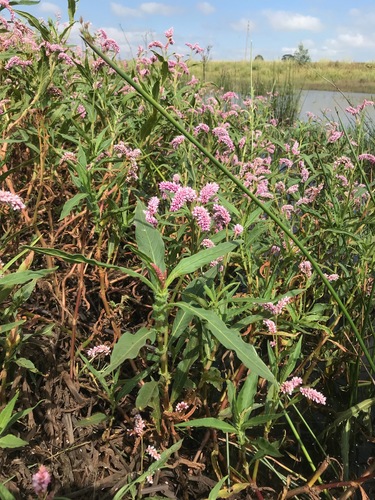
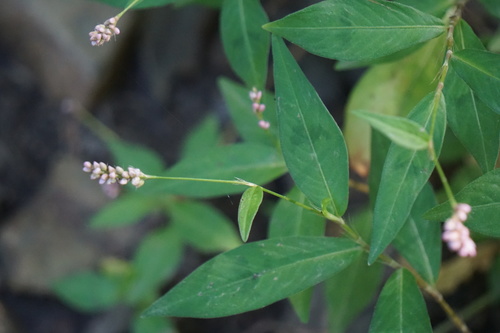
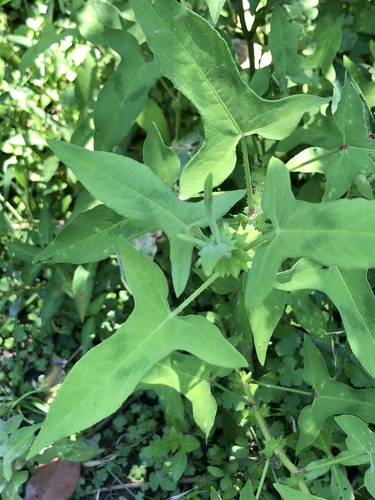
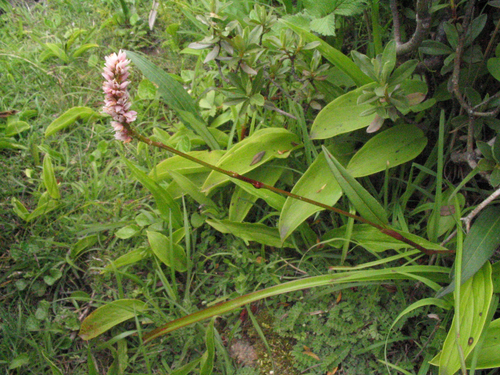
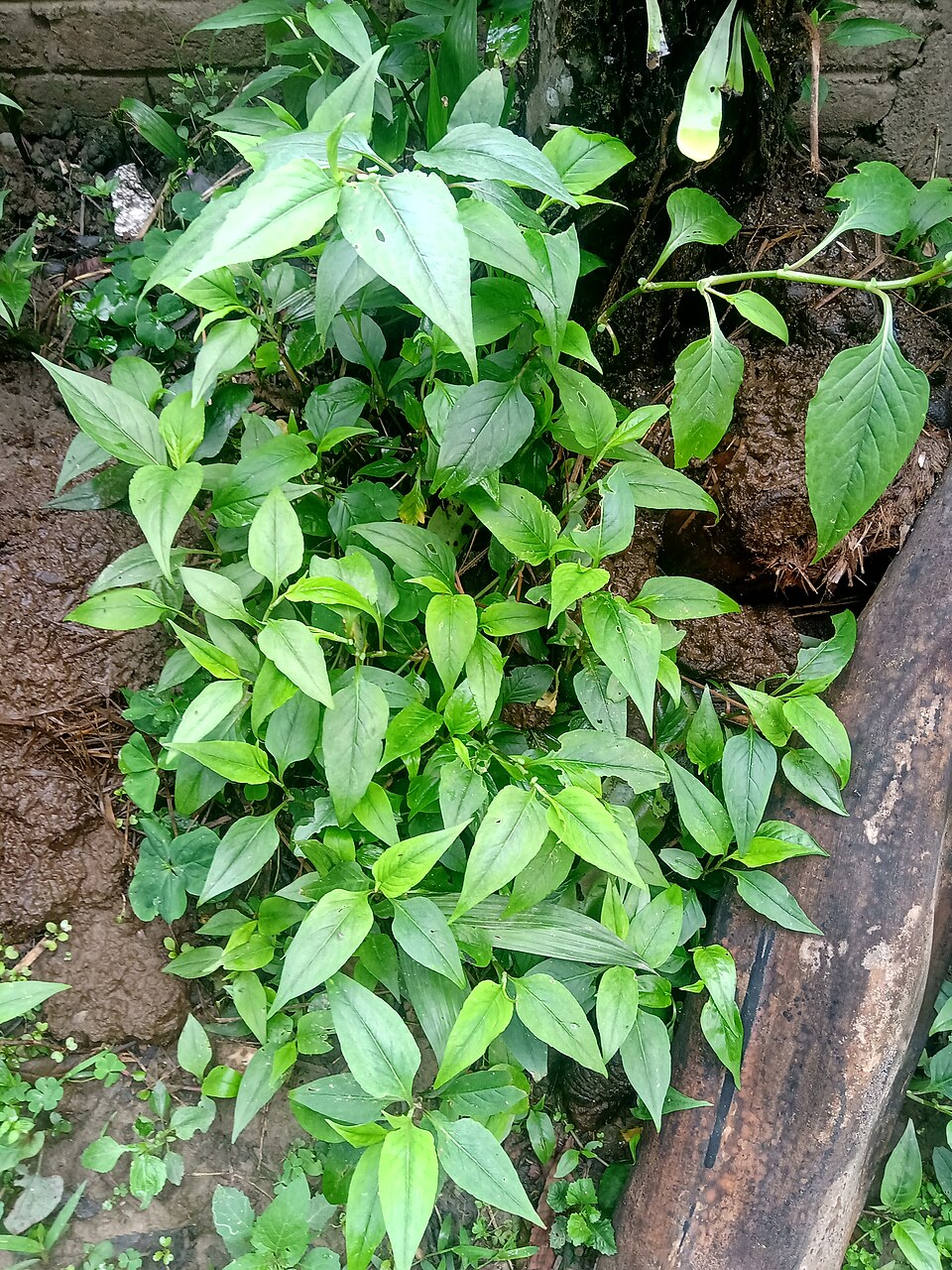
A herb. It grows along the ground or curves upwards. It keeps growing from year to year. It forms mats. The has glandular hairs. The leaves do not have stalks. The leaf blades are broadly oval and 2-5 cm long. They are green and taper to the base and tip. The central vein is red. The flowers are in round heads. The flowers are pink. The nut is 3 angled. It is dull black.
Edible Uses
The flower spikes are eaten raw and have a sweet-sour taste. The young leaves are eaten as a vegetable, typically in soup. The ripe fruit are eaten, especially by children.
Traditional Uses
The flower spikes are eaten raw. They have a sweet-sour taste. The young leaves are eaten as a vegetable, usually in soup. The ripe fruit are eaten.
Medicinal Uses
The juice of the plant is taken as a treatment for stomach disorders. A paste made from the plant is applied as a poultice on boils, wounds Aqueous or ethanolic extracts of the plant possess antibacterial, analgesic, anti-inflammatory, hypothermia, diuretic, and anti-oxidative activities. The plant has been widely used, with considerable therapeutic efficacy, in the treatment of various urologic disorders including urinary calculus and urinary tract infections. A number of drugs based on this plant (e.g., Relinqing Granule and Milin Capsule) have been approved by the Chinese State Food and Drug Administration. Chemical investigations have shown the presence of triterpenoids, steroids, fatty acid esters, flavonoids, gallic acid and its analogues, as well as other phenolic compounds.
Distribution
It is a subtropical plant. It can grow in shade and in dry or moist soil. In China it grows between 600-3,500 m above sea level. In Vietnam it grows between 1,300-1,600 m above sea level. In Sichuan and Yunnan.
Where It Grows
Asia, Australia, Bhutan, Brazil, China, Hawaii, Himalayas*, India, Indochina, Malaysia, Myanmar, Nepal, North America, Northeastern India, Pacific, SE Asia, Sikkim, Sri Lanka, St Helena, Taiwan, Tasmania, Thailand, USA, Vietnam,
Cultivation
Plants can be grown by seed or stem cuttings.
Other Uses
The plant makes a dense mat of growth and is an excellent ground cover.
Other Information
The ripe fruit are especially eaten by children.
Synonyms
Also Known As
Babing kaling, Kaflya, Nghe dau, Niaorla, Ratnaulo, Ratneulo, Sambondom-bong, Vankaphal
References (9)
- Flora of China @ efloras.org Volume 5 (As Polygonum capitatum)
- Geng, Y., et al, 2016, Traditional knowledge and its transmission of wild edibles used by the Naxi in Baidi Village, northwest Yunnan province. Journal of Ethnobiology and Ethnomedicine. 12:10 (As Polygonum capitatum)
- Ghorbani, A., et al, 2012, A comparison of the wild food plant use knowledge of ethnic minorities in Naban River Watershed Nature Reserve, Yunnan, SW China. Journal of Ethnobiology and Ethnomedicine; 8:17 (As Polygonum capitatum)
- Luo, B., et al, 2019, Wild edible plants collected by Hani from terraced rice paddy agroecosystem in Honghe Prefecture, Yunnan, China. Journal of Ethnobiology and Ethnomedicine 15:56 (As Polygonum capitatum)
- Negi, K.S., 1988, Some little known wild edible plants of U.P. Hills. J. Econ. Tax. Bot. Vol. 12 No. 2 pp 345-360 (As Polygonum capitatum)
Show all 9 references Hide references
- Prodr. fl. nepal. 73. 1825 (As Polygonum capitatum)
- Singh, B., et al, 2012, Wild edible plants used by Garo tribes of Nokrek Biosphere Reserve in Meghalaya, India. Indian Journal of Traditional Knowledge. 11(1) pp 166-171 (As Polygonum capitatum)
- Staples, G.W. and Herbst, D.R., 2005, A tropical Garden Flora. Bishop Museum Press, Honolulu, Hawaii. p 460 (As Polygonum capitatum)
- Taram, M., et al, 2018, Wild Food Plant Resources of Komkar Adi Tribe of Upper Siang District in Arunachal Pradesh, India. Bulletin of Arunachal Forest Research, Vol. 33(2), 27-35