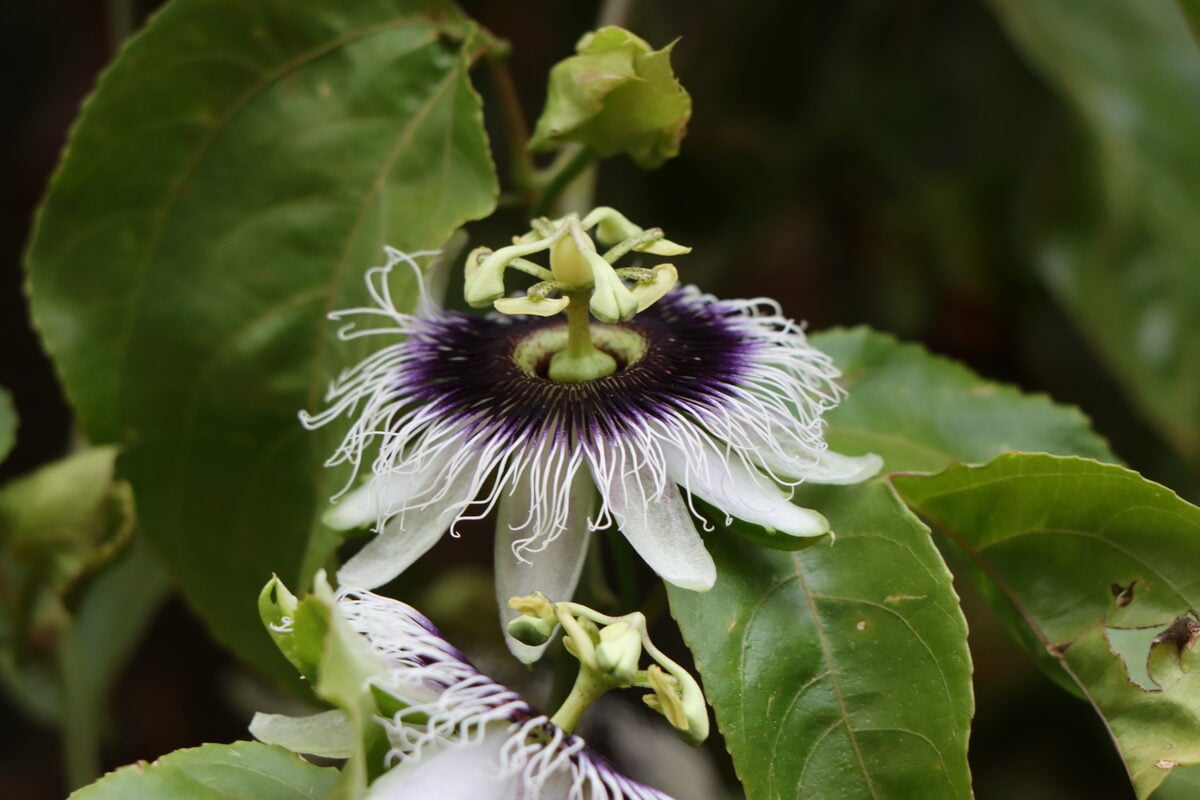
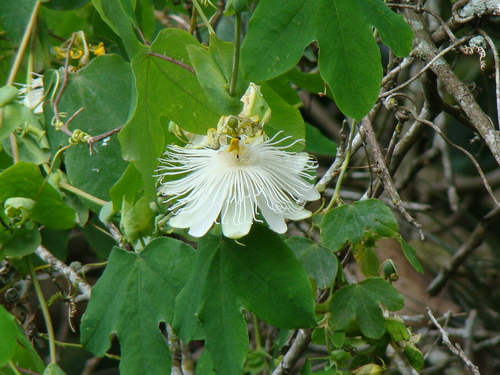
Passiflora seemannii
Griseb.
Guataco
iNaturalist· cc-by-nc-sa
(c) Erick Lux, some rights reserved (CC BY-NC-SA)
iNaturalist· cc-by
(c) Alexis López Hernández, some rights reserved (CC BY)
iNaturalist· cc-by
(c) Alexis López Hernández, some rights reserved (CC BY)
Description
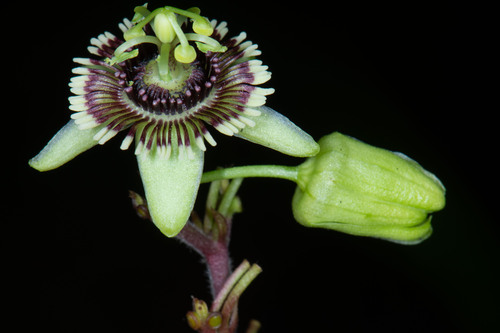
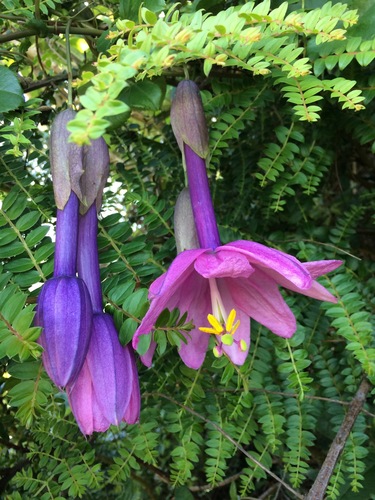
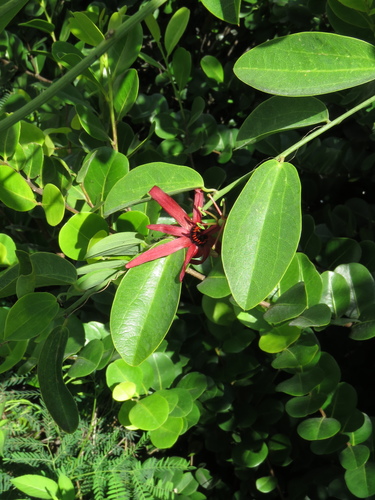
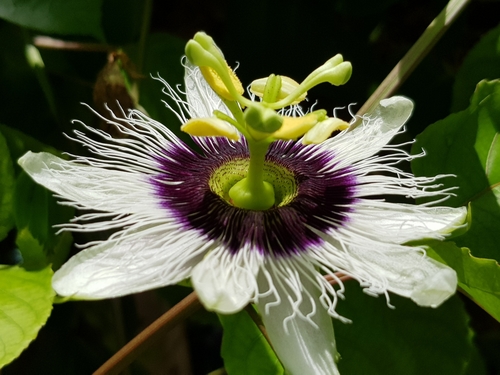
A creeper. The leaves are simple and alternate. The leaf blades are 5-14 cm long by 4-11 cm wide. They are heart shaped at the base. They have several lobes. The flowers occur singly. They are 6-10 cm across. The fruit are 4-7 cm long by 3-6 cm wide. There are many seeds.
Edible Uses
Fruit - raw. The pulp surrounding the seeds is eaten. The fruit is sometimes used for refrescos or eaten with milk and sugar. The greenish-yellow to yellow, ellipsoid to widely ellipsoid fruit is 6 - 8cm long and 4 - 5cm wide.
Traditional Uses
The fleshy layer of the fruit is eaten raw and also used for drinks.
This uses section is brief — help expand it
Medicinal Uses
The leaves and roots of some, if not all, members of this genus contain a substance called 'passiflorina' which has similaritiesr to morphine and is an effective tranquilizer. We have no specific information for this species but many species are used in herbal infusions to calm the nerves and help bring about a restful sleep. The leaves of many species are also considered to be anthelmintic, antihysteric and diaphoretic. They are used in Brazil to combat intermittent fevers, cutaneous inflammations, and erysipelas.
Distribution
A tropical plant. In Central America it grow from sea level to 1,100 m altitude.
Where It Grows
Amazon, Central America, Colombia, Costa Rica, Honduras, Jamaica, Mexico, Nicaragua, North America, Panama, South America, Venezuela, West Indies,
Cultivation
Passiflora species generally grow best in a sheltered, sunny position or in dappled shade. Most species are found in the wild in moist but well-drained soils, generally of a lighter texture, and will often flower and fruit more heavily if the soil fertility is low. They often develop deep roots and can be moderately tolerant of dry spells. Most Passiflora species prefer a neutral to slightly alkaline soil, growing best where the pH is around 6. 5 - 7.5. The flowers are fragrant.
Propagation
Seed - best sown as soon as it is ripe along with the pulp which will help break down the seed coat and speed up germination. Stored seed should be soaked for 24 hours in warm water and germination time can be reduced if the seed is then mixed with the juice of a fresh passion fruit (of any species). Even so, it can take 12 months for stored seed to germinate. Place the seed tray in a shady position, maintaining a temperature around 19 - 24°c. Prick the seedlings out into individual containers as soon as they are large enough to handle and plant out when large enough. Cuttings of young shoots, taken at the nodes. The cuttings root best in a neutral to slightly acid compost, but 100% sharp sand also produces good results. Cuttings of fully mature wood taken at a node. They can take 3 months. Layering. Very easy. Air layering.
Also Known As
Cocorilla guatinaja, Guate-guate, Maracuya
References (7)
- Bonplandia 6:7. 1858
- Chizmar Fernandez, C., et al, 2009, Plantas comestibles de Centroamerica. Instituto de Biodiversidad, Costa Rica. p 254
- Kermath, B. M., et al, 2014, Food Plants in the Americas: A survey of the domesticated, cultivated and wild plants used for Human food in North, Central and South America and the Caribbean. On line draft. p 619
- Lopez-Diago, D. & Garcia, N., 2021, Wild edible fruits of Colombia. Biota ColomBiana 22 (2) p 47
- Mazzani, E., S. Perez y W. Pacheco, 1999, Distribución y uso de especies del género passiflora (Passifloraceae) en las zonas altas de los estados Lara y Falcón, Venezuela. Plant Genetic Resources Newsletter. No. 119:24-32
Show all 7 references Hide references
- Roa, J. A. G. & Boada, D. S. G., 2018, Fundación para el Fortalecimiento de la Fruticultura y Plantas Alimenticias no Convencionales en Colombia.
- Ulmer, T., & MacDougal, J.M., 2004, Passiflora Passionflowers of the World. Timber Press. p 69