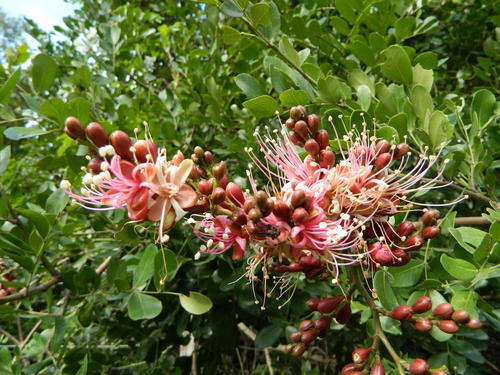
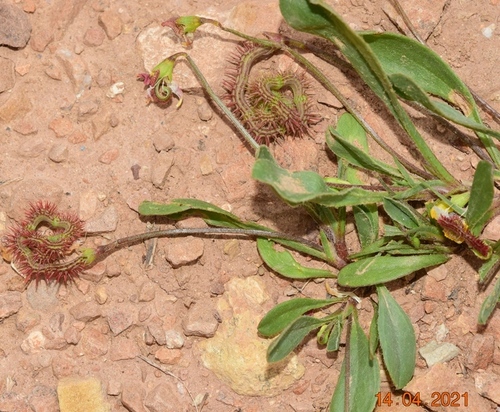
Vigna vexillata var. wightii
(Bedd.) Babu & S. K. Sharma
Wynaad sweet pea
gbif· cc-by
Royal Botanic Gardens, Kew
gbif· cc-by
Royal Botanic Gardens, Kew
Summary
Source: WikipediaVigna vexillata, the Zombi pea or wild cowpea, is a variable, perennial climbing plant that is pantropical, found in regions such as Ethiopia, Nigeria, and Venezuela.
Description
A climbing bean. It is twining and hairy. The end leaflets is 8.5 cm long by 6 cm wide the the side leaflets are 7 cm long by 4.5 cm wide. The base is rounded and there is a sharp tip at the top. The leaves are hairy. The flowering shoots are 10 cm long with 2-4 flowers. They are in the axils of leaves. The flowers are light purple. The pods are 13 cm long by 0.8 cm wide. The seeds are black and 6 mm long by 4 mm wide.
Edible Uses
The plant is a very important food crop in several areas, such as Namibia, where it is commonly harvested from the wild for local use. Its use has spread beyond its native range and the plant is now sometimes cultivated for its edible tubers. It is also grown as a green manure and ground cover crop, especially in poor soils. The root is consumed raw or cooked. The tubers have a soft, easily peeled skin and creamy flesh. They are boiled or roasted and are particularly rich in protein. The young leaves, young pods, and seeds are also cooked and eaten as a vegetable.
Traditional Uses
The pods are cooked and eaten as a vegetable.
This uses section is brief — help expand it
Distribution
A tropical plant. It grows in moist deciduous forest.
Where It Grows
Asia, India,
Synonyms
References (1)
- Ramachandran, V.S. and Nair, V.J., 1981, Ethnobotanical studies in Cannanore District, Kerala State (India). J Econ. Tax. Bot. Vol 2 pp 65-72