Lecointea amazonica
Ducke
iNaturalist· cc-by-nc
(c) sarievanbelle, some rights reserved (CC BY-NC), uploaded by sarievanbelle
iNaturalist· cc-by-nc
(c) sarievanbelle, some rights reserved (CC BY-NC), uploaded by sarievanbelle
iNaturalist· cc-by-nc-sa
(c) Mateo Hernandez Schmidt, some rights reserved (CC BY-NC-SA), uploaded by Mateo Hernandez Schmidt
Description
A tropical tree in the Fabaceae family that grows 25 m tall with a deeply fluted trunk, found on forested slopes with granitic rocks.
This description is brief — help expand it
Edible Uses
Fruit. The flesh is soft, with a sweet/sour flavour. The seedpod is a leathery legume containing a fleshy, edible pericarp surrounding 1 - 2 seeds.
Distribution
It is a tropical plant. It grows on forested slopes on granitic rocks.
Where It Grows
Amazon, Belize, Bolivia, Brazil, Central America, Colombia, Costa Rica, Ecuador, Guatemala, Guianas, Guyana, Honduras, Mexico, Nicaragua, North America, Panama, Peru, South America, Suriname, Venezuela,
Cultivation
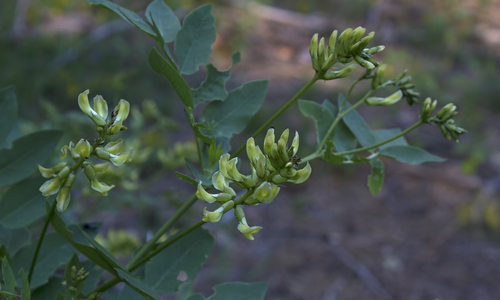
Found on sandy soils in the wild that are often periodically inundated. The flowers are sweet-scented, with an odour similar to that of sweet peas (Lathyrus odoratus).
Other Uses
A yellow, aromatic essential oil is obtained from the roots. The heartwood is chocolate-brown, the thick band of sapwood yellowish. The rather fine-textured wood is exceedingly hard and heavy (sinking in water), very strong, durable. It finishes very smoothly and takes a high polish. An attractive wood but it lacks commercial possibilities because of the limited supply and the deeply fluted wood impedes processing. It is used for tool handles, cabinetwork and construction, also for axe handles.
Synonyms
Also Known As
Cumaceba, Nispero, Pau santo, Tango
References (3)
- Fern, K., 2012, Tropical Species Database http://theferns.info/tropical/
- Grandtner, M. M. & Chevrette, J., 2013, Dictionary of Trees, Volume 2: South America: Nomenclature, Taxonomy and Ecology. Academic Press p 344
- Kew Plants of the World On line