Pyracantha fortuneana
(Maximowicz) H. L. Li
Chinese fire-thorn, Torch fruit
iNaturalist· cc-by
(c) Gianni Del Bufalo bygdb, some rights reserved (CC BY)
iNaturalist· cc-by
(c) Gianni Del Bufalo bygdb, some rights reserved (CC BY)
iNaturalist· cc-by
(c) Gianni Del Bufalo bygdb, some rights reserved (CC BY)
Summary
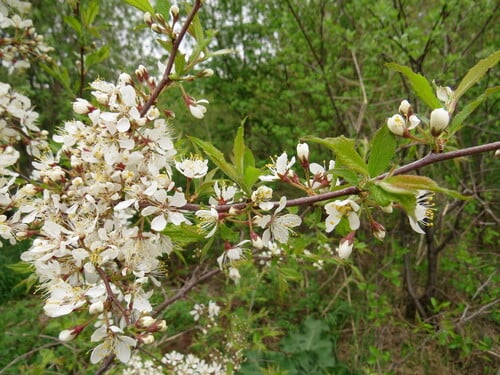
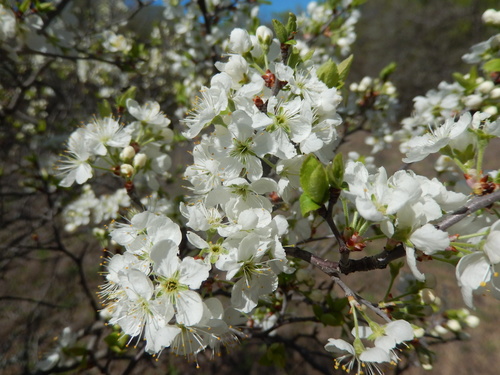
Source: WikipediaPyracantha crenatoserrata, commonly known as Chinese firethorn or Yunnan firethorn, is a species of firethorn. It is a short shrub. It is cultivated for its decorative bright red pome fruit (inaccurately called berries). The flowers are white. It survives in warm climates. It cannot tolerate frost, but it can withstand drought. This species originates from central China. It has become naturalised across parts of Australia, New Zealand and the United States.
Description
An evergreen shrub. It grows 2-3 m high. The small branches are dark brown. They are hairy when young. The short shoots end in a thorn. The leaves are broadly oval and 2-6 cm long by 1-2 cm wide. The flowers are white. The fruit are 5 mm across.
Edible Uses
The fruit are eaten raw and are commonly used as a famine food, though only occasionally eaten otherwise.
Traditional Uses
The fruit are eaten raw.
This uses section is brief — help expand it
Distribution
A tropical plant. It grows in Yunnan in China between 1500-2000 m altitude. It grows in secondary forest. Mt Lofty Botanical Gardens. In Sichuan.
Where It Grows
Asia, Australia, Central America, China*, Indonesia, SE Asia, Tibet,
Cultivation
Plants can be grown from seeds. It is planted as a hedge.
Other Information
It is only occasionally eaten. It is commonly used as a famine food.
Notes
non P. fortuneana (Maxim.) H. L. Li (= Photinia sp.)
Nutrition
| Part | Moisture | kJ | kcal | Protein | Vit A | Vit C | Iron | Zinc |
|---|---|---|---|---|---|---|---|---|
| Fruit | 81.7 | — | — | — | — | 4.8 | — | — |
Synonyms
Also Known As
Abalugu, Duri api jingga, Jubingliang, Sare, Scarlet firethorn
References (10)
- Flora of China @ efloras.org Volume 9
- Geng, Y., et al, 2016, Traditional knowledge and its transmission of wild edibles used by the Naxi in Baidi Village, northwest Yunnan province. Journal of Ethnobiology and Ethnomedicine. 12:10
- Hibbert, M., 2002, The Aussie Plant Finder 2002, Florilegium. p 244
- Jin, Chen et al, 1999, Ethnobotanical studies on Wild Edible Fruits in Southern Yunnan: Folk Names: Nutritional Value and Uses. Economic Botany 53(1) pp 2-14
- Ju, Y., et al, 2013, Eating from the wild: diversity of wild edible plants used by Tibetans in Shangri-la region, Yunnan, China, Journal of Ethnobiology and Ethno medicine 9:28
Show all 10 references Hide references
- Kang, Y., et al, 2012, Wild food plants and wild edible fungi in two valleys on the Qinling Mountains (Shaanxi, central China) Journal of Ethnobiology and Ethnomedicine; 9:26
- Sukarya, D. G., (Ed.) 2013, 3,500 Plant Species of the Botanic Gardens of Indonesia. LIPI p 696
- Wang, J. et al, 2013, A Study on the Utilization of Wild Plants for Food in Liangshan Yi Autonomous Prefecture. Plant Diversity and Resources. 35(4): 416-471
- Wang, J., et al, 2020, An ethnobotanical survey of wild edible plants used by the Yi people of Liangshan Prefecture, Sichuan Province, China. Journal of Ethnobiology and Ethnomedicine 16:10 p 9
- Zhang, L., et al, 2016, Ethnobotanical study of traditional edible plants used by the Naxi people during droughts. Journal of Ethnobiology and Ethnomedicine. 12:39