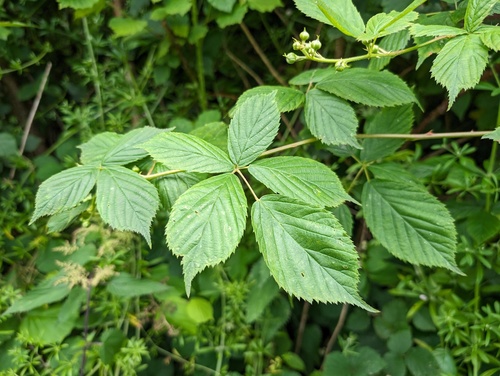
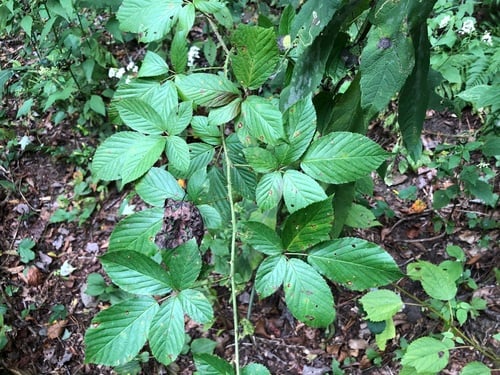
Rubus procerus
P. J. Mull. ex Boulay
Himalaya-berry, Himalayan blackberry, Himalayan giant blackberry
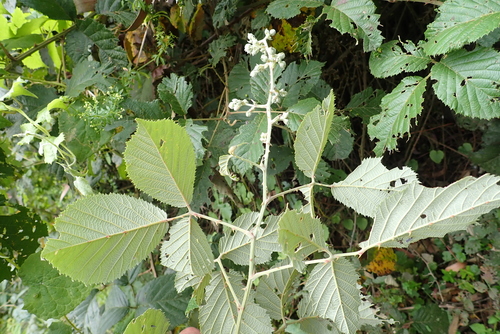
iNaturalist· cc-by-nc
(c) Alexey P. Seregin, some rights reserved (CC BY-NC), uploaded by Alexey P. Seregin
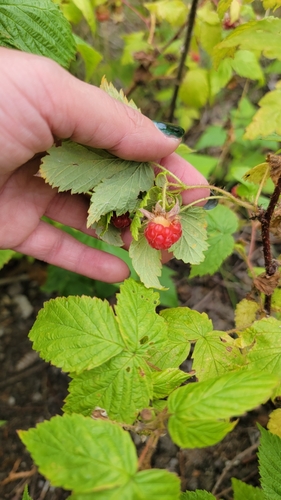
iNaturalist· cc-by-nc
(c) Barbara L. Wilson, some rights reserved (CC BY-NC), uploaded by Barbara L. Wilson
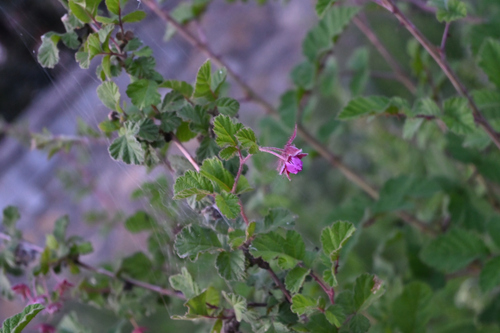
iNaturalist· cc-by-nc
(c) Barbara L. Wilson, some rights reserved (CC BY-NC), uploaded by Barbara L. Wilson
Summary
Source: WikipediaA fast-growing deciduous shrub reaching 10 meters tall, hardy to UK zone 5 and frost-hardy. Flowers July to August with seeds maturing August to September. Hermaphroditic and self-fertile with insect pollination. Grows in sandy, loamy, or clay soils with good drainage and mildly acidic to mildly alkaline pH. Tolerates semi-shade to full sun and prefers moist soil.
Description
A fast-growing deciduous shrub reaching 10 meters tall, hardy to UK zone 5 and frost-hardy. Flowers July to August with seeds maturing August to September. Hermaphroditic and self-fertile with insect pollination. Grows in sandy, loamy, or clay soils with good drainage and mildly acidic to mildly alkaline pH. Tolerates semi-shade to full sun and prefers moist soil.
Edible Uses
The fruit can be eaten raw or cooked in pies, cakes, and similar dishes, and can also be dried for later use. It is very large for a blackberry and develops a pleasant, rich flavour when fully ripe.
Traditional Uses
The fruit are eaten raw. They are also dried. They can be used for cakes, pies and drinks.
This uses section is brief — help expand it
Medicinal Uses
None known
Where It Grows
Fruit,
Cultivation
Easily grown in a good well-drained loamy soil in sun or semi-shade. A form of this species, known as 'Himalayan giant', is commonly cultivated in temperate zones for its edible fruit. Although a blackberry, the stems are often perennial and can fruit for more than one year. This name may be wrongly applied . According to the new RHS Dictionary of Gardening, the correct name for the 'Himalayan Giant' blackberry is R. procerus. P.J.Muell., the name R. discolor is misapplied. Plants in this genus are notably susceptible to honey fungus.
Propagation
Seed requires stratification and is best sown in early autumn in a cold frame. Stored seed needs one month of stratification at around 3°c and should be sown as early in the year as possible. Prick out seedlings once large enough to handle and grow on in a cold frame before planting into permanent positions in late spring of the following year. Cuttings of half-ripe wood can be taken in July or August in a frame. Tip layer in July and plant out in autumn. Division can be done in early spring or just before leaf-fall in autumn.
Other Uses
A purple to dull blue dye is obtained from the fruit.
Other Information
Rosaceae
Notes
A climber.
Dangerous Lookalikes
This plant can be confused with the following toxic species. Always verify identification carefully before consuming any wild plant.
Red Baneberry
Actaea rubra
Walter Siegmund (talk)
Himalaya-berry
Rubus procerus
(c) Alexey P. Seregin, some rights reserved (CC BY-NC), uploaded by Alexey P. Seregin
Red Baneberry: Short herbaceous plant (no thorns), berries on thick red stems, each berry has a single seed, compound sharply-toothed leaves.
Himalaya-berry: Thorny woody canes (brambles), aggregate berry made of many drupelets, berries pull easily from receptacle.
Synonyms
References (5)
- Facciola, S., 1998, Cornucopia 2: a Source Book of Edible Plants. Kampong Publications, p 210
- Jennings, D.L., 1979, Raspberries and blackberries, in Simmonds, N.W., (ed), Crop Plant Evolution. Longmans. London. p 251
- Plants for a Future database, The Field, Penpol, Lostwithiel, Cornwall, PL22 0NG, UK. http://www.scs.leeds.ac.uk/pfaf/
- Ronces vosgiennes 7. 1864
- USDA, ARS, National Genetic Resources Program. Germplasm Resources Information Network - (GRIN). [Online Database] National Germplasm Resources Laboratory, Beltsville, Maryland. Available: www.ars-grin.gov/cgi-bin/npgs/html/econ.pl (10 April 2000)