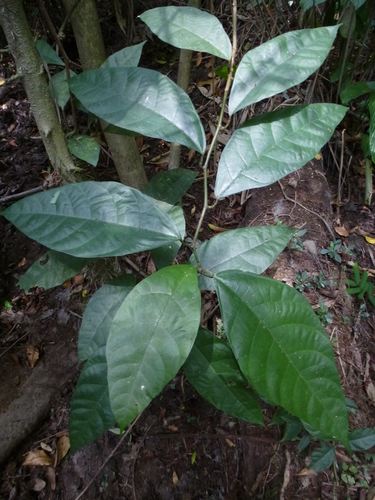
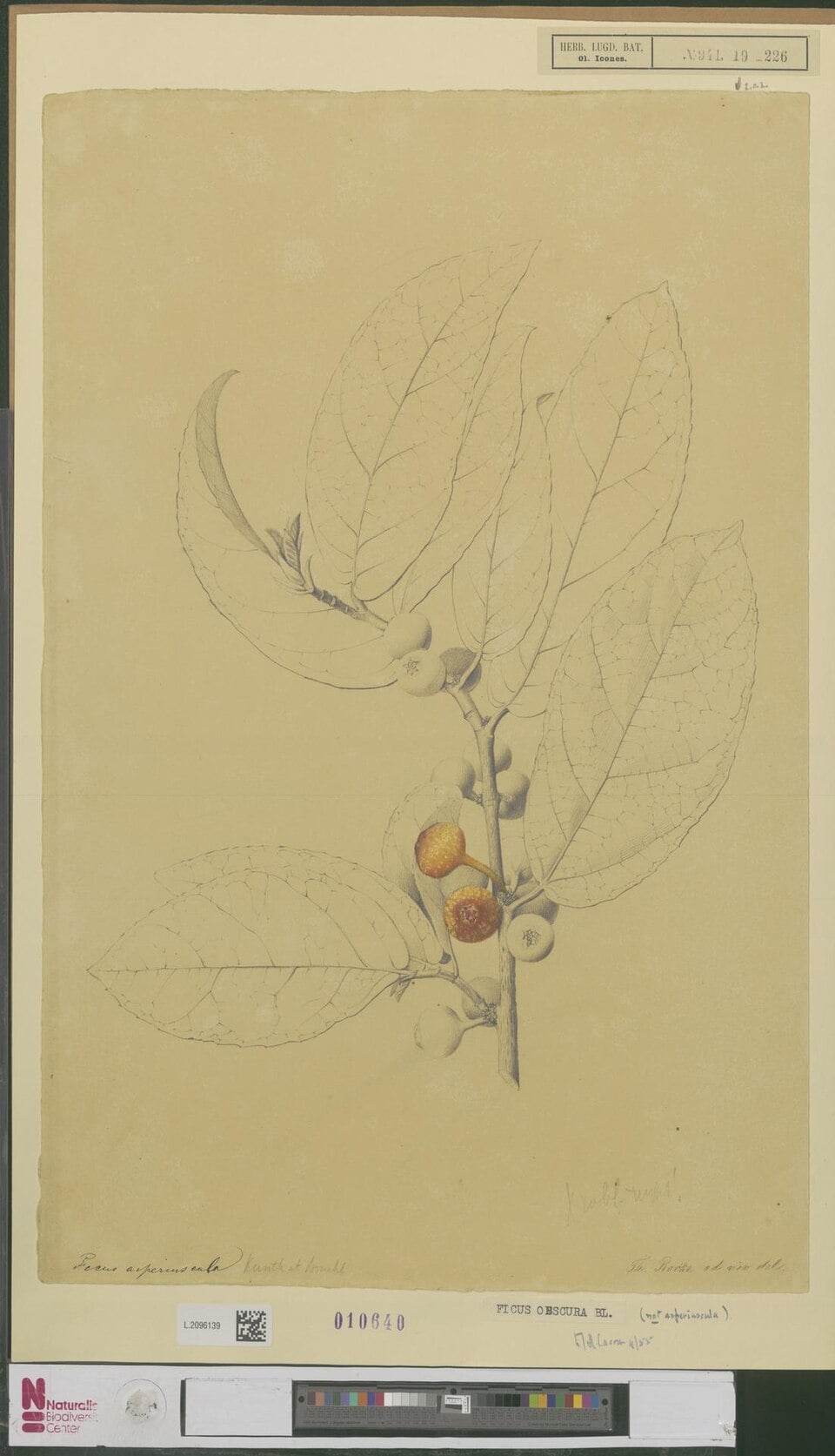
Artocarpus chama
Buch.-Ham.
Chaplash
iNaturalist· cc-by
(c) Kristof Zyskowski, some rights reserved (CC BY), uploaded by Kristof Zyskowski
iNaturalist· cc-by-nc
(c) Aditya Gadkari, some rights reserved (CC BY-NC), uploaded by Aditya Gadkari
iNaturalist· cc-by
(c) T R Shankar Raman, some rights reserved (CC BY), uploaded by T R Shankar Raman
Summary
Source: WikipediaArtocarpus chama is a tree in the family Moraceae: a wild species of the breadfruit/jackfruit genus (Artocarpus) and may be referred to as the 'chaplaish'; its Vietnamese name is mít nài (also used for other forest species). Distribution records are from: Yunnan China, Bangladesh, Bhutan, India, Laos, Malaysia, Myanmar, Sikkim and Thailand.
Description
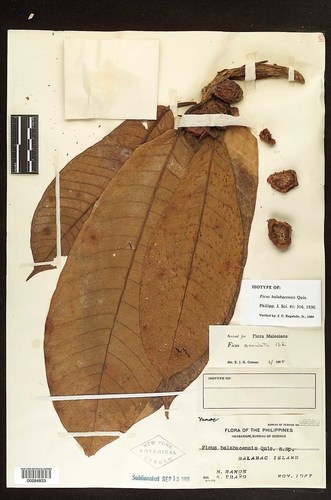
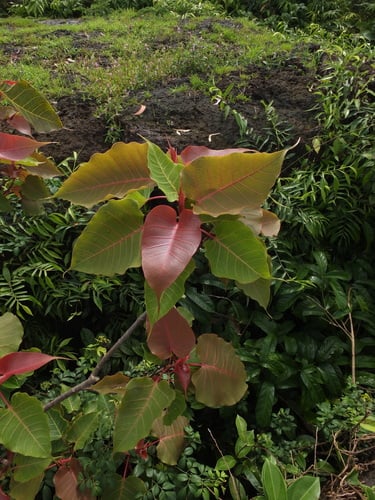
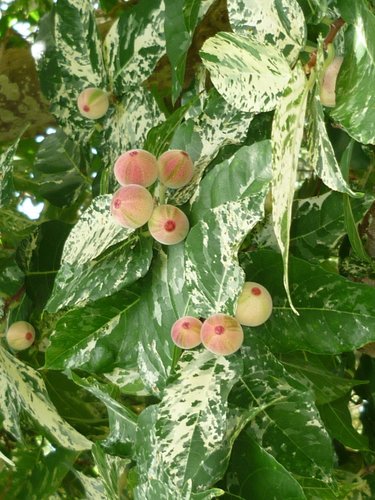
A tree. It loses its leaves during the year. It grows 40 m tall. The bark is grey to brown. It peels off in flakes. The leafy growths (stipules) at the base of the leaves are oval and 2.5 cm long. These are yellow and hairy. The leaves are oval and 14-23 cm long by 9-14 cm wide. Young leaves are divided. The flowers occur singly in the axils of leaves. The male heads are roundish and 1.5-3 cm by 1-3 cm. The female heads have hairy bracts. The fruit is almost round and 6-10 cm across. The seeds are 7 mm long by 4 mm wide. The fruit are edible.
Edible Uses
The ripe fruits are eaten raw and are sweet, and can also be used in pickles. Young fruits are eaten as a vegetable. The seeds are parboiled, fermented, and baked before eating. Fruits are sold in local markets.
Traditional Uses
The seeds are parboiled then fermented and baked before eating. The young fruits are eaten as a vegetable. The ripe fruit are eaten raw. They are sweet. They are also used in pickles.
Distribution
A tropical plant. It needs a well marked monsoonal climate. It needs a rainfall of at least 2000 mm per year. It grows in the Chittagong hills in Bangladesh. It grows in Yunnan in China.
Where It Grows
Andamans, Asia, Bangladesh, Bhutan, Cambodia, China, Himalayas, India, Indochina, Laos, Malaysia, Myanmar, Northeastern India, SE Asia, Thailand, Vietnam,
Cultivation
A plant of the moist to wet tropics where there is a distinct dry season, it is found at elevations up to 1,650 metres. It grows best in areas where annual daytime temperatures are within the range 22 - 32°c, but can tolerate 10 - 40°c. It prefers a mean annual rainfall in the range 3,000 - 4,000mm, but tolerates 2,000 - 5,500mm. Mature trees grow best in full sun or light shade, though younger trees require some shade. Grows best in a fertile, medium to heavy, well-drained soil. Prefers a pH in the range 5 - 6.5, tolerating 4 - 7.5. Wood production may be 15 - 40 cubic metres per hectare per year.
Other Uses
The plant yields a tenacious, milky latex. The yellowish or brownish wood is light in weight, fairly hard, easily worked. A good quality wood, it is used to manufacture carriage wheels, tea boxes, packing cases etc. It is also used in construction, joinery, turnery, sculpture. When making furniture, it can give better results than Teak. The plant is a source of terap timber. The general description of terap is as follows:- The heartwood is yellow to pale brown; it is usually not differentiated from the sapwood. The texture is moderately coarse to coarse and even; the grain is interlocked. The wood is non-durable under tropical conditions. It seasons fairly slowly, with high shrinkage and slight bowing, cupping and checking. It is generally easy to work; saws well; planes easily but leaves a rough finish on radial surfaces; bores and turns easily, but leaves a rough finish;nailing property is good; can be peeled satisfactorily and is suitable for plywood production. Locally, the wood is used for light construction, for making boxes, crates, wooden pallets and veneer. The wood is sometimes nicely figured and therefore is suitable for decorative purposes like furniture, joinery and panelling.
Production
In India plants flower and fruit March to August.
Other Information
Fruit are sold in local markets.
Notes
There are about 50 Artocarpus species. They are in the tropics and subtropics of Asia and the Pacific.
Synonyms
Also Known As
Chamal, Chambal, Cham kathal, Chamin gulo, Chaplash, Chattim, Dieng-soh-ram, Heirukothong, Jaremjang, Jarm, Jram, Knorprey, Lutta, Mit rung, Panoh-deh, Phong, Sam, Sonapati chaam, Tak sam schein, Tatkawng, Taung-peinne, Thaingpeinne, Toung-peing-nai, Vivoi, Ye shu bo luo
References (36)
- Ambasta S.P. (Ed.), 2000, The Useful Plants of India. CSIR India. p 57
- Angami, A., et al, 2006, Status and potential of wild edible plants of Arunachal Pradesh. Indian Journal of Traditional Knowledge 5(4) October 2006, pp 541-550
- Arora, K., Indigenous Forest Management in the Andaman and Nicobar Islands, India. (As Artocarpus chaplasha)
- Baishya, S. Kr., et al, 2013, Survey of Wild Edible Fruits of Dhubri District, Assam, India. Plant Archives Vol 13 (1): 155-158 (As Artocarpus chama)
- BARC, 2016, State of Biodiversity for Food and Agriculture in Bangladesh. Bangladesh Agricultural Research Council. (As Artocarpus chaplasha)
Show all 36 references Hide references
- Bircher, A. G. & Bircher, W. H., 2000, Encyclopedia of Fruit Trees and Edible Flowering Plants in Egypt and the Subtropics. AUC Press. p 43
- Biswas, S. C., et al, 2018, Diversity of wild edible minor fruits used by the ethnic communities of Tripura, India. Indian Journal of Traditional Knowledge. Vol 17(2), April 2018, pp 282-289
- Burkill, I.H., 1966, A Dictionary of the Economic Products of the Malay Peninsula. Ministry of Agriculture and Cooperatives, Kuala Lumpur, Malaysia. Vol 1 (A-H) p 249
- Chakraborty, S. & Chaturbedi, H. P., 2014, Some Wild Edible Fruits of Tripura- A Survey. Indian Journal of Applied research. (4) 9 (As Artocarpus chaplasha)
- Das, T. & Das, A. K., 2005, Inventorying plant biodiversity in homegardens: A case study in Barak Valley, Assam, North East India. CURRENT SCIENCE, VOL. 89, NO. 1, 10 JULY 2005
- Devi, O.S., P. Komor & D. Das, 2010, A checklist of traditional edible bio-resources from Ima markets of Imphal Valley, Manipur, India. Journal of Threatened Taxa 2(11): 1291-1296 (As Artocarpus chaplasha)
- Ethnobotany of Karbis. Chapter 4 in p 103
- Fl. ind. ed. 1832, 3:525. 1832
- Hazarika, T. K., et al, 2012, Studies on wild fruits of Mizoram, India used as ethno-medicines. Genetic Resources and Crop Evolution. Published on line 03 February, 2012 (As Artocarpus chama)
- Jeeva, S., 2009, Horticultural potential of wild edible fruits used by the Khasi tribes of Meghalaya. Journal or Horticulture and Forestry Vol. 1(9) pp. 182-192 (As Artocarpus chaplasha)
- Kar, A., et al, 2013, Wild Edible Plant Resources used by the Mizos of Mizoram, India. Kathmandu University Journal of Science, Engineering and Technology. Vol. 9, No. 1, July, 2013, 106-126 (As Artocarpus chama)
- Lalfakzuala, R., 2007, Ethnobotanical usages of plants in western Mizoram. Indian Journal of Traditional Knowledge. Vol 6(3) pp 480-493
- Majumdar, K and Datta, N., 2009, Traditional wild edible fruits for the forest dwellers of Tripura, India. Pleione 3(2) 167-178 (As Artocarpus chaplasha)
- Medhi, P., Sarma, A and Borthakur, S. K., 2014, Wild edible plants from the Dima Hasao district of Assam, India. Pleione 8(1): 133-148
- Mozhui, R., et al, 2011, Wild edible fruits used by the tribals of Dimapur district of Nagaland, India. Pleione 5(1): 56 - 64. (As Artocarpus chaplasha)
- Murtem, G. & Chaudhrey, P., 2016, An ethnobotanical note on wild edible plants of Upper Eastern Himalaya, India. Brazilian Journal of Biological Sciences, 2016, v. 3, no. 5, p. 63-81
- Partha, P., 2014, Ethnobotany of the Laleng (Patra) Community in Bangladesh. Journal of Pharmacognosy and Phytochemistry. 2(6):173-184
- Pasha, M. K. & Uddin, S. B., 2019, Minor Edible Fruits of Bangladesh. Bangladesh J. Plant Taxon. 26(2): 299–313
- Patiri, B. & Borah, A., 2007, Wild Edible Plants of Assam. Geethaki Publishers. p 132 (As Artocarpus chama)
- Pegu, R., et al, 2013, Ethnobotanical study of Wild Edible Plants in Poba Reserved Forest, Assam, India. Research Journal of Agriculture and Forestry Sciences 1(3):1-10 (As Artocarpus chama)
- Pradheep, K., et al, 2016, Wild edible plants used by Konyak tribe in Mon district of Nagaland: Survey and inventorisation. Indian Journal of Natural Products and Resources. Vol 7(1) pp 74-81
- PROSEA (Plant Resources of South East Asia) handbook, Volume 2, 1991, Edible fruits and nut. p 79
- Sahni, K.C., 2000, The Book of Indian Trees. Bombay Natural History Society. Oxford. p 159
- Sang, D. T., & Mizoue, K. O. N., 2012, Use of Edible Forest Plants among Indigenous Ethnic Minorities in Cat Tien Biosphere Reserve, Vietnam. Asian Journal of Biodiversity Vol. 3 (1), p 23-49
- Sarma, H., et al, 2010, Updated Estimates of Wild Edible and Threatened Plants of Assam: A Meta-analysis. International Journal of Botany 6(4): 414-423 (As Artocapus chama)
- Sawian, J. T., et al, 2007, Wild edible plants of Meghalaya, North-east India. Natural Product Radiance Vol. 6(5): p 413
- Swaminathan, M.S., and Kochnar, S.L., 2007, An Atlas of major Flowering Trees in India. Macmillan. p 246
- Teron, R. & Borthakur, S. K., 2016, Edible Medicines: An Exploration of Medicinal Plants in Dietary Practices of Karbi Tribal Population of Assam, Northeast India. In Mondal, N. & Sen, J.(Ed.) Nutrition and Health among tribal populations of India. p 153
- Turreira Garcia, N., et al, 2017, Ethnobotanical knowledgeof the Kuy and Khmer people in Prey Lang, Cambodia. Cambodian Journal of Natural History 2017 (1): 76-101
- World Checklist of Useful Plant Species 2020. Royal Botanic Gardens, Kew
- www.eFloras.org Flora of China (As Artocarpus chama)