Melicope lunu-ankenda
(Gaertn.) T.G. Hartley
Sour-relish wood
iNaturalist· cc-by-nc
(c) Muhammad Rizki, some rights reserved (CC BY-NC), uploaded by Muhammad Rizki
iNaturalist· cc-by-nc-sa
(c) filibot.web, some rights reserved (CC BY-NC-SA)
Summary
Source: WikipediaMelicope lunu-ankenda, synonym Euodia lunu-ankenda, is a species of plant in the family Rutaceae. It is native to tropical Asia.
Description
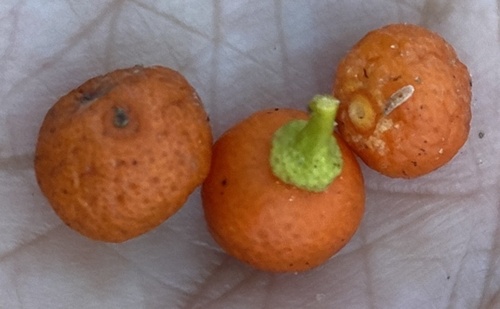
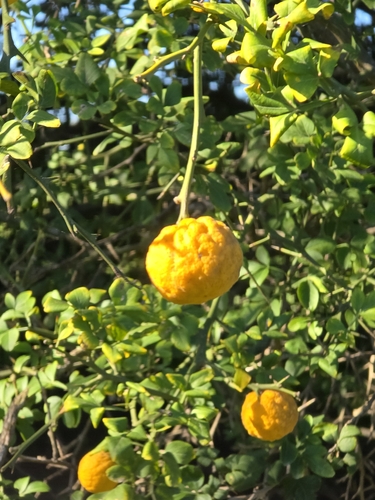
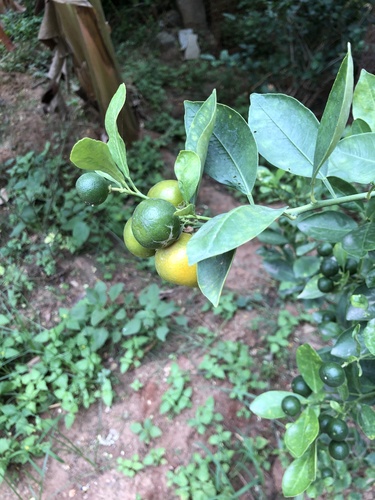
A shrub or tree. It can grow up to 30 m high. The young branches can be velvety. The leaves are opposite and have 3 leaflets. The leaf stalks can be 2-15 cm long. The leaflets are narrowly oval and 4-23 cm long by 3-7 cm wide. They taper to the tip and the base is unequal. They have small hairs when young. The flowering bunches are in the axils of leaves. These are 2-32 cm long. The flowers are greenish-white and without stalks. The flowers are usually of one sex. The fruit are oval, 4-valved follicles having a cavity in the centre. They are 6-10 mm long. The seeds are round or flattened and 3-6 mm long.
Edible Uses
The sour-tasting leaves are used as a flavouring and condiment for food dishes and are also made into tea.
Traditional Uses
The leaves are used as a flavouring for food dishes. The leaves are sour in taste. They are also used for tea.
This uses section is brief — help expand it
Medicinal Uses
The roots are used to treat colds and rheumatism. The leaves and flowers are used in the treatment of menstrual disorders and fever.
Distribution
A tropical plant. It can be in forest on well-drained or swampy land. It grows from sea level to 2,200 m above sea level. It grows on dry stony hills in south India.
Where It Grows
Andaman islands, Asia, Brunei, Cambodia, China, Himalayas, India, Indochina, Indonesia, Malaysia, Myanmar, Nepal, New Guinea, Philippines, SE Asia, Sri Lanka, Taiwan, Thailand, Tibet, Vietnam,
Cultivation
Plants can be grown from seeds.
Other Uses
The heartwood is yellow or light orange; it is not clearly demarcated from the lighter coloured sapwood. The texture is moderately fine and even; the grain is straight or shallowly interlocked. The wood is soft to moderately hard and fairly light in weight. It is suitable for interior finishing, paneling, mouldings, veneer and plywood manufacture, general utility furniture, packing cases and boxes, carving and handicraft items. The wood is weak but it is used in construction.
Notes
There are about 150-233 species in Malaysia and the Pacific.
Synonyms
Also Known As
Kanalei, Kattuchampakam, Kayu asam, Lunu melicope tree, Medang ketimang, Midauma-baphang, Pauh-pauh paya, Pohon melikope lunu, Sam ngam, Setenggek burong, U am
References (10)
- Ambasta, S.P. (Ed.), 2000, The Useful Plants of India. CSIR India. p 215 (As Evodia lunu-ankenda)
- Burkill, I.H., 1966, A Dictionary of the Economic Products of the Malay Peninsula. Ministry of Agriculture and Cooperatives, Kuala Lumpur, Malaysia. Vol 1 (A-H) p 1005 (As Evodia roxburghiana)
- Martin, F.W. & Ruberte, R.M., 1979, Edible Leaves of the Tropics. Antillian College Press, Mayaguez, Puerto Rico. p 99 (As Euodia roxburghii)
- Martin, F. W., et al, 1987, Perennial Edible Fruits of the Tropics. USDA Handbook 642 p 75 (As Evodia lunu-ankenda)
- PROSEA handbook Volume 13 Spices. p 277
Show all 10 references Hide references
- Sandakania 4:61. 1994
- Schatz, G.E., 2001, Generic Tree Flora of Madagascar. Royal Botanical Gardens, Kew and Missouri Botanical Garden. p 349 (Genus)
- Soepadmo, E. and Wong, K. M., 1995, Tree Flora of Sabah and Sarawak. Forestry Malaysia. Volume One. p 392
- Sukarya, D. G., (Ed.) 2013, 3,500 Plant Species of the Botanic Gardens of Indonesia. LIPI p 389
- World Checklist of Useful Plant Species 2020. Royal Botanic Gardens, Kew