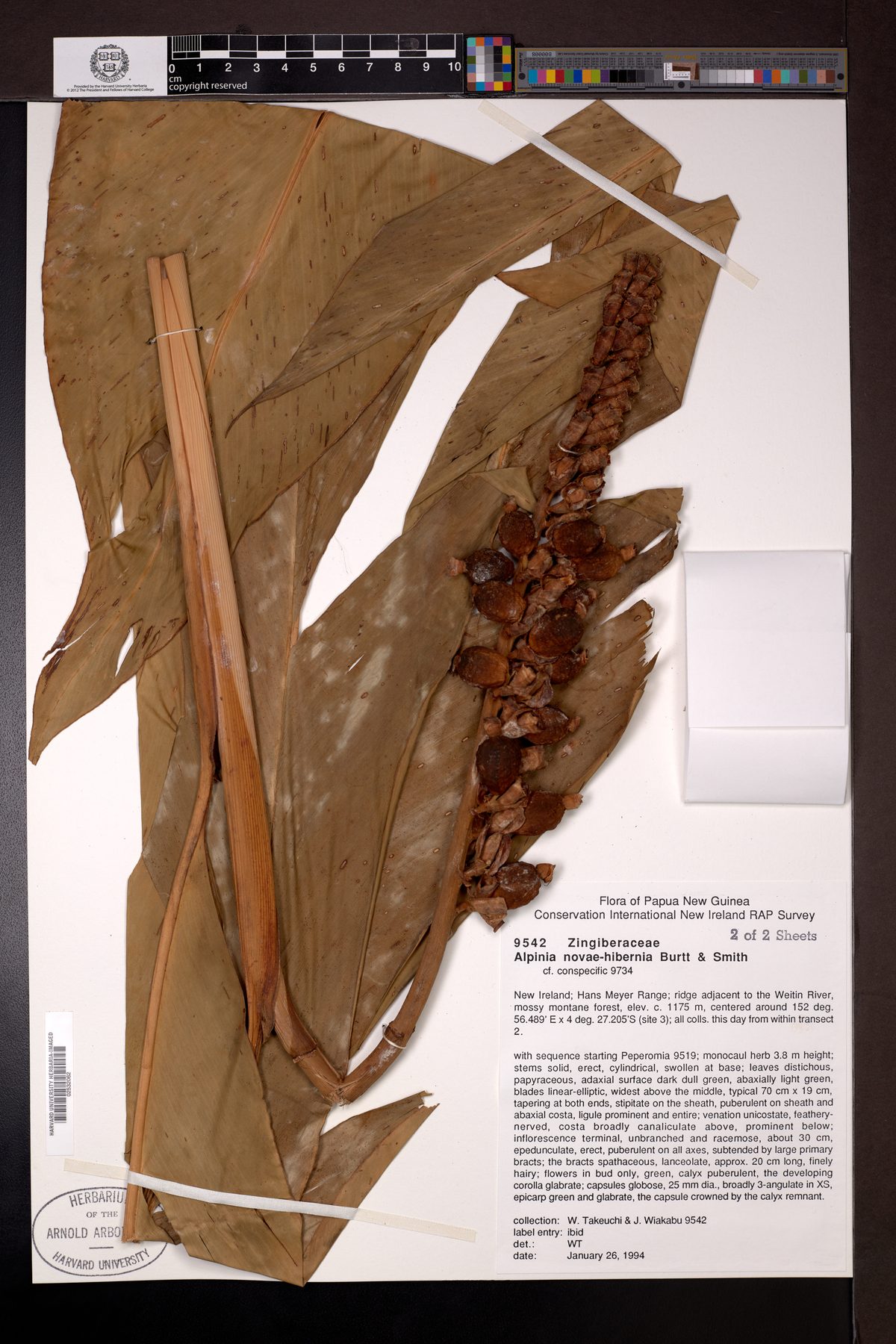
Amomum villosum var. xanthioides
(Wallich ex Baker) T. L. Wu & S. J. Chen
Wild siamese cardamom
gbif· cc-by
Royal Botanic Gardens, Kew
gbif· cc-by
Meise Botanic Garden
gbif· cc-by
Meise Botanic Garden
Description
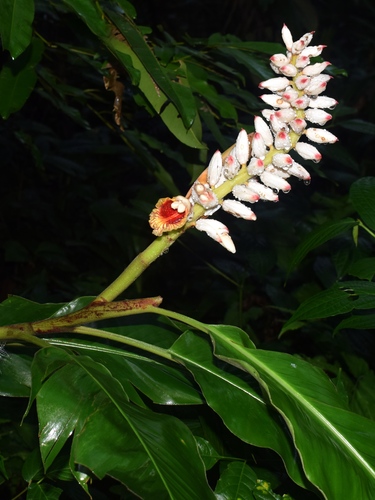
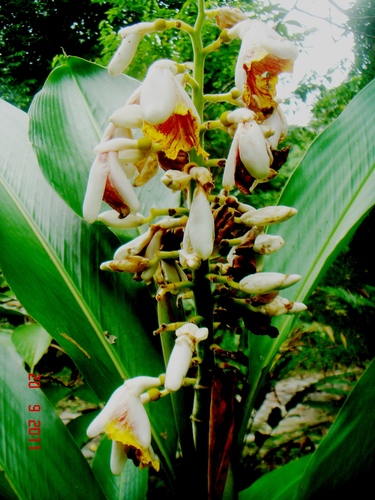
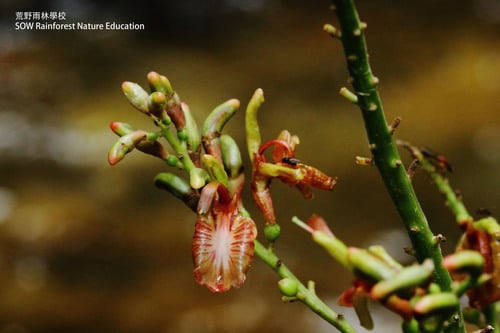
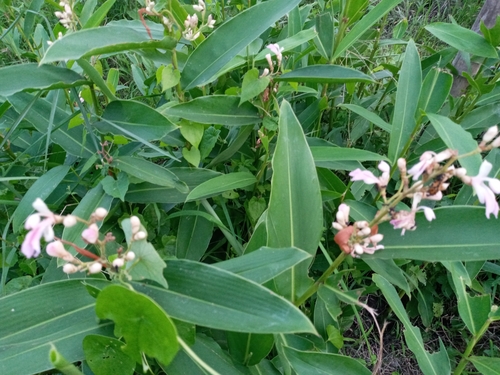
A herb in the ginger family. It keeps growing from year to year. It has rhizomes or underground stems. There are also reed like stems that can be 2-2.5 m tall. The leaves are in two rows and are sword shaped and 20-35 cm long. The flowers are white with purple spots. They are in rounded heads near the base of the plant. The fruit is an oval capsule with 3 valves.
Edible Uses
The seeds are used for flavouring liqueurs and as a cardamom substitute. The leaves are cooked and eaten as a vegetable. The rhizomes are slightly boiled and eaten.
Traditional Uses
The seeds are used for flavouring. They are used to flavour liqueurs and as a substitute for cardamom. The leaves are cooked and eaten as a vegetable. The rhizomes are slightly boiled and eaten.
Distribution
It is a tropical plant. It grows in forests between 600-800 m above sea level in southern China. In Yunnan.
Where It Grows
Asia, Cambodia, China, India, Indochina, Laos, Myanmar, SE Asia, Thailand, Vietnam,
Cultivation
Plants are grown by division.
Other Information
It is cultivated.
Notes
There are about 150 Amomum species. They are mostly tropical.
Synonyms
Also Known As
Kar-wahn, Malabar cardamom, Maliangkuoyou, Sa nhan xanh, Tavoy cardamom
References (15)
- Ambasta S.P. (Ed.), 2000, The Useful Plants of India. CSIR India. p 35
- Bircher, A. G. & Bircher, W. H., 2000, Encyclopedia of Fruit Trees and Edible Flowering Plants in Egypt and the Subtropics. AUC Press. p 24
- Brown, D., 2002, The Royal Horticultural Society encyclopedia of Herbs and their uses. DK Books. p 118
- Burkill, I.H., 1966, A Dictionary of the Economic Products of the Malay Peninsula. Ministry of Agriculture and Cooperatives, Kuala Lumpur, Malaysia. Vol 1 (A-H) p 137
- Facciola, S., 1998, Cornucopia 2: a Source Book of Edible Plants. Kampong Publications, p 247
Show all 15 references Hide references
- Hedrick, U.P., 1919, (Ed.), Sturtevant's edible plants of the world. p 50
- J. D. Hooker, Fl. Brit. India 6:239. 1892
- Kachenchart, B., et al, 2008, Phenology of Edible Plants at Sakaerat Forest. In Proceedings of the FORTROP II: Tropical Forestry Change in a Changing World. Bangkok, Thailand.
- Morton,
- PROSEA handbook Volume 13 Spices. p 274
- Sang, D. T., & Mizoue, K. O. N., 2012, Use of Edible Forest Plants among Indigenous Ethnic Minorities in Cat Tien Biosphere Reserve, Vietnam. Asian Journal of Biodiversity Vol. 3 (1), p 23-49 (As Amomum xanthioides)
- Seidemann J., 2005, World Spice Plants. Economic Usage, Botany, Taxonomy. Springer. p 38
- Suksri, S., et al, 2005, Ethnobotany in Bung Khong Long Non-Hunting Area, Northeast Thailand. Kasetsart J., (Nat. Sci) 39: 519-533
- Xu, You-Kai, et al, 2004, Wild Vegetable Resources and Market Survey in Xishuangbanna, Southwest China. Economic Botany. 58(4): 647-667.
- Zeven, A. C. & de West, J. M. J., 1982, Dictionary of cultivated plants and their regions of diversity. Wageningen. p 80 (As Amomum xanthioides)