Piper aduncum
L.
Spiked pepper, Hooked pepper
iNaturalist· cc-by-nc-sa
(c) 106611639464075912591, some rights reserved (CC BY-NC-SA), uploaded by 106611639464075912591
iNaturalist· cc-by-nc
(c) ronaldsoft, some rights reserved (CC BY-NC), uploaded by ronaldsoft
iNaturalist· cc-by-nc
(c) Akmal Idham, some rights reserved (CC BY-NC)
Summary
Source: WikipediaPiper aduncum, the spiked pepper, matico, hierba del soldado, achotlín, cordoncillo, higuillo or higuillo de hoja menuda, is a flowering plant in the family Piperaceae. Like many species in the family, the matico tree has a peppery odor. It grows wild on the coasts and in the forests of Central and South America and in the Interandean Valleys, up to 3,000 m (9,800 ft) above sea level.
Description
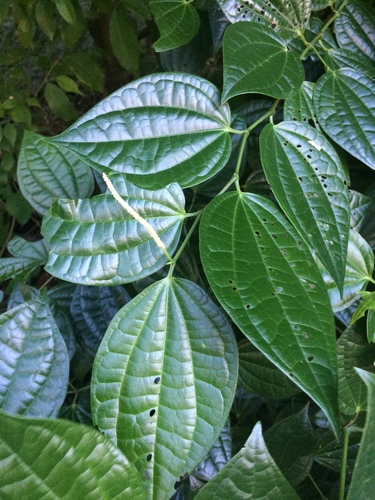
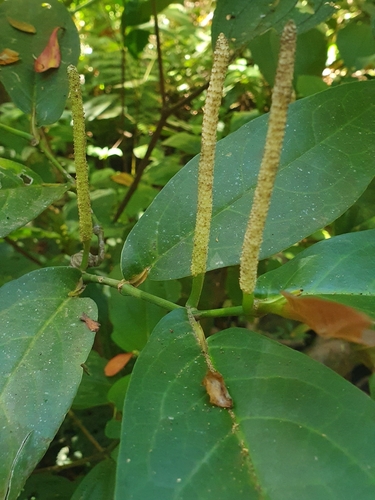
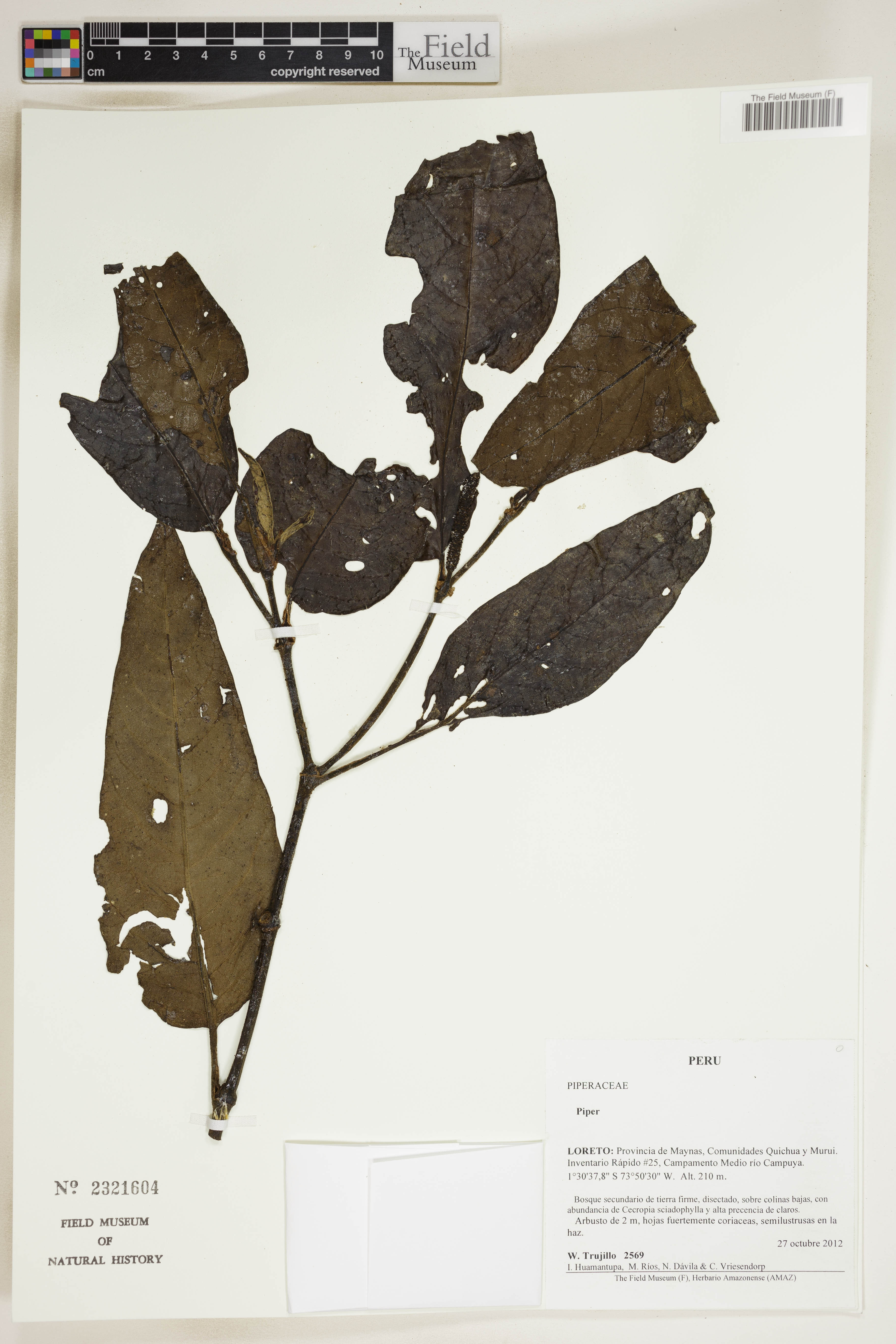
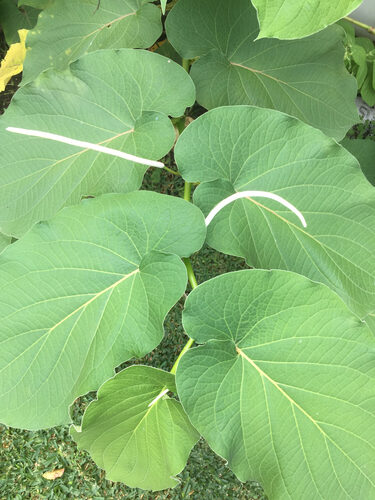
A shrubby tree. It grows 2-8 m high. It spreads 2.4-5 m wide. The trunk can be 10 cm thick. The bark is smooth and grey. The leaf blade is oblong and sword shaped and 12-20 cm long by 3-9 cm wide. The nodes where the leaves join is swollen. The flowering head curves over. They are cord like and flexible. The fruit is an oval berry. These have small seeds.
Edible Uses
Like many species of the family, this tree has the characteristic smell of pepper. The fruits are used as a condiment and for flavoring cocoa. It is sometimes used as a substitute for long pepper.
Traditional Uses
The peppery fruit are used as a spice. It is used for flavouring fish. The fruit are sweet when black and very ripe. The leaves can be used as a potherb.
Medicinal Uses
In the Amazon rainforest, many of the native tribes use matico leaves as an antiseptic. In Peru, it was used for stopping hemorrhages and treating ulcers, and in European practice in the treatment of diseases of the genitals and urinary organs, such as those for which cubeb was often prescribed.
Distribution
A tropical plant. It grows in open and disturbed places. It grows up to 1500 m altitude. It suits hardiness zones 10-12.
Where It Grows
Argentina, Asia, Australia, Barbados, Belize, Bolivia, Brazil, Caribbean, Central America, Colombia, Costa Rica, Cuba, Dominica, Dominican Republic, Ecuador, El Salvador, Fiji, Guatemala, Guiana, Guianas, Guyana, Haiti, Hawaii, Honduras, Indonesia, Jamaica, Malaysia, Martinique, Mexico, Nicaragua, North America, Pacific, Panama, Papua New Guinea, PNG, Paraguay, Peru, Polynesia, Puerto Rico, SE Asia, South America, Suriname, Tuvalu, USA, Venezuela, West Indies,
Cultivation
A plant of tropical regions, found mainly at lower elevations up to 1,000 metres, but extending to over 2,000 metres in places. It grows best in areas with a mean annual rainfall from 1.500 - 4,000mm or more. The plant is moderately intolerant of shade, as it requires at least partial exposure to sunlight for it to reach a large size and flower. It colonizes most soil types, apart from excessively well-drained soils (where it only grows at the upper end of the rainfall range); dry soils; and salty soils. An invader of disturbed areas, where it is able to form thickets and spread by sprouts and suckers. The plant has spread through cultivation and has become naturalized in many areas including southeast Asia, the Pacific and north America. It has been declared a noxious weed in parts of N. America and is a problem in some Pacific Islands, where it can interfere with the harvesting of the related kava plant. It requires high light levels and a bare soil surface, which means that disturbance is necessary for this species to establish. The tree produces cord-like, white to pale yellow, inflorescence spikes that contain many minute flowers that are wind-pollinated and that soon develop into numerous tiny drupes with black seeds. The seeds are then scattered easily by bats and birds. From these many seeds, it can form large stands of quickly-growing shrubby trees that can choke out other native vegetation. Established plants also thicken into clumps or stands by suckers arising from the root crown. The plant can flower and produce fruit all year round. The fruits, leaves and seeds have a peppery taste and aroma.
Propagation
Seed - Cuttings Suckers.
Other Uses
An essential oil in the leaves contains asarone and coneol. It can be used as an insecticide and a molluscicide. It also contains safrol, which has been used successfully in making powerful insecticides, fragrances, soaps and detergent products. The whitish wood is medium hard, brittle. Although small, it can be used for basic construction, fuel, stakes and fences. The plant is cultivated locally as a soil cover.
Notes
There are about 1,000 Piper species. It is used in medicine. It has become invasive near Finschafen in Papua New Guinea.
Synonyms
Also Known As
Aduncum, Aperta-ruao, Biritac, Bwa majo, Bwa siwo, Cordoncillo, Cow's foot, Cuturo, False Kava, False Matico, Higuillo, Jaborandiba, Jointwood, Matico, Pimenta-do-mato, Seuseureuhan, Spanish elder, Wild pepper
References (24)
- Bortolotto, I. M., et al, 2018, Lista preliminar das plantas alimenticias nativas de Mato Grosso do Sul, Brasil. Iheringia, Serie Botanica, Porto Alegre, 73 (supl.):101-116
- Brazil: Biodiversity for Food and Nutrition. http://www.b4fn.org/countries/brazil/
- Burkill, I.H., 1966, A Dictionary of the Economic Products of the Malay Peninsula. Ministry of Agriculture and Cooperatives, Kuala Lumpur, Malaysia. Vol 2 (I-Z) p 1766
- Cundall, P., (ed.), 2004, Gardening Australia: flora: the gardener's bible. ABC Books. p 1052
- Duke,
Show all 24 references Hide references
- Facciola, S., 1998, Cornucopia 2: a Source Book of Edible Plants. Kampong Publications, p 171
- Grandtner, M. M., 2008, World Dictionary of Trees. Wood and Forest Science Department. Laval University, Quebec, Qc Canada. (Internet database http://www.wdt.qc.ca)
- Grandtner, M. M. & Chevrette, J., 2013, Dictionary of Trees, Volume 2: South America: Nomenclature, Taxonomy and Ecology. Academic Press p 500
- Kermath, B. M., et al, 2014, Food Plants in the Americas: A survey of the domesticated, cultivated and wild plants used for Human food in North, Central and South America and the Caribbean. On line draft. p 664
- Kinupp, V. F., 2007, Plantas alimenticias nao-convencionais da regiao metropolitana de Porto Alegre, RS, Brazil p 91
- Peres, M. K., 2011, Diasporos do Cerrado Atrativos para Fauna: Chave Interativa Caracterizacao Visual e Relacoes Ecologicas. Masters thesis. Universidade de Brasilia.
- Plants of Haiti Smithsonian Institute http://botany.si.edu/antilles/West Indies
- PROSEA handbook Volume 13 Spices. p 260
- Reis, S. V. and Lipp, F. L., 1982, New Plant Sources for Drugs and Foods from the New York Botanical Garden herbarium. Harvard. p 34
- Roa, J. A. G. & Boada, D. S. G., 2018, Fundación para el Fortalecimiento de la Fruticultura y Plantas Alimenticias no Convencionales en Colombia.
- Sieges, T. A., Hartemink, A. E., Hebinck, P., & Allen, B. J., 2005, The invasive shrub Piper aduncum and rural livelihoods in the Finschafen area of Papua New Guinea. Human Ecology 33(6): 875-893
- Slik, F., www.asianplant.net
- Smith, A.C., 1981, Flora Vitiensis Nova, Lawaii, Kuai, Hawaii, Volume 2 p 275
- Smith, N., Mori, S.A., et al, 2004, Flowering Plants of the Neotropics. Princeton. Plate 37 (Photo)
- Sp. pl. 1:29. 1753
- Thaman, R. R, 2016, The flora of Tuvalu. Atoll Research Bulletin No. 611. Smithsonian Institute p 106
- Torre, de la, L., et al, 2008, Enciclopedia de las Plantas Útiles del Ecuador. Herbario QCA. Pontificia Universidad Católica del Ecuador. p 496
- World Checklist of Useful Plant Species 2020. Royal Botanic Gardens, Kew
- www.colecionandofrutas.org