Piper peltatum
L.
Lizard's tail pepper
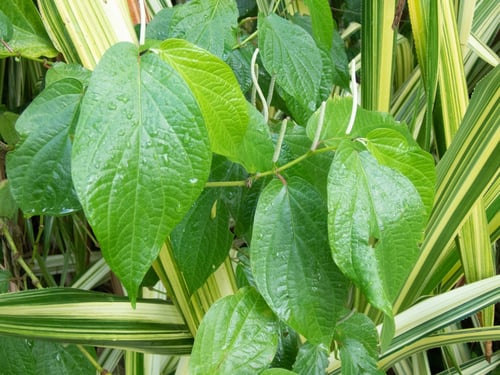
iNaturalist· cc-by-nc-sa
(c) Aleix, some rights reserved (CC BY-NC-SA), uploaded by Aleix
iNaturalist· cc-by-nc
(c) nelyser, some rights reserved (CC BY-NC)
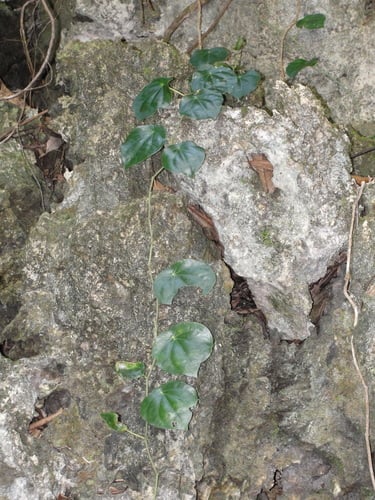
iNaturalist· cc-by-nc
(c) Ivelisse Irizarry, some rights reserved (CC BY-NC)
Summary
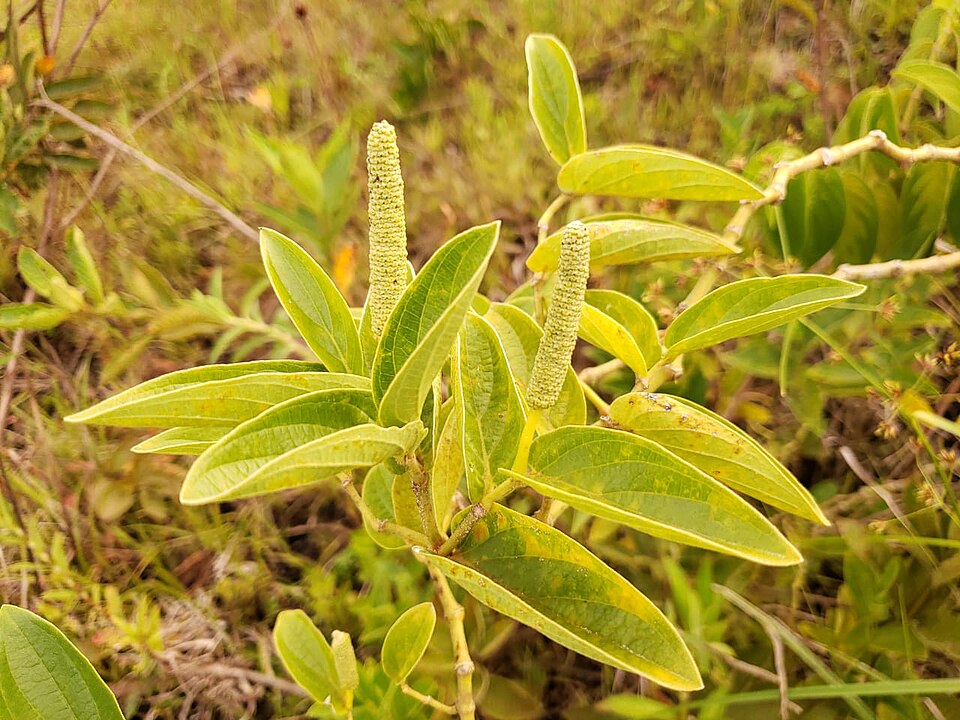
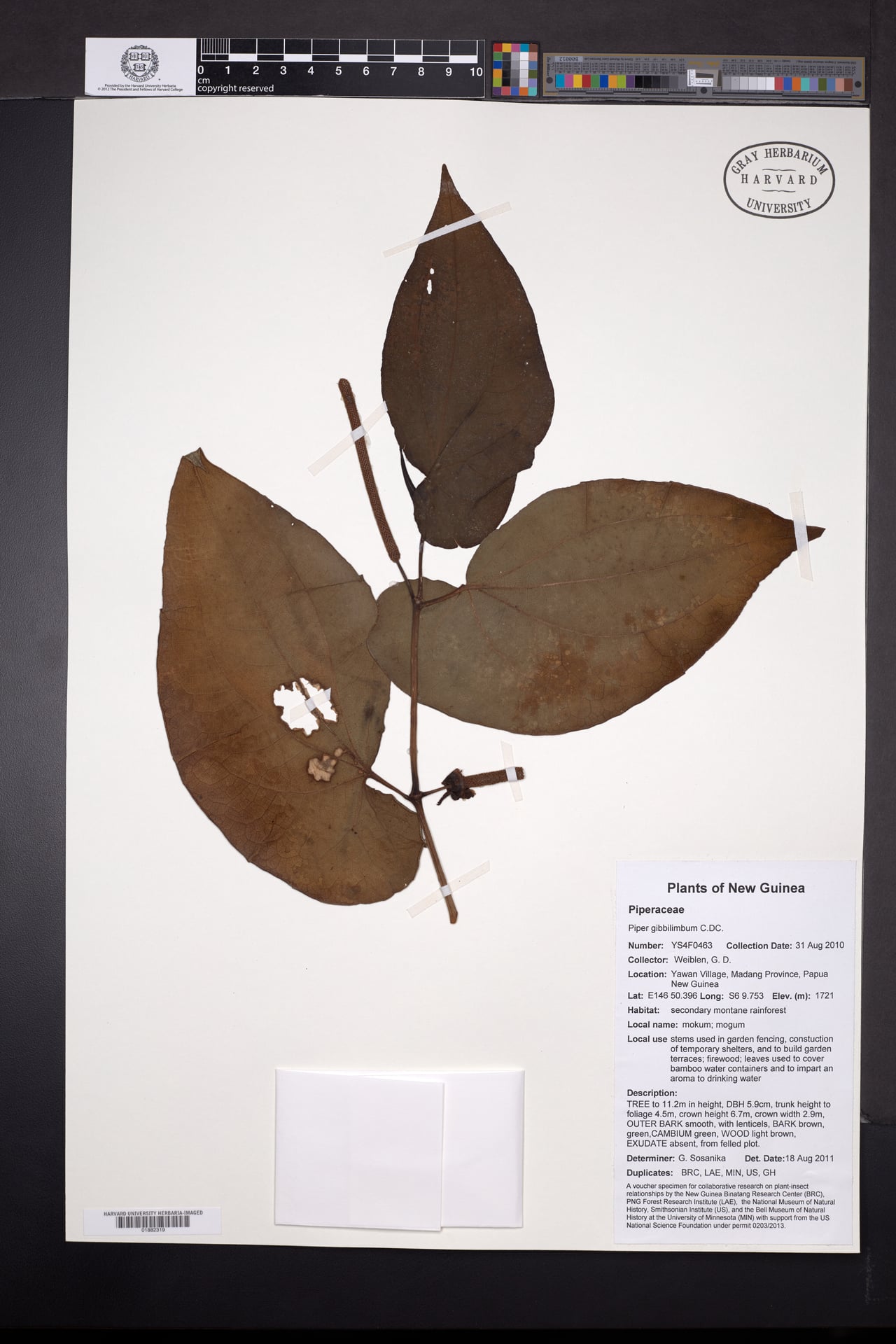
Source: WikipediaPiper peltatum, also known as Pothomorphe peltatum, is a shrub of the drier Neotropics in the black pepper family Piperaceae. It grows to 2 m (6 ft 7 in) in height and has peltate leaves 18 cm (7.1 in) long and about 15 cm (5.9 in) wide. The inflorescences are vertical white spikes with multitudes of tiny flowers. The range of the plant extends from Mexico in the north to Brazil to the south.
Description
An erect shrub. It has a few branches. It can grow to 2.5 m tall. The stems are cylinder shaped and tapering and with a white powder on the surface. They are swollen at the nodes. The leaves are alternate and have long leaf stalks. They are broadly heart shaped and the leaf stalk joins away from the edge of the leaf. They taper to a short tip. They are a pale green above and whitish underneath. They are 15-50 cm across. The leaf stalk forms a sheath at the base. The flowering shoots occur singly in the axils of the leaves and develop as 7-32 spikes. The fruit are small berries with gland dots over them.
Edible Uses
Young leaves are boiled or steamed and eaten with rice, or used for wrapping fish that are roasted in ashes. The sweet ripe fruit are eaten, particularly by children.
Traditional Uses
The young leaves are boiled or steamed and eaten with rice. The leaves are used for wrapping fish that are roasted in the ashes. The sweet ripe fruit are eaten especially by children.
Medicinal Uses
The plant is boiled and the water used as an herbal bath or for washing the skin for reducing high fevers. It is heated and tied or wrapped around the head and forehead as a poultice for treating headaches. The root is diuretic. A remedy for uterus pain is derived from the partially cooked root. The leaves are antiinflammatory, antineuralgic, sudorific. An infusion is used to treat fevers. Decoction used in Guyana as a purgative to clean out the uterus. In a poultice with oil for bruises and swellings. In NW Guyana, leaves are used for abscesses, colds and coughs, haemorrhage, headache, swellings, and for cleaning the womb and tubes. Applied externally, the leaves are used in a compress that is applied to the head for a prolonged period of time as an antineuralgic. The macerated leaves and crushed stem are combined with the leaves of Piper amapaense to make a headache remedy. The leaves are mixed with coconut oil or castor oil and rubbed on painful or swollen joints. The leaves are used as a poultice on cuts. The warmed leaves are applied locally to treat conditions such as hernia pain and arthritis pain. An essential oil obtained from the leaves is ingested with sugar as a treatment for stomach atony. The plant contains chavicine, piperine and lignans.
Known Hazards
The leaves are mixed with the leaves of Clibadium to make a fish poison.
Distribution
A tropical plant. It grows throughout the tropics. In Indonesia it grows from sea level to 1,000 m above sea level.
Where It Grows
Africa, Asia, Belize, Bolivia, Brazil, Caribbean, Central America*, Colombia, Costa Rica, Cuba* Dominican Republic, Ecuador, El Salvador, French Guiana, Guatemala, Guianas, Guyana, Haiti, Honduras, Indonesia, Jamaica*, Lesser Antilles, Liberia, Mexico*, Nicaragua, North America, Panama, Peru, Puerto Rico, SE Asia, South America, Suriname, Trinidad-Tobago, Venezuela, West Africa, West Indies*,
Other Uses
The leaves are used as 'toilet paper' to clean young children.
Other Information
The ripe fruit are eaten by children.
Synonyms
Also Known As
Bulput, Caisimon, Gedebong, Kalamata, Natsampar, Sikatara, Ugudi bagasu, Wenye-leh
References (16)
- Bennett, B. C., 1990, Useful Plants of Amazonian Ecuador. US Agency for International Development. Fifth Progress Report. New York Botanical Gardens. p 39 (As Pothomorphe peltata)
- Coe, F. G., and Anderson, G. J., 1996, Ethnobotany of the Garifuna of Eastern Nicaragua. Economic Botany 50(1) pp 71-107
- Coe, F. G. & Anderson, G. J., 1997, Ethnobotany of the Miskitu of Eastern Nicaragua. Journal of Ethnobiology 17(2): 171-214
- Coe, F. G. and Anderson, G. J., 1999, Ethnobotany of the Sumu (Ulwa) of Southeastern Nicaragua and Comparisons with Miskitu Plant Lore. Economic Botany Vol. 53. No. 4. pp. 363-386
- Facciola, S., 1998, Cornucopia 2: a Source Book of Edible Plants. Kampong Publications, p 172 (As Pothomorphe peltata)
Show all 16 references Hide references
- Hawthorne, W.& Marshall, C., 2013, Nimba Western Area Iron Ore Concentrator Mining Project Environmental and Social Impact Assessment. AcelorMittel Liberia. p 487 (As Lepianthes peltata)
- Kermath, B. M., et al, 2014, Food Plants in the Americas: A survey of the domesticated, cultivated and wild plants used for Human food in North, Central and South America and the Caribbean. On line draft. p 664
- Kew Plants of the World Online
- Martin, F. W. & Ruberte, R. M., 1979, Edible Leaves of the Tropics. Antillian College Press, Mayaguez, Puerto Rico. p 212 (As Heckeria peltata)
- Ochse, J. J. et al, 1931, Vegetables of the Dutch East Indies. Asher reprint. p 585 (As Heckeria peltata)
- Plants of Haiti Smithsonian Institute http://botany.si.edu/antilles/West Indies
- Roa, J. A. G. & Boada, D. S. G., 2018, Fundación para el Fortalecimiento de la Fruticultura y Plantas Alimenticias no Convencionales en Colombia.
- Sp. pl. 1:30. 1753
- Torre, de la, L., et al, 2008, Enciclopedia de las Plantas Útiles del Ecuador. Herbario QCA. Pontificia Universidad Católica del Ecuador. p 501
- Wiersema, J. H. & Leon, B., 2013, World Economic Plants. A Standard Reference CRC Press. 2nd Ed. p 535
- World Checklist of Useful Plant Species 2020. Royal Botanic Gardens, Kew