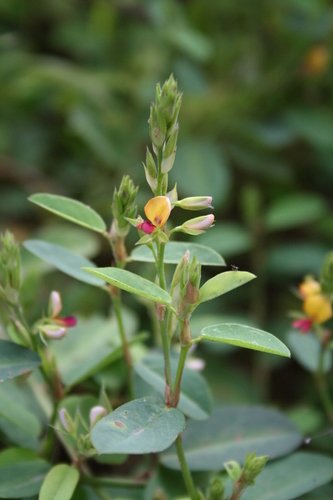
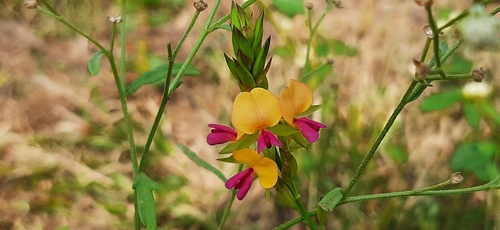
Archidendron fagifolium
(Blume ex Miquel) Nielsen
Jengkolan, Jering goleng
gbif· cc0
President and Fellows of Harvard College
gbif· cc0
President and Fellows of Harvard College
gbif· cc0
President and Fellows of Harvard College
Description
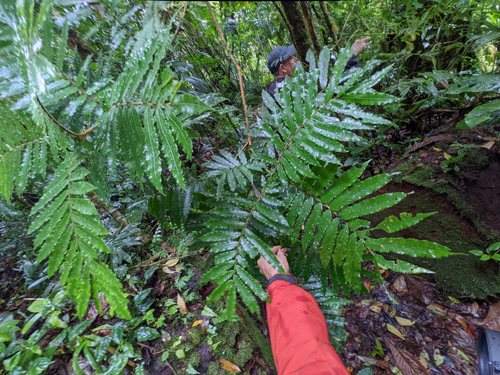
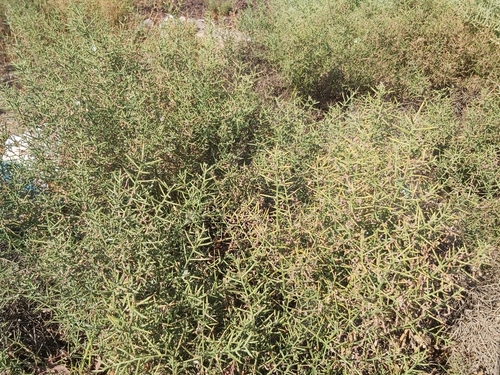
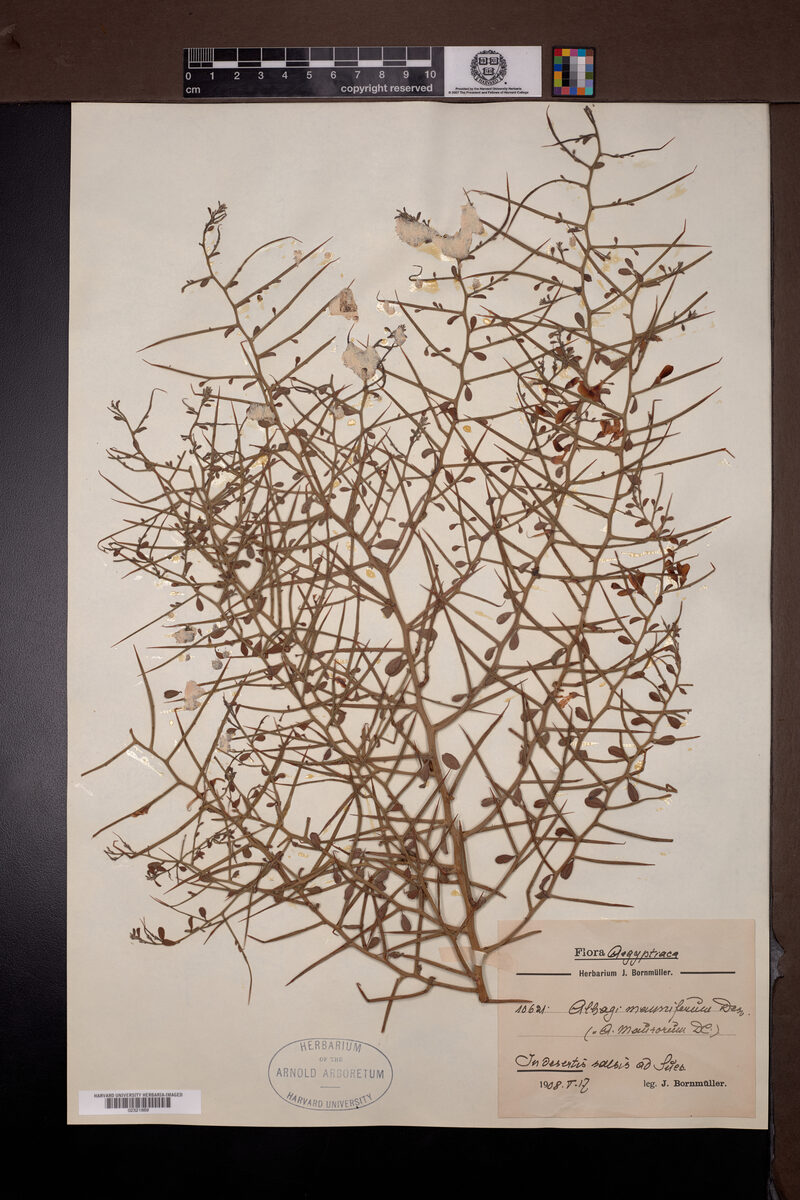
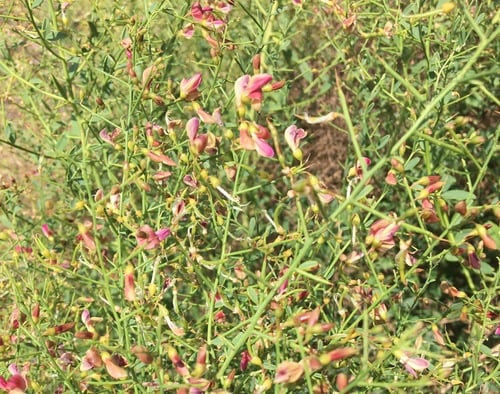
A shrub or tree. It grows up to 16 m tall. The leaves are twice divided. The smallest leaflets are in 1-3 pairs. The leaflets have 2-5 pairs on each smaller leaflet. They are sword shaped and 2-15 cm long by 1-7 cm wide. They can be smooth or softly hairy. There are glands present. The flowers are in panicles up to 35 cm long. The flowers are in groups of 3 without stalks and they are funnel shaped. They are white to green. They have 5 lobes. The fruit is a pod. It is 11-20 cm long by 1-2 cm wide. It is curved into a half circle. The pods are light yellow outside and orange inside. The seeds are flattened and shiny black. They are 8 mm long by 4 mm wide. At least 3 different varieties occur.
Edible Uses
Although the smell of the seed is rather offensive, the seeds are used to add flavour to food just like jengkol (Archidendron jiringa). The seeds contain large amounts of djenkol acid which needs to be removed by boiling them in 2 - 3 changes of water.
Traditional Uses
The seeds have a smell but are used to flavour foods.
This uses section is brief — help expand it
Known Hazards
Although we have no specific information for this species, the seeds of several other members of this genus contain the amino acid derivative djenkolic acid. Ingestion of seed containing this substance can cause the formation of sharp needle-like crystals of djenkolic acid in the kidney or urinary tract. In severe cases, crystals of djenkolic acid have been found in urine. Indeed, people who are suffering from djenkolism show similar symptoms to those suffering from kidney or urinary stones, a condition for which it has been frequently mistaken.
Distribution
A tropical plant. It grows in the rainforest up to 600-1000 m altitude.
Where It Grows
Asia, Indonesia, Myanmar, Pacific, Philippines, SE Asia,
Cultivation
A plant of the moist tropics, where it can be found at elevations up to 1,150 metres. This species has a symbiotic relationship with certain soil bacteria, these bacteria form nodules on the roots and fix atmospheric nitrogen. Some of this nitrogen is utilized by the growing plant but some can also be used by other plants growing nearby.
Notes
There are 90 Archidendron species. Also as Mimosaceae.
Synonyms
Also Known As
Jering tupai, Ki ca-ang, Kulikul, Lalatan, Tomanag
References (4)
- Hariyadi, B., 2008, The Entwined Tree: Traditional Natural Resource Management of Serampas, Jambi, Indonesia. Ph. D thesis. Univ. or Hawaii. p 401
- PROSEA handbook Volume 13 Spices. p 247
- Seidemann J., 2005, World Spice Plants. Economic Usage, Botany, Taxonomy. Springer. p 48
- World Checklist of Useful Plant Species 2020. Royal Botanic Gardens, Kew