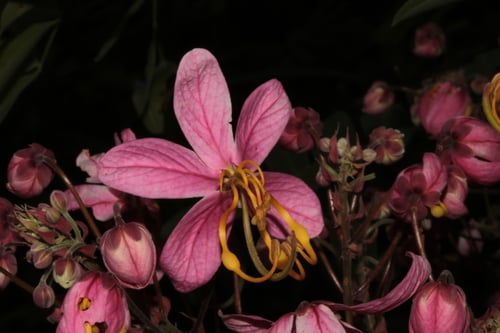
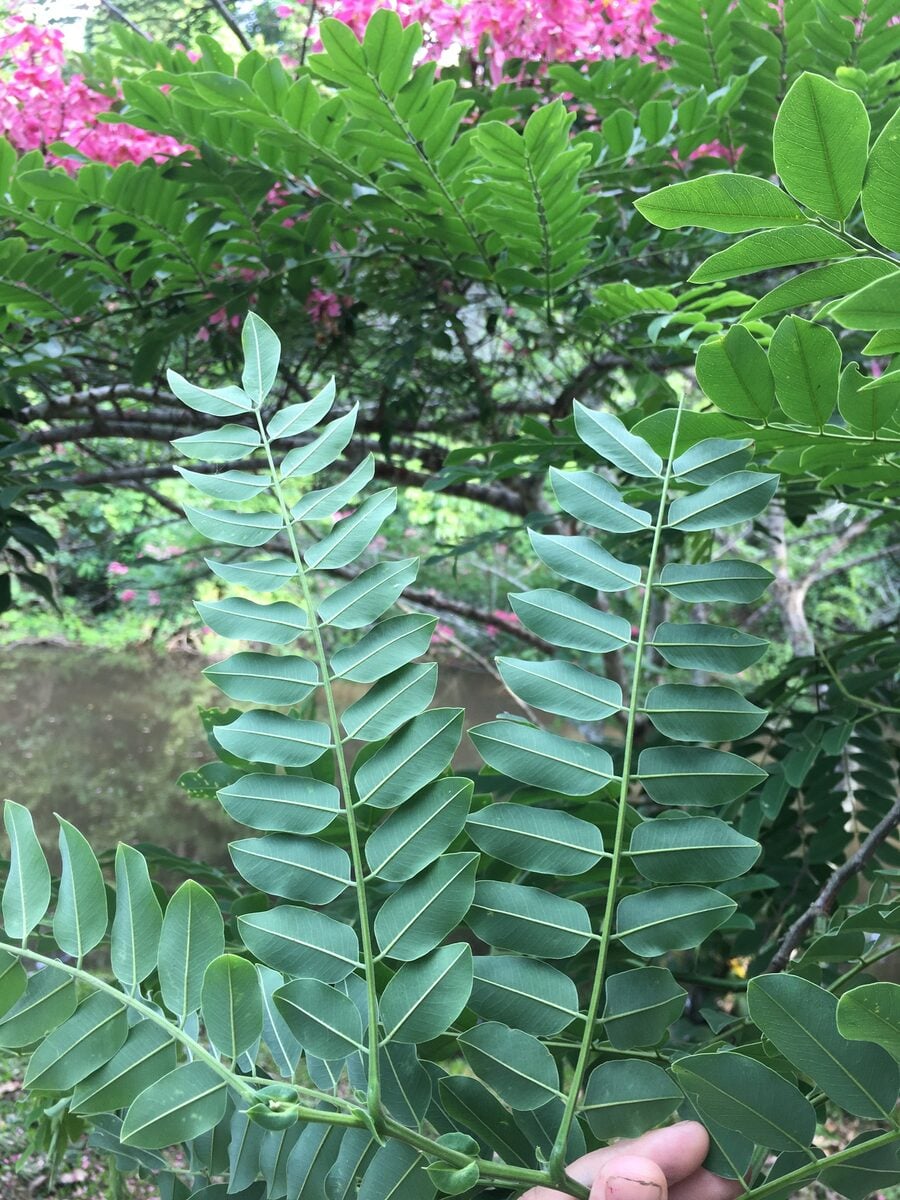
Gilbertiodendron preussii
(Harms) J. Leonard
gbif· cc-by-nc-sa
GBIF
gbif· cc-by-nc-sa
GBIF
gbif· cc-by-nc-sa
GBIF
Summary
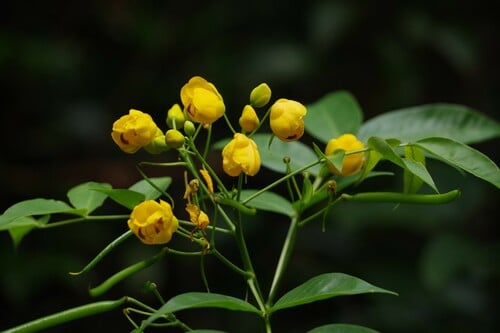
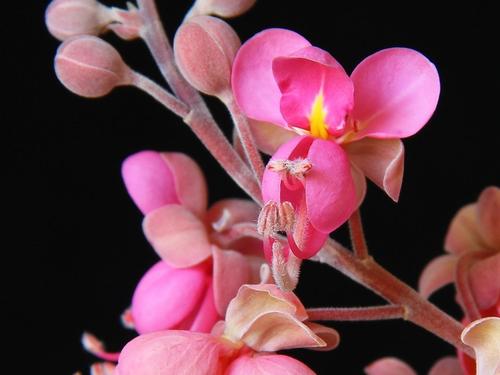
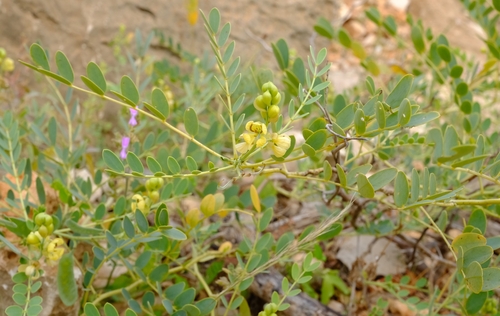
Source: WikipediaGilbertiodendron preussii is a species of tree in the family Fabaceae, native to tropical rain forests in West Africa. It is commonly known as the Liberian red oak.
Description
A tall tree. It grows 30 m tall. The trunk is straight. The bark is yellow and flaking.
This description is brief — help expand it
Edible Uses
The seeds are edible and have been used as a famine food.
Distribution
It is a tropical plant.
Where It Grows
Africa, Liberia, Sierra Leone, West Africa,
Cultivation
Plants are grown from seeds. Seed germinate in 8-15 days.
Other Uses
The wood is used in the same way as Gilbertiodendron dewevrei. The heartwood is a light chestnut brown to dark brown; it is clearly demarcated from the 5 - 10cm wide band of white sapwood.. The texture is coarse; grain straight or interlocked; it releases a foetid smell on cutting, but this fades. The wood is of medium to heavy in weight, moderately hard, durable, being resistant to fungi and dry wood borers, and moderately resistant to termites. The wood works well with power tools, but the blunting effect is high and stellite-tipped tools are recommended; nailing and screwing are good, but pre-boring is necessary; it glues well for interior use. The drying rate is slow, with a high risk of distortion; it is moderately stable in service. The wood, traded as ‘limbali’, is very suitable for flooring, joinery, stairs, window frames, doors and decks of bridges. It can also be used for heavy construction including hydraulic works, interior trim, mine props, ship building, vehicle bodies, garden furniture, railway sleepers, toys, novelties, agricultural implements, draining boards and turnery. As the wood does not have special aesthetic qualities, it is not very suitable for cabinet work and fine joinery.
Other Information
Seeds are a famine food.
Synonyms
Also Known As
Limbali
References (1)
- Polansky, C., 2018, Annex: Tree Identification and Propagation Images and text for 29 species found in Nimba County, Liberia. ACDI p 27