Bambusa tulda
Roxb.
Bengal bamboo, Spineless Indian bamboo
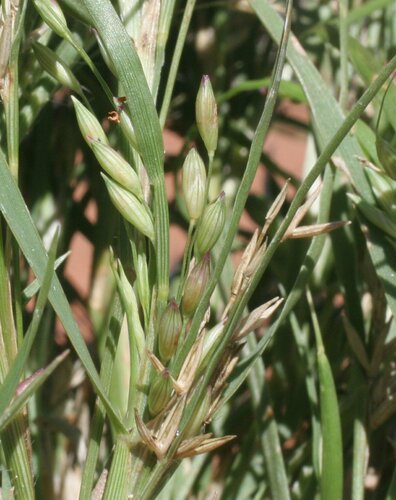
iNaturalist· cc-by-nc
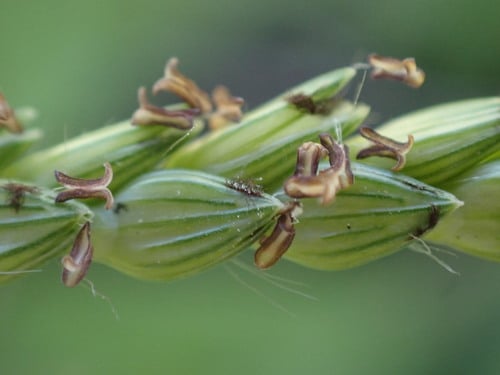
(c) 陳育賢, some rights reserved (CC BY-NC), uploaded by 陳育賢
iNaturalist· cc-by-nc
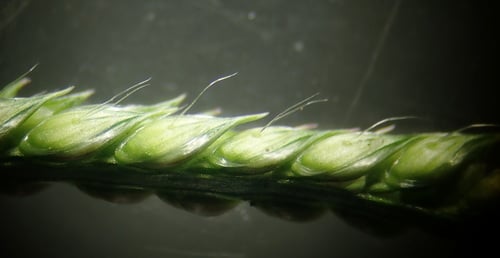
(c) 眼子菜, some rights reserved (CC BY-NC), uploaded by 眼子菜
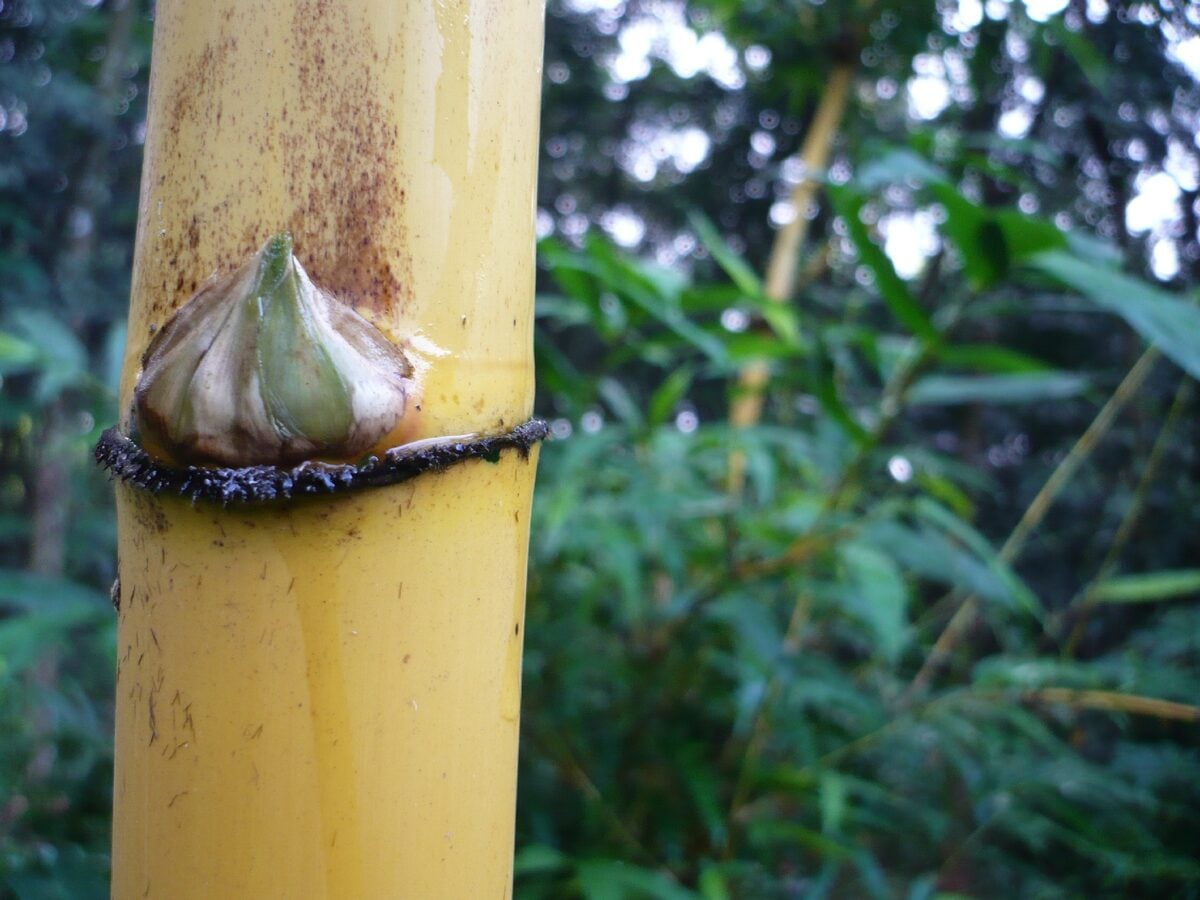
iNaturalist· cc-by
(c) Yoav Daniel Bar-Ness, some rights reserved (CC BY), uploaded by Yoav Daniel Bar-Ness
Summary
Source: WikipediaBambusa tulda, or Indian timber bamboo (alternatively spineless Indian bamboo or Bengal bamboo), is considered to be one of the most useful of bamboo species. It is native to the Indian subcontinent, Indochina, Tibet, and Yunnan, and naturalized in Iraq, Puerto Rico, and parts of South America. B. tulda is used extensively by the paper pulp industry in India. It can grow to a height of 15 m and a thickness of 8 cm. The single most important fact about Bambusa tulda is its incredible tensile strength; up to 60,000 pounds (27,000 Kg) per square inch. It is commonly found in southeastern Asia.
Description
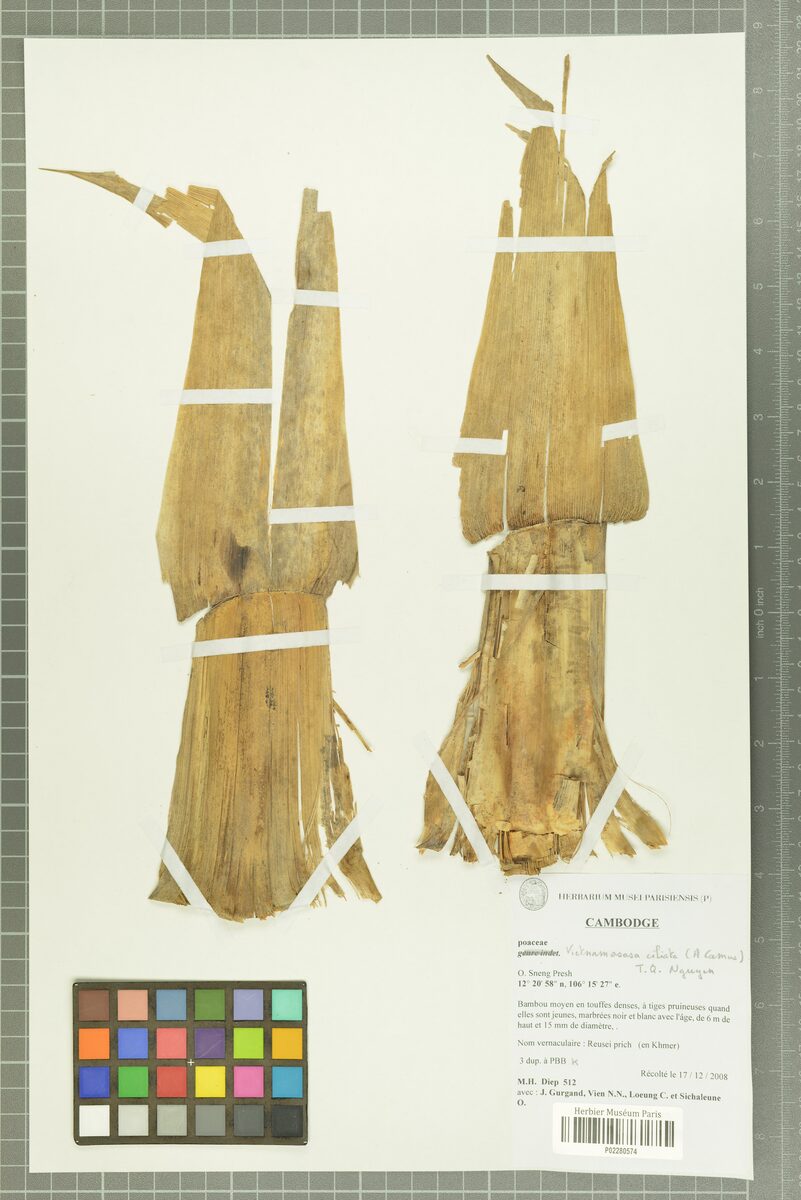
A thick walled tufted bamboo. It grows to about 20 m tall. It is almost un-branched near the base but branches higher up. The nodes are slightly thickened. The internodes are 40-65 cm long and 5-10 cm wide. They have a white ring around the node. They are grey-green at maturity. The culm sheath is 10-25 cm long and 15-25 cm wide. The leaves have leaf stalks. The leaves are 15-25 cm long and 2-4 cm wide. They are narrow and sword shaped. They are hairy underneath. Young shoots are green with yellow stripes. Plants may take 25-40 years to flower.
Edible Uses
Edible Parts: Shoots Edible Uses: The young shoots are edible but taste slightly bitter, therefore they are often pickled. The young shoots are harvested as they emerge from the soil.
Traditional Uses
The young shoots are boiled and eaten. The water is changed. They are also used in soup. They are also pickled. The harvested young shoots can be stored for 8-10 days. They are also dried for future use.
Medicinal Uses
None known
Distribution
A tropical and subtropical plant. It grows in Nepal at 200-1200 m altitude. It grows in moist soils near rivers. It grows up to 1500 m altitude in Bangladesh. In the Cairns Botanical Gardens. In Yunnan.
Where It Grows
Asia, Australia, Bangladesh, Bhutan, Brazil, China, Colombia, Ecuador, Himalayas, India - Assam, Indochina, Indonesia, Iraq, Laos, Myanmar, Nepal, Northeastern India, Pacific, Philippines, Puerto Rico, SE Asia, Tahiti, Thailand, USA, Vietnam,
Cultivation
It grows best in areas where annual daytime temperatures are within the range 22 - 28c, but can tolerate 9 - 32c. It prefers a mean annual rainfall in the range 1,200 - 2,500mm, but tolerates 700 - 4,500mm. Prefers a position in dappled shade, also succeeding in full sun. Grows best in fertile, medium to heavy soils. Prefers a pH in the range 5 - 6, tolerating 4.5 - 6.5. Bamboos have an interesting method of growth. Each plant produces a number of new stems annually - these stems grow to their maximum height in their first year of growth, subsequent growth in the stem being limited to the production of new side branches and leaves. In the case of some mature tropical species the new stem could be as much as 30 metres tall, with daily increases in height of 30cm or more during their peak growth time. This makes them some of the fastest-growing species in the world. About one month after germination a seedling produces its first stem and at this stage the rhizome also starts to develop. After 9 months 4 - 5 young culms have been formed. Shoot growth starts at the beginning of the rainy season and it takes approximately 1 month to emerge above the ground. Height increase of the shoots may attain as much as 70 cm per day. Culms complete their growth within 2 - 3 months after their emergence as shoots, and their diameter and height do not increase as they become older. Young shoots to be used as a vegetable should preferably be harvested while they are still underground. In plantations, selective felling of older culms may start 5 - 7 years after planting. Normally 3 - 4-year-old culms are harvested, retaining at least 3 - 6 evenly spaced culms per clump. A 4-year felling cycle is often adopted. Traditionally, the harvested canes are submerged for 10 - 20 days in running water to improve resistance to powder-post beetles. Subsequently the culms are air dried for 1.5 - 3.5 months. The culms suffer considerably from cracking and collapse. Cracks often extend along the entire length of the internodes and the culm collapses at these cracks. To improve their durability, culms can be treated with solutions of sodium carbonate, calcium hydroxide or copper sulphate. The annual yield of dry culms is about 3 tonnes/ha in India. Bamboos in general are usually monocarpic, living for many years before flowering, then flowering and seeding profusely for a period of 1 - 3 years before usually dying. Bengal bamboo normally flowers gregariously for a period of 2 years in a cycle of 25 - 40 years, and produces viable seed. However, it also often flowers sporadically or in small groups, without an obvious cycle. In Bangladesh several forms are distinguished: 'tulda bans' is the normal form; 'jowa bans' is a large form with longer and thicker culms, mainly used for scaffolding and construction; and 'basini bans' is a form with a larger cavity in the culms and is mainly used for basketry.
Propagation
Seed - under ambient conditions, the seed remains viable for about 1 month only; when stored dry (in a desiccator over silica gel) viability can be extended to up to 1.5 years. Surface sow the seed in containers as soon as it is ripe, preferably at a temperature around 20c. Do not allow the compost to dry out. Germination of around 70% usually takes place fairly quickly so long as the seed is of good quality, though it can take 3 - 6 months. Prick out the seedlings into containers when they are large enough to handle and grow on in a lightly shaded place until large enough to plant out. Plants only flower at intervals of many years and so seed is rarely available. Division as new growth commences. Take divisions with at least three canes in the clump, trying to cause as little root disturbance to the main plant as possible. Grow them on in light shade in pots of a high fertility sandy medium. Mist the foliage regularly until plants are established. Plant them out into their permanent positions when a good root system has developed, which can take a year or more. Propagation by rhizome cuttings with direct planting in the field is very successful (survival more than 90%) and average height of shoots 2.5 months after planting is 1.35 m. Rhizome parts can best be taken at the beginning of the rainy season from 1 - 2-year-old culms and planted in pits of 60 cm3 at a spacing of 8 m x 8 m.
Other Uses
Basketry Biomass Containers Paper Roofing Shelterbelt Wood Agroforestry Uses: In its natural area Bambusa tulda is also often planted as a wind-break around farms and fields. Other Uses: Near solid culms and hence very strong timber. The culms are generally used for construction, scaffolding, furniture, boxes, basketry, mats, household utensils, handicrafts and as raw material for paper pulp. Used extensively by the paper pulp industry in India. In Thailand the handicrafts made of this bamboo, polished with a mixture of Young oil and oleoresin, are famous. Special Uses Carbon Farming Food Forest
Production
A 1000 seeds weigh 70 g. Young shoots to be used as a vegetable should preferably be harvested while still underground.
Other Information
It is important in northern Thailand for edible shoots. It is common in Bangladesh. It is in high demand as bamboo shoots. It is sold in local markets. It is cultivated.
Notes
There are about 120 Bambusa species. They are tropical and subtropical in Asia.
Nutrition
| Part | Moisture | kJ | kcal | Protein | Vit A | Vit C | Iron | Zinc |
|---|---|---|---|---|---|---|---|---|
| Shoots | — | — | — | — | 1.4 | 3.2 | 0.7 | — |
Synonyms
Also Known As
Auwa gubwi, Ba, Bakal, Bambu india, Banse, Bas, Bijuli, Bong, Calcutta cane, Chat-wa, Chekeme, Deo-bans, Deobans, Dibang, Ghora, Govatuai, Govatuoi, Jati bah, Jao, Jowa, Karil, Kharra, Kiranti, Liangpai, Mai bong, Mak, Matela, Mirtinga, Nal-bans, Peka, Phai hangchang, Phai-bongdam, Rawthing, Utang, Talagu-wa, Taru bans, Thaik-wa, Tre xim, Tulda, Tusa, Utang, Wagi, Wamuna, Wandal, Wati
References (51)
- Ambasta S.P. (Ed.), 2000, The Useful Plants of India. CSIR India. p 67
- Anderson, E. F., 1993, Plants and people of the Golden Triangle. Dioscorides Press. p 203
- Angami, A., et al, 2006, Status and potential of wild edible plants of Arunachal Pradesh. Indian Journal of Traditional Knowledge 5(4) October 2006, pp 541-550
- A Rapid Participatory Biodiversity Assessment. 2007, Southern Lao PDR. IUCN p 42
- Arora, R. K., 2014, Diversity in Underutilized Plant Species - An Asia-Pacific Perspective. Bioversity International. p 36
Show all 51 references Hide references
- Balkrishna, A., et al, 2022, Indigenous Uses of Plants among Forest-dependent Communities of Seijosa, Arunachal Pradesh. International Journal of Economic Plants 2022, 9(1):064-080
- Bandyopadhyay, S. et al, 2009, Wild edible plants of Koch Bihar district, West Bengal. Natural Products Radiance 8(1) 64-72
- BARC, 2016, State of Biodiversity for Food and Agriculture in Bangladesh. Bangladesh Agricultural Research Council.
- Baro, D., Baruah, S. and Borthukar, S. K. 2015, Documentation on wild vegetables of Baksa district, BTAD (Assam). Scholars Research Library. Archives of Applied Science Research, 2015, 7 (9):19-2
- Bircher, A. G. & Bircher, W. H., 2000, Encyclopedia of Fruit Trees and Edible Flowering Plants in Egypt and the Subtropics. AUC Press. p 53
- Bodkin, F., 1991, Encyclopedia Botanica. Cornstalk publishing, p 127
- Chowdery, T., et al, 2014, Wild edible plants of Uttar Dinajpur District, West Bengal. Life Science Leaflets. 47:pp 20-36 http://lifesciencesleaflets.ning.com
- Chowdhury, M. & Mukherjee, R., 2012, Wild Edible Plants Consumed by Local Communities of Maldah of West Bengal, India. Indian J.Sci.Res.3(2) : 163-170
- Deb, D., et al, 2013, Wild Edible Plants and Their Utilization in Traditional Recipes of Tripura, Northeast India. Advances in Biological Research 7(5):203-211
- Delang, C. O., 2007, Ecological Succession of Usable Plants in an Eleven-Year Fallow Cycle in North Lao P.D.R., Ethnobotany Research and Applications. Vol. 5:331-350
- Dobriyal, M. J. R. & Dobriyal, R., 2014, Non Wood Forest Produce an Option for Ethnic Food and Nutritional Security in India. Int. J. of Usuf. Mngt. 15(1):17-37
- Dransfield, S. & Widjaja, EA., 1995, Plant Resources of South East Asia. PROSEA No. 7 Bamboos. Leiden. p 69
- Dutta, U., 2012, Wild Vegetables collected by the local communities from the Churang reserve of BTD, Assam. International Journal of Science and Advanced Technology. Vol. 2(4) p 119
- Fl. ind. ed. 1832, 2:193. 1832
- Gangte, H. E., et al, 2013, Wild Edible Plants used by the Zou Tribe in Manipur, India. International Journal of Scientific and Research Publications, Volume 3, Issue 5
- Guite, C., 2016, A study of wild edible plants associated with the Paite tribe of Manipur, India, International Journal of Current Research. Vol. 8, Issue, 11, pp. 40927-40932
- Hedrick, U.P., 1919, (Ed.), Sturtevant's edible plants of the world. p 90
- Hibbert, M., 2002, The Aussie Plant Finder 2002, Florilegium. p 37
- Joshi, N. & Siwakoti, M., 2012, Wild Vegetables Used by Local Community of Makawanpur District and Their Contribution to Food Security and Income Generation. Nepal Journal of Science and Technology Vol. 13, No. 1 (2012) 59-66
- Kew Plants of the World Online
- Kumari, P, 2019, Bambusoideae in India: An Updated Enumeration. Plantae Scientia : Volume 01, Issue 06, March 2019
- Lalfakzuala, R., 2007, Ethnobotanical usages of plants in western Mizoram. Indian Journal of Traditional Knowledge. Vol 6(3) pp 480-493
- Lim, T. K., 2015, Edible Medicinal and Non Medicinal Plants. Volume 9, Modified Stems, Roots, Bulbs. Springer p 15
- Luczaj, L., et al, 2021, Wild food plants and fungi sold in the markets of Luang Prabang, Lao PDR. Journal of Ethnobiology and Ethnomedicine (2021) 17:6
- Manandhar, N.P., 2002, Plants and People of Nepal. Timber Press. Portland, Oregon. p 104
- Marandi, R. R. & Britto, S. J., 2015, Medicinal Properties of Edible Weeds of Crop Fields and Wild plants Eaten by Oraon Tribals of Latehar District, Jharkhand. International Journal of Life Science and Pharma Research. Vo. 5. (2) April 2015
- Meitei, L. R., et al, 2022, An ethnobotanical study on the wild edible plants used by forest dwellers in Yangoupokpi Lokchao Wildlife Sanctuary, Manipur, India. Ethnobotany Research and Application 23:15
- Narzary, H., et al, 2013, Wild Edible Vegetables Consumed by Bodo tribe of Kokrajhar District (Assam), North-East India. Archives of Applied Science Research, 5(5): 182-190
- Patiri, B. & Borah, A., 2007, Wild Edible Plants of Assam. Geethaki Publishers. p 161
- Premlata, T., et al, 2020, Edible bamboo resources of Manipur: consumption pattern of young shoots, processing techniques and their commercial status in the local market. Indian Journal of Traditional Knowledge Vol. 19(1) pp 73-82
- Ray, A., et al, 2020, How many Wild Edible Plants do we Use. Frontiers in Sustainable Food Systems. 4:56 p 12
- Roy, A., et al, 2017, Insight into Bamboo-based Fermented Foods by Galo (Sub-tribe) of Arunachal Pradesh, India. Int. J. Life. Sci. Scienti. Res., 3(4): 1200-1207
- Saikia, M., 2015, Wild edible vegetables consumed by Assamese people of Dhemaji District of Assam, NE India and their medicinal values. Archives of Applied Science Research, 2015, 7 (5):102-109
- Sarma, H., et al, 2010, Updated Estimates of Wild Edible and Threatened Plants of Assam: A Meta-analysis. International Journal of Botany 6(4): 414-423
- Singh, H.B., Arora R.K.,1978, Wild edible Plants of India. Indian Council of Agricultural Research, New Delhi. p18
- Sukarya, D. G., (Ed.) 2013, 3,500 Plant Species of the Botanic Gardens of Indonesia. LIPI p 838
- Teron, R. & Borthakur, S. K., 2016, Edible Medicines: An Exploration of Medicinal Plants in Dietary Practices of Karbi Tribal Population of Assam, Northeast India. In Mondal, N. & Sen, J.(Ed.) Nutrition and Health among tribal populations of India. p 154
- Tutul, E et al, 2009, Angiospermic Flora of Runctia Sal Forest, Bangladesh. Bangladesh J. Plant Taxon. 16(1): 83-90. p 86
- Upreti, T.C. and Sundriyal, R. C., 2001, Bamboo and cane resources of Arunachal Pradesh: Utilization pattern and implications for management. Bamboo Science and Culture: The Journal of the American Bamboo Society 15(1):20-34
- USDA, ARS, National Genetic Resources Program. Germplasm Resources Information Network - (GRIN). [Online Database] National Germplasm Resources Laboratory, Beltsville, Maryland. Available: www.ars-grin.gov/cgi-bin/npgs/html/econ.pl (10 April 2000)
- Waikhom, S. D., et al, 2013, Grappling the High Altitude for Safe Edible Bamboo Shoots with Rich Nutritional Attributes and Escaping Cyanogenic Toxicity. BioMed Reserch International. Voluyme 2013 Article ID 289285, 11 pages
- Waikhom, S. D. and Louis, B., 2014, An Effective Protocol for Micropropagation of Edible Bamboo Species (Bambusa tulda and Melocanna baccifera) through Nodal Culture. The Scientific World Journal Volume 2014, Article ID 345794, 8 pages
- Wiersema, J. H. & Leon, B., 2013, World Economic Plants. A Standard Reference CRC Press. 2nd Ed. p 91
- Wild edible plants of Himachal Pradesh
- World Checklist of Useful Plant Species 2020. Royal Botanic Gardens, Kew
- Zeven, A. C. & de West, J. M. J., 1982, Dictionary of cultivated plants and their regions of diversity. Wageningen. p 53, 73