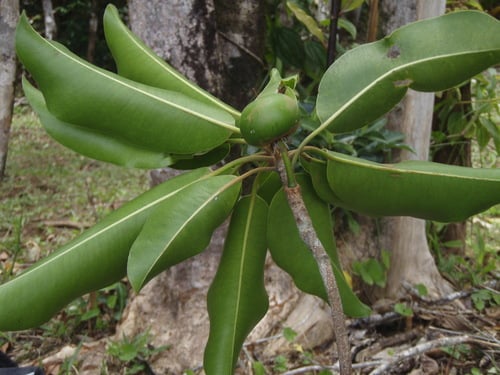
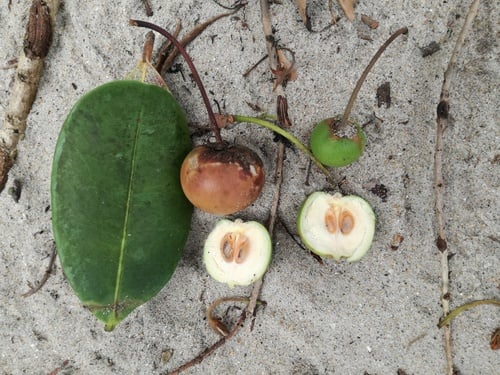
Baillonella toxisperma
Pierre
False shea butternut, African pearwood
wikimedia· cc0
Wikimedia Commons - Jabea Tongo Etonde
wikimedia· cc-by
Wikimedia Commons - MNHN - Paris, Muséum National d'Histoire Naturelle, VD - 2004
Summary
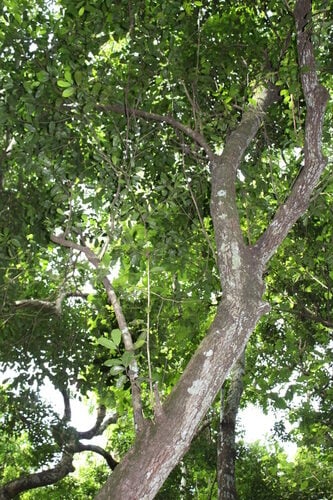
Source: WikipediaA deciduous tree reaching 50 m tall and 40 m wide, growing at a fast rate. Hardy to UK zone 10. Tolerates light sandy, medium loamy, and heavy clay soils with good drainage; adapts to mildly acid, neutral, and basic pH ranges, including very acid and very alkaline conditions. Grows in semi-shade or full sun and prefers consistently moist soil.
Description
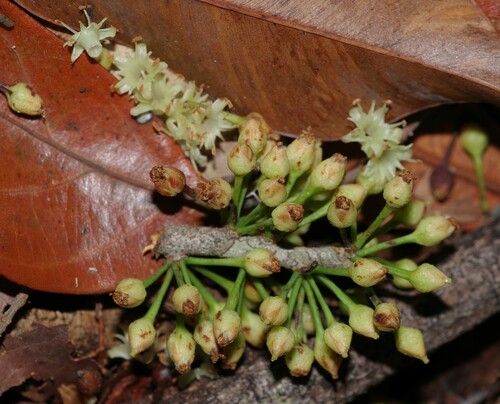
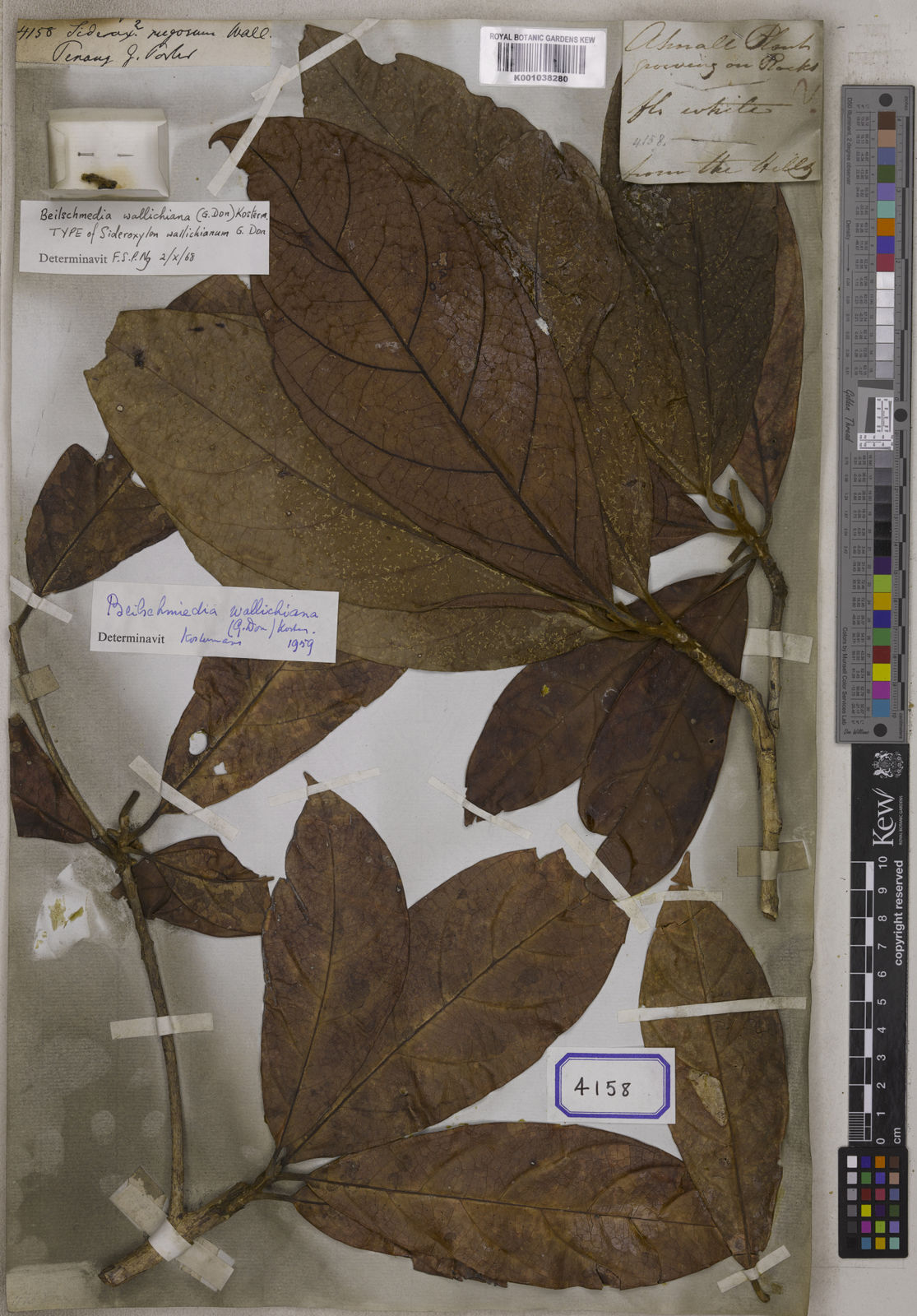
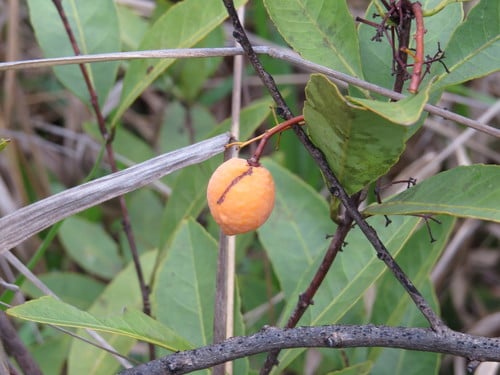
A large tree. It grows to 60 m high. The trunk can be 5 m across. The leaves are alternate and simple. They are 15-30 cm long by 5-10 cm wide. The fruit are round and 6 cm across. There are 1-2 seeds per fruit.
Edible Uses
Edible Parts: Fruit Oil Seed Edible Uses: Oil Edible portion: Nut, Seeds - oil, Fruit. The fruit pulp is eaten fresh although it contains latex. The seed kernel contains a fatty oil that is used in cooking. The residue after extracting the oil is toxic.
Traditional Uses
The flesh of the fruit is eaten when ripe. The seeds yield an oil. The residue after extracting the oil is toxic. The leaves are used as a vegetable.
Medicinal Uses
Antirheumatic Kidney Odontalgic Pectoral The seed kernel contains a fatty oil that is used in traditional medicine. It is applied externally to treat rheumatic pains. Bark decoctions are used to treat kidney problems, toothache, rickets, vaginal infections and affections of the respiratory and digestive tracts.
Known Hazards
The residue remaining after oil extraction from seeds is toxic.
Distribution
A tropical plant. It grows in forest.
Where It Grows
Africa, Cabinda, Cameroon, Central Africa, Central African Republic, CAR, Congo DR, Congo R, Gabon, Ghana, Nigeria, South Africa, Southern Africa, West Africa,
Cultivation
The tree occurs in primary rain forest in humid and warm climates, with a mean annual temperature of 23 - 26°c and a mean annual rainfall of 1,500 - 3,000 mm. Seeds germinate in abundance under or close to mother trees. However, young plants of 1 metre tall are rare as a result of predation by animals, mainly elephants, and the survival rate of seedlings after 18 months is practically nil under the mother tree and very low (less than 2%) elsewhere. In forest undergrowth seedlings grow 4 - 5 cm/year. They respond rapidly to the opening of the forest cover and direct sunlight, and under these circumstances may grow up to 40 cm/year. When the tree bole has attained 1m in diameter and the crowns have reached or passed the forest canopy, diameter growth is up to 9.5 mm/year. It has been estimated from growth rings and C14 dating that a tree with a bole diameter of 1 metre was 260 years old and one with a diameter of 2.8 metres 600 - 700 years. The tree starts flowering at an age of 50 - 70 years, when it has reached the light in the upper storey of the forest, but regular fructification starts still later, when the bole has reached 70 cm in diameter. Fruits are produced annually, but mass production occurs once in 3 years. About 6,000 seeds per tree are produced within a cycle of 3 years; a single tree produced 2,460 kg of fruits, including 327 kg of seed kernels. The fruiting season lasts up to 4 weeks for an individual tree, but may last 3 months for a whole wild population. At present, the only management measure for natural forest is the maintenance of a minimum diameter limit for exploitation, i.e. 70 cm in Gabon, 80 cm in Congo and 100 cm in Cameroon. In Cameroon commercial exploitation of the tree implies the cutting of 90% of trees above 100 cm in diameter, leaving only poorly shaped trees. It has been estimated that after 300 years 84% of the harvested volume is re-established and after 500 years 92%. Sustainable production in natural forest is therefore not possible. Cutting cycles of 30 years, as often practised, threaten the populations seriously. During the fruiting season, local people often move to localities where clusters of trees are found and stay there in temporary camps for 2 - 8 weeks. The collected fruits are depulped and the seed kernels dried. After heating, the oil is gathered by pressing with a traditional wooden press. The oil is used domestically or sold. It can be stored for 1 - 2 years. In 1992, which was a very good year for fruit production, the yield of oil was estimated at 135 - 165 litres per adult tree.
Propagation
Seed. Shade is required for germination, which usually takes 1 - 4 weeks. The germination capacity of fresh seeds is high (> 85%), but drops rapidly to 5% after 6 weeks of storage due to rapid degradation of the fatty acids. However, fresh seeds stored at 4?C and humid conditions still showed a germination rate of about 50% after 11 months. In the nursery the lower half of the seed is buried, with the scar pointing downwards. The mortality of seedlings in the nursery is very low. Partial shading is favourable for seedling development. Under optimal nursery conditions seedlings may reach 35 cm in height after 6 weeks, 45 cm after 3 months and 1.5 metres after 18 months. The seedling develops a taproot and so it is recommended to sow into polythene pots. Seedlings are planted out into the field, when about 4 - 5 months old, at the start of the rainy season under the light shade of about 10 retained adult trees per ha. The shade should be removed gradually when a reduction in diameter growth is observed. Seeds germinate in abundance under or close to mother trees - whilst it is not necessary for the seeds to pass through the intestines for germination, it does accelerate germination slightly.
Other Uses
Hair Oil Soap making Wood Other uses rating: High (4/5). Other Uses The seed kernel contains a fatty oil that is used as a pomade to the hair and also in soap manufacture. The allelopathic compound 3-hydroxyuridine has been isolated from the leaves, stems and roots of the tree. It inhibited the growth of seedlings of some test plants. The heartwood has a uniform reddish brown colour, more or less dark and finely veined; it is clearly demarcated from the 4 - 6cm wide band of sapwood. The texture is fine; the grain straight or interlocked. The wood is heavy, hard, elastic, very durable, with a resistance to fungi, Lyctus beetles, termites and marine borers. It is difficult to work due to the presence of silica (0.2 - 0.3%) - power tools that are stellite-tipped and tungsten carbide are recommended; it glues correct, though care needs to be taken because of the density of the wood; it takes nails and screws well, but pre-boring is required; it finishes well; and has good steam-bending properties. Painting and varnishing with the principal industrial products do not cause problems. It is used for many purposes including high class cabinetwork, joinery and carpentry in both interior and exterior applications, marine construction, flooring, turnery, railway sleepers, decorative uses and veneer. Special Uses Food Forest
Other Information
It is sold in local markets.
Synonyms
Also Known As
Adjap, Adza, Gio, Mabe, Mabi, Moabi, Njabi, Njap, Oko uku
References (24)
- Akinola, R., et al, 2020, A Review of Indigenous Food Crops in Africa and the Implications for more Sustainable and Healthy Food Systems. Sustainability 2020, 12, 3493; (As Aillonella)
- Billong Fils, P. E., et al, 2020, Ethnobotanical survey of wild edible plants used by Baka people in southeastern Cameroon. Journal or Ethnobiology and Ethnomedicine. 16:64 p 7
- Bircher, A. G. & Bircher, W. H., 2000, Encyclopedia of Fruit Trees and Edible Flowering Plants in Egypt and the Subtropics. AUC Press. p 52
- Burkill, H. M., 1985, The useful plants of west tropical Africa, Vol. 5. Kew.
- Dalziel, J. M., 1937, The Useful plants of west tropical Africa. Crown Agents for the Colonies London.
Show all 24 references Hide references
- Fongnzossie Fedoung, E., et al, 2014, Density and Natural Regeneration Potential of Selected Non-timber Forest Products Species in the Semi-deciduous Rainforest of Southeastern Cameroon. African Study Monographs, Suppl. 49:69-90.
- Fungo, R., et al, 2015, Nutrients and bioactive compounds content of Baillonella toxisperma, Trichoscypha abut and Pentaclethra macrophylla from Cameroon. Food Science & Nutrition 2015; 3(4):292-301
- Gallois, S., et al, 2020, Methodological priorities in assessing wild edible plant knowledge and use – a case study among the Baka in Cameroon.
- Ingram, V. & Schure, J. 2010, Review of Non Timber Forest Products (NTFPs) in Central Africa, Cameroon. Center for International Forestry Research (CIFR). p 34
- Iponga, D. M., et al, 2016, The contribution of NTFP-gathering to rural people’s livelihoods around two timber concessions in Gabon. Agroforest Syst. Springer
- Jardin, C., 1970, List of Foods Used In Africa, FAO Nutrition Information Document Series No 2.p 32
- Keay, R.W.J., 1989, Trees of Nigeria. Clarendon Press, Oxford. p 390
- Moutsambote, J., 1996, Vegetation forestiere et plantes alimentaires de la region de la Sangha. Chp. 11 of Bien Manger et Bien Vivre. ORSTOM p 119
- Nkeoua, G. & Boundzanga, G. C., 1999, Donnees sur les produits forestieres non ligneux en Republique du Congo. FAO. p 20
- Not. bot. 14. 1890
- Oldfield, S., et al, 1998, The World List of Threatened Trees. World Conservation Press. p 75
- Peters, C. R., O'Brien, E. M., and Drummond, R.B., 1992, Edible Wild plants of Sub-saharan Africa. Kew. p 182
- Ruiters-Welcome, A. K., 2019, Food plants of southern Africa. Ph.D. thesis. Univ. of Johannesburg p 100
- Sunderland, T. C. H., et al, 2002, Distribution, Utilisation and Sustainability of the Non-timber forest products of the Takamanda Forest Reserve, Cameroon. PROFA
- Vivien, J. & Faure, J.J., 1985, Abres des forets dense d'Afrique Centrale. Agence de Cooperation Culturelle et Technique. Paris. p 418
- Vivien, J., & Faure, J.J., 1996, Fruitiers Sauvages d'Afrique. Especes du Cameroun. CTA p 315
- Welcome, A. K. & Van Wyk, B.-E., 2019, An inventory and analysis of the food plants of southern Africa. South African Journal of Botany 122 (2019) 136–179
- Wickens, G.E., 1995, Edible Nuts. FAO Non-wood forest products. FAO, Rome. p151
- World Checklist of Useful Plant Species 2020. Royal Botanic Gardens, Kew