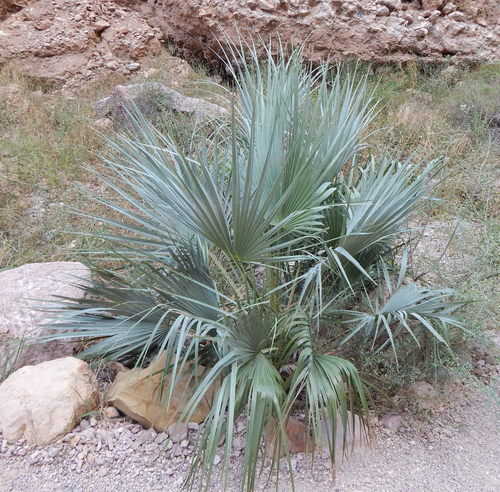
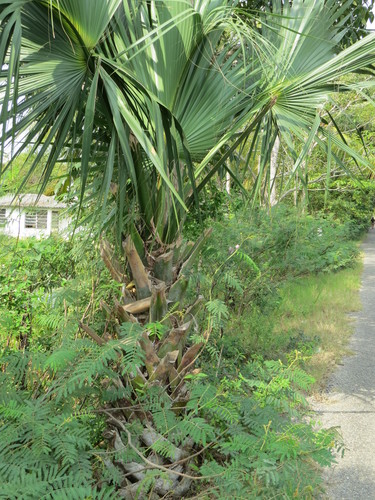
Pseudophoenix vinifera
(Mart.) Becc.
Wine palm, Cherry palm
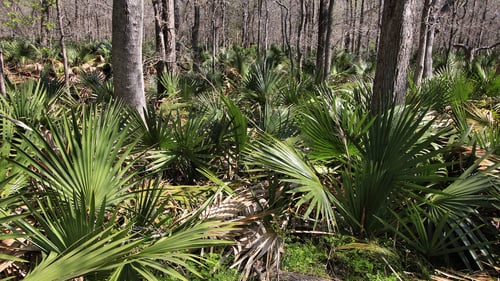
iNaturalist· cc-by-nc
(c) Joey Santore, some rights reserved (CC BY-NC), uploaded by Joey Santore
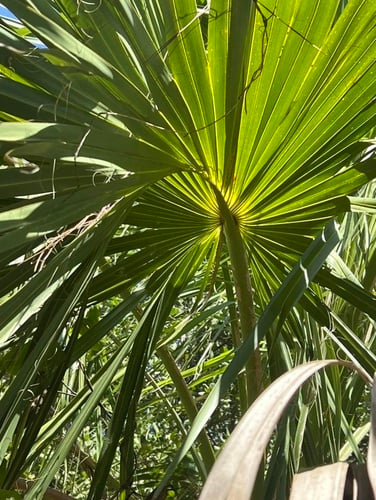
iNaturalist· cc-by-nc
(c) Joey Santore, some rights reserved (CC BY-NC), uploaded by Joey Santore
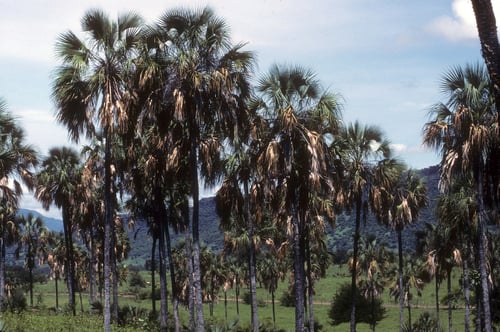
iNaturalist· cc-by-nc
(c) Yolanda M. Leon, some rights reserved (CC BY-NC), uploaded by Yolanda M. Leon
Summary
Source: WikipediaPseudophoenix vinifera (Dominican Spanish: cacheo, Haitian Creole: katié) is a palm species endemic to the Caribbean island of Hispaniola, in the Dominican Republic and Haiti.
Description
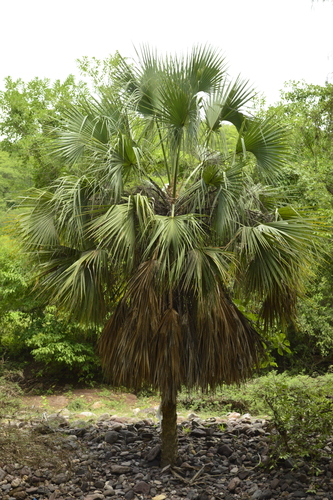
A palm with a swollen trunk. It grows 25 m tall. The trunk is 30 cm across. It bulges about the mid point and narrows near the crown. The trunk is deep grey and has closely set dark rings of leaf base scars. These become less distinct with age. The leaf crown is 5 m wide. The crown-shaft is 60 cm long. It tapers from the base to the tip. The leaves are stiff and upright and silvery grey. They are 3.3-4 m long. They arch over and are feathery. The leaf stalks are 30-60 cm long and silvery white. All parts of the tree have a thin layer of whitish wax. The fruit clusters hang down among the leaves. They hang close to the trunk. They are bright red when ripe. The fruit are covered with a layer of wax when mature. They are edible.
Edible Uses
The fruit are edible. The trunk can be tapped to extract sugary sap, which is fermented to make palm wine.
Traditional Uses
The plant has been used to make palm wine. The trunk is cut and the sugary sap squeezed out and then fermented.
This uses section is brief — help expand it
Medicinal Uses
The plant has been used to make palm wine.
Distribution
It is a tropical plant. It grows on limestone foothills. It grows in regions with low rainfall. It suits seasonally moist and dry climates. It is hardy. It suits plant hardiness zones 10-11.
Where It Grows
Australia, Central America, Dominican Republic, Haiti, Hispaniola, West Indies,
Cultivation
Plants are grown from seed. Seed germinate and grow very slowly.
Other Uses
The leaves are used for thatching.
Synonyms
Also Known As
Cacheo, Katie, Buccaneer palm
References (12)
- Cundall, P., (ed.), 2004, Gardening Australia: flora: the gardener's bible. ABC Books. p 1102
- Facciola, S., 1998, Cornucopia 2: a Source Book of Edible Plants. Kampong Publications, p 30
- Gibbons, M., 2003, A pocket guide to Palms. Chartwell Books. p 176
- Grandtner, M. M., 2008, World Dictionary of Trees. Wood and Forest Science Department. Laval University, Quebec, Qc Canada. (Internet database http://www.wdt.qc.ca)
- Haynes, J., & McLaughlin, J., 2000, Edible palms and Their Uses. University of Florida Fact sheet MCDE-00-50-1 p 12
Show all 12 references Hide references
- Henderson, A., Galeano, G and Bernal, R., 1995, Field Guide to the Palms of the Americas. Princeton. p 73
- Johnson, D.V., 1998, Tropical palms. Non-wood Forest products 10. FAO Rome. p 94
- Jones, D.L., 1994, Palms throughout the World. Smithtonian Institution, Washington. p 318
- Kermath, B. M., et al, 2014, Food Plants in the Americas: A survey of the domesticated, cultivated and wild plants used for Human food in North, Central and South America and the Caribbean. On line draft. p 720
- Llamas, K.A., 2003, Tropical Flowering Plants. Timber Press. p 113
- Pomona Coll. J. Econ. Bot. 2:268. 1912
- Riffle, R.L. & Craft, P., 2003, An Encyclopedia of Cultivated Palms. Timber Press. p 424