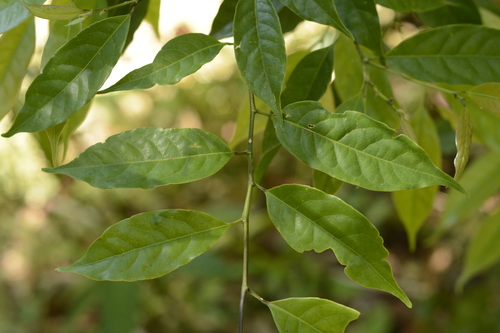
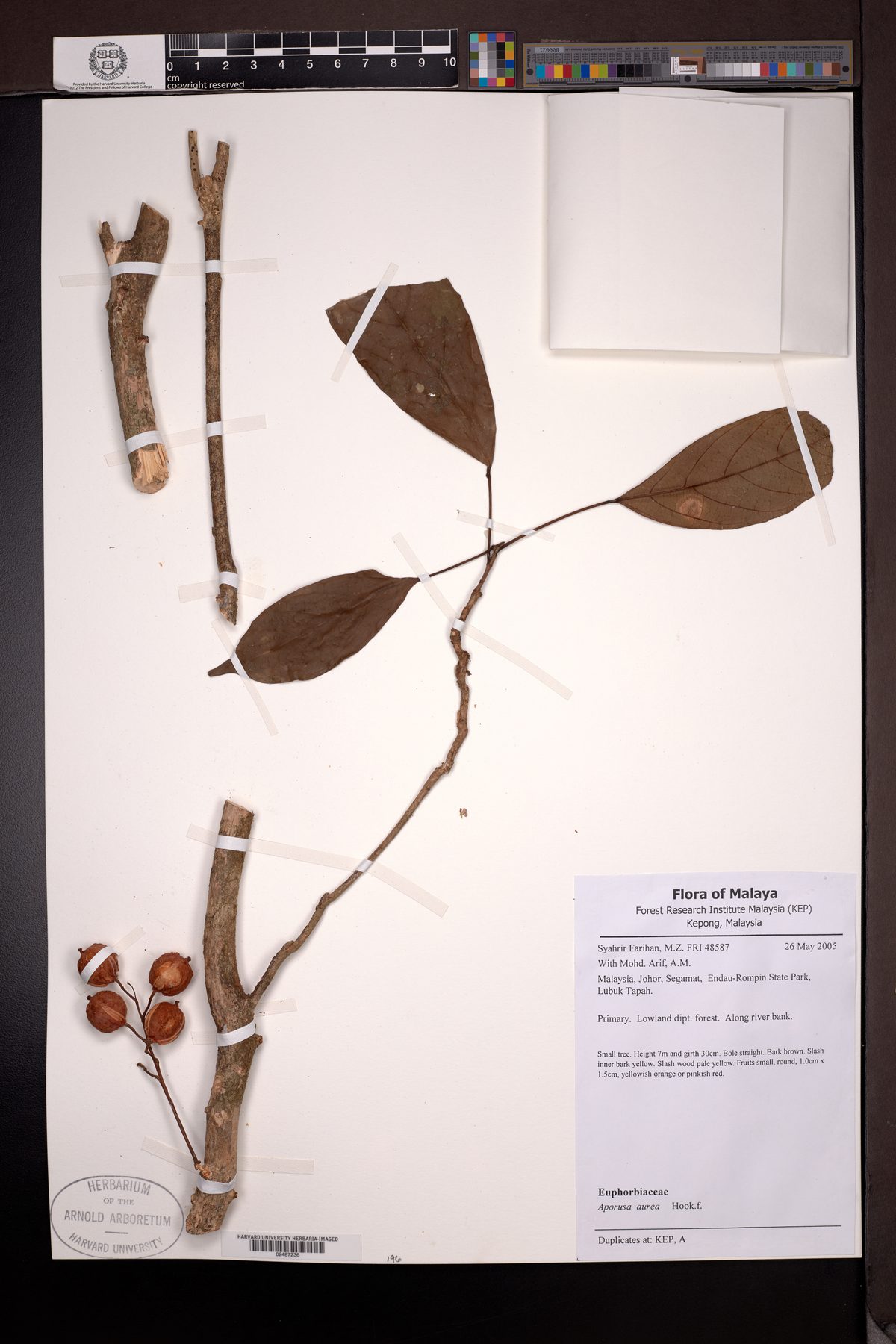
Baccaurea reticulata
Hook. f.
Lesser Tampoi
iNaturalist· cc-by-nc-sa
(c) Smithsonian Institution, National Museum of Natural History, Department of Botany, some rights reserved (CC BY-NC-SA)
wikimedia· cc-by-sa
Wikimedia Commons - KVDP
gbif· cc0
President and Fellows of Harvard College
Description
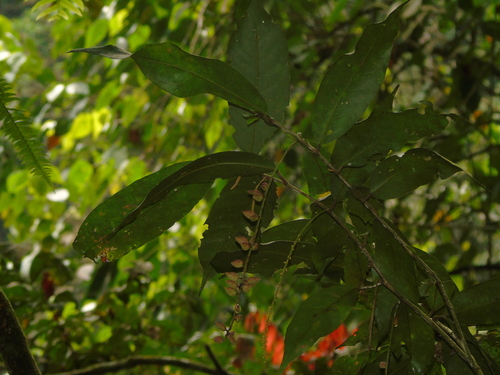
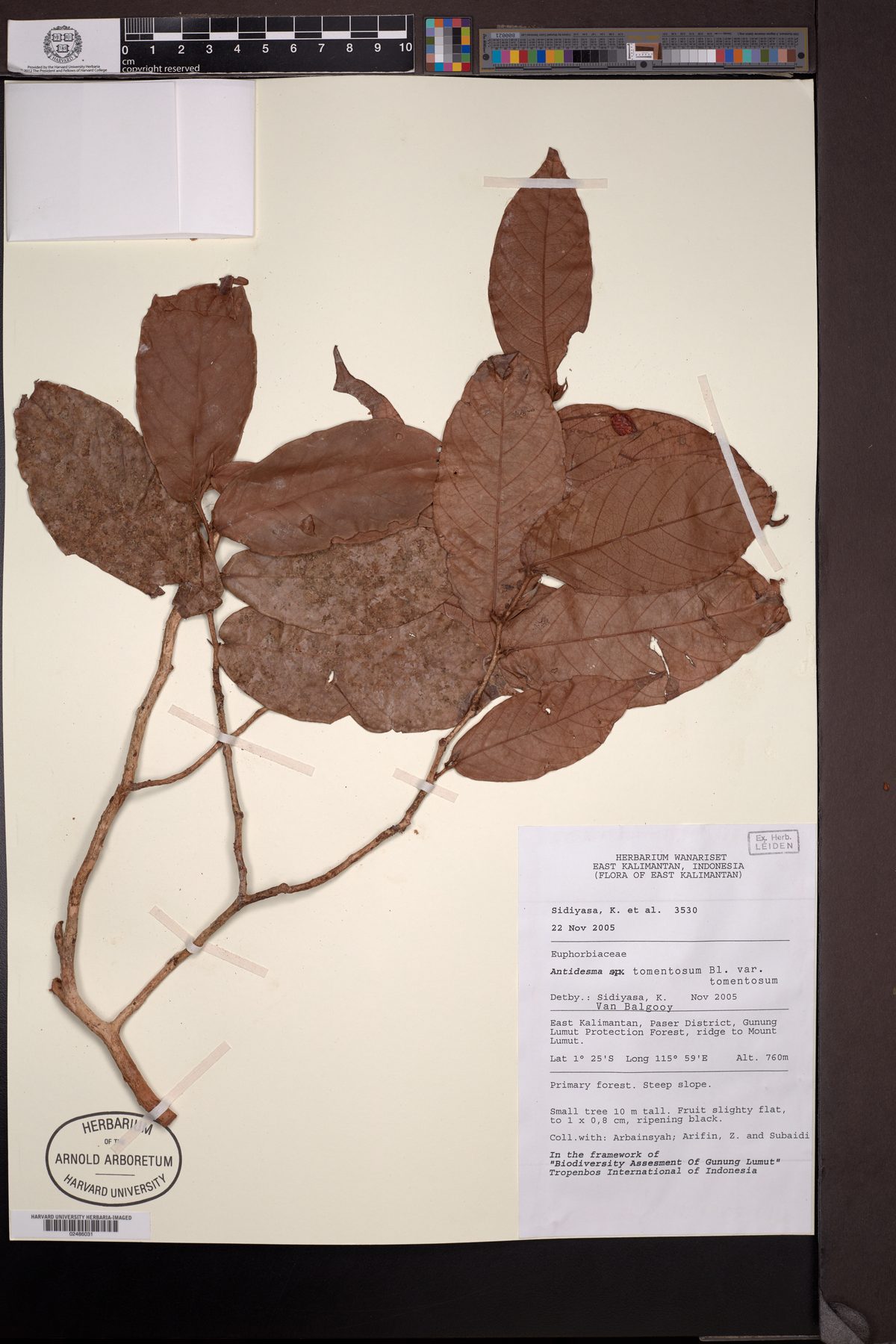
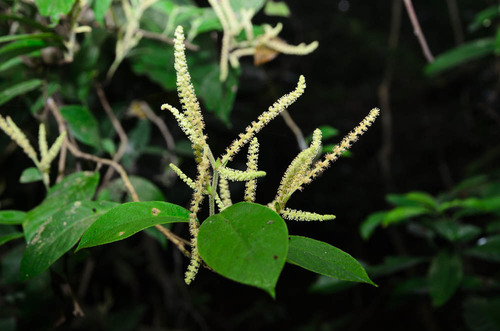
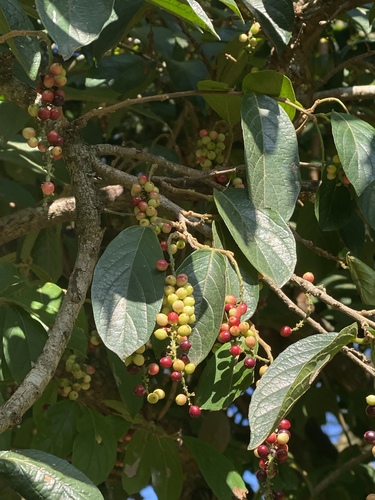
A tree. It grows 10-15 m tall. The bark is orange-brown. The leaves are narrowly oval and 20 cm long by 9 cm wide. The fruit are grey to brown. The pulp is pale yellow in colour.
Edible Uses
Fruit - raw. The yellow, transparent pulp has a pleasant, sweet flavour. The brightly coloured, grey to brown-yellow, globose fruits are up to 51mm in diameter.
Traditional Uses
The fruit are sweet.
This uses section is brief — help expand it
Medicinal Uses
We have no specific information on this species, but the bark of several members of this genus is used to relieve eye inflammation.
Distribution
A tropical plant. It grows in lowland forest. It grows from sea level to 330 m above sea level.
Where It Grows
Asia, Indonesia, Malaysia, SE Asia, Singapore,
Cultivation
Plants can be grown by seeds, air-layering and grafting.
Propagation
Seed - when sown fresh it usually germinates in a few days.
Other Uses
We have no specific information for this species, but the bark of several members of this genus is used, along with other ingredients, as a dyestuff to colour silk yellow, red or mauve, using the dyeing process known as 'pekan' in Malay. The dull red wood is hard and does not split during drying. Although we have no more specific information for this species, most members of this genus produce an excellent timber, which can be used to build houses and boats and to make furniture. In common with other trees that produce their flowers and fruits on the trunk of the tree, members of this genus are generally considered to be good support trees for the climbing rattan palms, which are grown to provide material for basket making, weaving into furniture, making ropes etc.
Notes
There are about 80 Baccaurea species.
Nutrition
| Part | Moisture | kJ | kcal | Protein | Vit A | Vit C | Iron | Zinc |
|---|---|---|---|---|---|---|---|---|
| Fruit | 73.8 | 389 | 93 | 1 | — | 0.1 | 0.6 | 5.8 |
Also Known As
Taban merkeh, Tampoi bunga
References (9)
- Burkill, I.H., 1966, A Dictionary of the Economic Products of the Malay Peninsula. Ministry of Agriculture and Cooperatives, Kuala Lumpur, Malaysia. Vol 1 (A-H) p 283
- Chin, H.F., & Yong, H.S., 1996, Malaysian Fruits in Colour. Tropical press, Kuala Lumpur p 82
- Hoe, V. B. & Siong, K. H., 1999, The nutritional value of indigenous fruit and vegetables in Sarawak. Asia Pacific J. Clin. Nutr. 8(1):24-31
- Khoo, H. E., et al, 2008, Carotenoid Content of Underutilized Tropical Fruits. Plant Foods for Human Nutrition 63:170-175
- Milow, P., et al, 2013, Malaysian species of plants with edible fruits or seeds and their evaluation. International Journal of Fruit Science. 14:1, 1-27
Show all 9 references Hide references
- Saw, L.G., LaFrankie, J. V. Kochummen, K. M., Yap S. K., 1991, Fruit Trees in a Malaysian Rain Forest. Economic Botany, Vol. 45, No. 1, pp. 120-136
- Sukarya, D. G., (Ed.) 2013, 3,500 Plant Species of the Botanic Gardens of Indonesia. LIPI p 146
- Verheij, E. W. M. and Coronel, R.E., (Eds.), 1991, Plant Resources of South-East Asia. PROSEA No 2. Edible fruits and nuts. Pudoc Wageningen. p 320
- Zawiah, N. & Othaman, H., 2012, 99 Spesies Buah di FRIM. Institut Penyelidikan Perhutanan Malaysia. p 62